
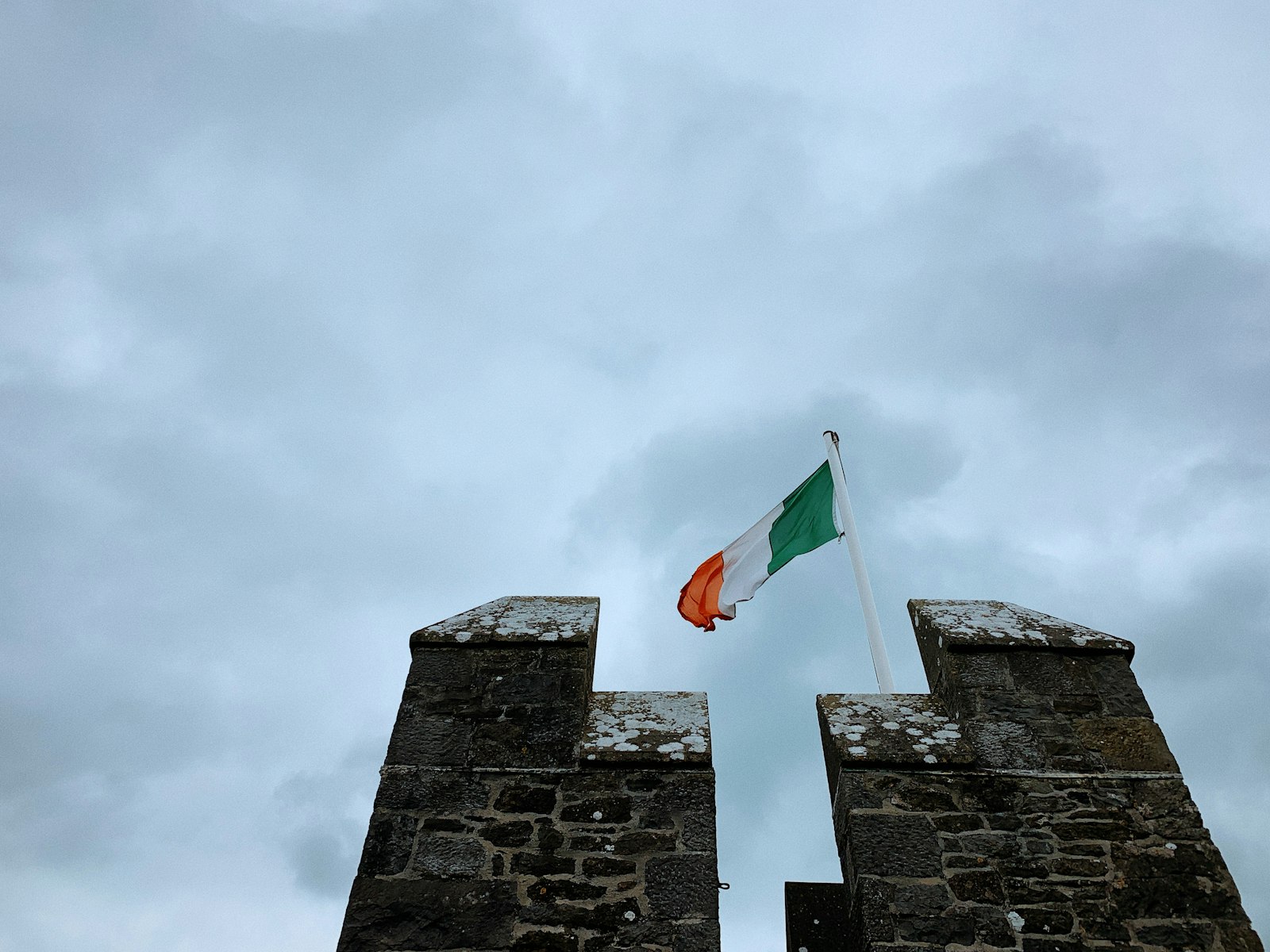
Photo by Tommy Bond on Unsplash
Introduction
Between 1919 and 1921, Ireland was consumed by a guerrilla war that would ultimately end centuries of direct English rule. The Irish War of Independence was unlike the Easter Rising that preceded it. Instead of one dramatic week of rebellion in Dublin, it was a years-long campaign spread across the island, involving flying columns, assassination, ambush, and counterinsurgency. It was brutal, chaotic, and devastating—yet it succeeded where the rising had failed.
The war was orchestrated by Michael Collins, perhaps the most brilliant military strategist in Irish history. Collins understood that the old style of open rebellion couldn’t defeat the British Army. Instead, he created a sophisticated guerrilla organization that could strike at British forces while being impossible to pin down. Through assassination, ambush, intelligence work, and coordination of local forces, Collins harried the British until they were exhausted and ready to negotiate.
For Americans, the Irish War of Independence represents a crucial turning point in history—the moment when guerrilla warfare defeated imperial power, and when a small nation successfully resisted and ultimately overcame a larger one. It’s a story of asymmetrical warfare, of intelligence and organization triumphing over raw military power, and of the beginning of the end of the British Empire as a global force.
The Context: From Rising to War
The Easter Rising of 1916 had been a military failure, but its political consequences transformed Irish politics. The execution of the rising’s leaders had radicalized public opinion. By 1918, Irish voters had overwhelmingly rejected the moderate Home Rule movement and elected Sinn Féin, a radical republican party that sought full Irish independence.
In January 1919, the newly elected Sinn Féin members refused to go to Westminster as the Home Rule Act prescribed. Instead, they declared themselves the parliament of the Irish republic (Dáil Éireann) and claimed authority to govern Ireland. The British government rejected this claim. From their perspective, Ireland was still a British territory governed by Westminster through Home Rule.
This constitutional impasse set the stage for conflict. The Irish republicans claimed authority over Ireland and declared themselves an independent state. The British government refused to recognize this claim. Neither side would back down. Armed conflict became inevitable.
Michael Collins: The Military Genius
The war would be orchestrated by Michael Collins, an Irish nationalist who had been hardened by the Easter Rising and who understood the lessons of that failure. Collins had been a junior officer in the rising and had been captured and imprisoned. Released after the war, he became increasingly involved in republican military organization.
Collins was a remarkable figure—simultaneously a military commander, an intelligence chief, a political strategist, and a charismatic leader. He was tall, athletic, energetic, and possessed an almost magnetic ability to inspire loyalty. But what made him effective was his intellectual capacity and his practical understanding of how to wage war against a larger enemy.
Collins understood that the British could not be defeated in open combat. The British Army had overwhelming military superiority—better equipped, better trained, more numerous. Any attempt to meet the British in pitched battles would result in Irish defeat. Instead, Collins organized a guerrilla campaign that would make Ireland ungovernable by British forces.
The Strategy: Guerrilla Warfare and Intelligence
Collins’s strategy had several key elements. First, he created small military units called flying columns that could move through the countryside, strike at British forces, and then melt back into the civilian population. These units would ambush British patrols, attack barracks, and generally harass British military presence.
Second, Collins created an intelligence network that gave him detailed information about British operations, force dispositions, and plans. He had informants throughout Ireland, including some in the British administration itself. This intelligence allowed him to anticipate British moves and position Irish forces to counter them.
Third, Collins understood that he had to eliminate the intelligence apparatus that the British used to gather information about Irish rebels. The Royal Irish Constabulary (the police force) and the British military’s intelligence service were the eyes and ears of British rule. Collins systematized the assassination of informants and intelligence operatives. British agents and police officers who helped suppress the rebellion became targets. This was brutal, but it destroyed the British ability to gather intelligence and thus their ability to anticipate Irish rebel movements.
Fourth, Collins worked to build political legitimacy for the rebel government. The Dáil Éireann (the declared Irish parliament) passed legislation, set policy, and attempted to govern. Local parish councils and councils in villages and towns recognized the authority of the Dáil rather than British authorities. This created a parallel government structure that competed with British authority for legitimacy and control.
The Brutality: Both Sides and Civilians
The war was brutal. The Irish rebels, through assassination, ambush, and guerrilla attacks, killed numerous British soldiers and police officers. The British response involved military raids, mass arrests, curfews, and violent repression. Both sides engaged in violence against civilians suspected of supporting the other side.
The British created paramilitary forces—particularly the Black and Tans, recruited from demobilized World War I veterans—that engaged in reprisals and violent suppression. The Black and Tans became notorious for brutal treatment of civilians, burning villages, and responding to rebel attacks with indiscriminate violence.
The rebels also engaged in violence against civilians—particularly those perceived as informants or collaborators. The killing of suspected informants was systematic and ruthless. This was partly military necessity (intelligence was crucial to fighting the war) and partly revenge.
The civilian population suffered tremendously. They were caught between two sides. The British imposed martial law, curfews, and restrictions. The rebels demanded support and information. Civilians suspected of supporting the wrong side faced violence from both sides. It was a brutal conflict that left scars on Irish society.
The Flying Columns and Local Warfare
The war was fought on two levels—through national leadership and strategy, and through local conflict in villages and towns across Ireland. The flying columns became the primary form of Irish military organization. These were small, mobile units of rebels who knew the local terrain and could move quickly to strike at British forces and then disperse.
Different regions developed different approaches. In some areas, flying columns operated effectively and could sustain significant pressure on British forces. In other areas, British military operations were more effective and the rebels were driven into hiding. The character of the war varied by region.
Cormac Murphy-O’Connor’s flying column in Cork, Seán Treacy’s column in Tipperary, and other regional commanders conducted operations that kept British forces tied down and defensive. They would ambush British patrols, attack barracks, and create an environment where British forces felt perpetually threatened.
One famous ambush occurred at Ambush Hill in Tipperary, where Irish rebels under Seán Treacy killed a substantial British patrol. These ambushes demonstrated that the rebels could achieve tactical victories even while losing the broader strategic military competition. Each successful ambush boosted rebel morale and public confidence in the rebellion.
The Intelligence War
One of the most sophisticated aspects of Collins’s strategy was the intelligence war. Collins created networks of informants that gave him detailed information about British operations. He understood that intelligence was crucial—knowing where British forces were positioned, what they were planning, and who was betraying the rebels was essential to the guerrilla campaign.
Collins personally directed much of the intelligence operation. He had agents in police stations, in the military, in civil administration. He cultivated informants through appeals to Irish patriotism, through payments, and through various forms of pressure. The information these agents provided allowed Irish rebels to anticipate British moves and position themselves effectively.
The intelligence apparatus also targeted British informants and intelligence officers. Collins maintained a unit specifically tasked with identifying and eliminating British agents and informants. This operation, while brutal, was effective in destroying the British intelligence network in Ireland.
The Bloody Sunday incident of November 1920 is the most famous example. On that day, Collins’s operatives assassinated over a dozen British intelligence officers in Dublin. The British responded with violence against spectators at a football game, killing civilians. The cycle of violence escalated. Yet the intelligence operation succeeded—the British intelligence network was damaged and demoralized.
The Political Dimension
Collins understood that the war couldn’t be won purely militarily. The British had superior military resources and could sustain losses better than the Irish. What the British couldn’t sustain was the political costs of the war. Public opinion in Britain grew weary of the conflict. British newspapers published accounts of violence and British reprisals. British politicians began questioning whether the cost of maintaining control over Ireland was worth it.
The Dáil Éireann, the declared Irish parliament, gave political legitimacy to the rebel cause. Even though the British government rejected its authority, the Dáil represented an alternative government structure competing for legitimacy and loyalty. As Irish people increasingly recognized the authority of the Dáil rather than British authorities, the practical ability of Britain to govern Ireland declined.
The American Dimension
American opinion was crucial for the Irish War of Independence. Many Americans, particularly Irish-Americans, sympathized with the Irish rebels fighting against British rule. This sympathy translated into political pressure on the American government to support Irish independence or at least to refrain from supporting the British war effort.
Irish-Americans raised funds for the Irish rebels. Some provided arms and supplies. American newspapers, particularly those read by Irish-Americans, covered the war and generally favored the Irish side. American public opinion developed increasingly anti-British sentiment regarding Ireland.
The American dimension became more important as the war continued. British officials understood that American support was crucial for maintaining the British position internationally. American pressure for Irish independence was one factor pushing Britain toward negotiation. The possibility that the United States might come to recognize an Irish republic was another concern for British policymakers.
The War Expands and Intensifies
As 1920 progressed into 1921, the intensity of the conflict increased. British military and paramilitary forces expanded their operations. The Auxiliaries, a paramilitary police force, engaged in particularly brutal operations against suspected rebels and their supporters.
The rebels also intensified their campaign. Flying columns operated more boldly. Attacks on British forces increased. The war began to resemble conventional conflict in some areas, with rebels holding territory and engaging British forces in more sustained combat.
However, the overall situation was becoming untenable for the British. The war was expensive. British soldiers and police were dying regularly. The war was unpopular in Britain. Parliamentary opposition to continued military action in Ireland was growing. British public opinion was weary.
For the Irish rebels, the situation was also difficult but more sustainable. They were fighting for something they believed in deeply—national independence. The rebels could sustain losses because they felt they were fighting a war of survival. The British, in contrast, were fighting to maintain control over a distant island, which seemed increasingly not worth the cost.
The Negotiation and the Treaty
By early 1921, both sides recognized that a negotiated settlement was necessary. The British couldn’t crush the rebellion militarily without unacceptable losses. The rebels couldn’t defeat the British militarily but had made British rule in Ireland impossible.
Negotiations began in July 1921. Michael Collins, though primarily a military leader, was part of the Irish delegation. After months of negotiation, the Irish and British agreed on a treaty in December 1921. The treaty granted Ireland dominion status—self-government with control over domestic affairs, but not full independence. Northern Ireland was excluded and remained in the United Kingdom.
Collins accepted the treaty reluctantly, understanding it wasn’t the full independence the rebels had sought. But he also understood that it was the best that could be achieved at that moment. The treaty would give Ireland control over most of its affairs and would effectively end British direct rule.
The Victory and the Cost
The Irish War of Independence was, by objective measures, a victory for the rebels. British direct rule over Ireland ended (except for Northern Ireland). Most of Ireland achieved independence. A treaty that recognized Irish sovereignty was signed.
Yet the victory came at a significant cost. The war killed an estimated 2,000-4,000 people, including rebels, British forces, and civilians caught in the conflict. Many more were wounded, imprisoned, or traumatized. Irish society was marked by the violence and the memories of British reprisals.
The victory was also incomplete. Ireland didn’t achieve the full independence that many had sought—the treaty created an independent dominion, but within the British Commonwealth. Full independence wouldn’t come until much later. And Northern Ireland remained in the United Kingdom, creating a permanent division on the island.
The Civil War That Followed
The treaty wasn’t universally accepted in Ireland. Many republicans rejected it as insufficient—they wanted full independence, not dominion status. This led to the Irish Civil War (1922-1923), in which Irish republicans fought against the Irish Free State government (which accepted the treaty).
The civil war was tragic because it pitted former comrades against each other. Collins, who had led the war of independence, now led the Free State forces against the republicans who had fought alongside him. The civil war was even deadlier than the war of independence, with estimates of 4,000+ deaths.
The civil war demonstrated that military victory didn’t translate into political harmony. The underlying disputes that had driven the war of independence—questions about what form Irish independence should take—remained unresolved and led to further violence.
Michael Collins’s Fate
Michael Collins, the architect of the Irish victory in the war of independence, did not survive long after the treaty. He was killed in an ambush on August 22, 1922, during the civil war. He was only 31 years old.
Collins’s death was tragic and symbolic. The man who had orchestrated the defeat of British rule in Ireland was killed by fellow Irish republicans who rejected the treaty he had negotiated. His death demonstrated the tragedy of the civil war—that the common enemy (British rule) that had unified Irish nationalists was replaced by disagreement about what form Irish independence should take.
The Legacy and Lessons
The Irish War of Independence became one of the most studied examples of successful guerrilla warfare against a larger, better-equipped military force. Military academies and strategists studied how Collins had organized his campaign, how intelligence had been used, how a small force had made a country ungovernable for a much larger one.
The lessons of the war influenced subsequent independence movements and guerrilla wars throughout the 20th century. Leaders of independence movements in India, China, and elsewhere studied the Irish example. The success of guerrilla tactics against a superior military force influenced military thinking globally.
For Ireland itself, the war established the independence that had been fought for through centuries. While not complete independence (Northern Ireland remained in the UK, and the Irish Free State was within the Commonwealth), it represented a dramatic break from direct British rule. It demonstrated that Irish nationalism could succeed through armed struggle.
Conclusion: Guerrilla Victory
The Irish War of Independence demonstrates that a smaller, less well-equipped force can defeat a larger, better-equipped one through superior strategy, organization, intelligence, and willingness to sustain losses. Michael Collins understood this and organized a campaign that made Ireland ungovernable for the British.
For Americans interested in Irish history, the war represents the climax of Ireland’s struggle for independence. It shows how the dream of Irish nationalism, pursued through centuries, finally achieved success. It demonstrates the power of commitment to cause and the willingness to sacrifice for deeply held beliefs.
The war also raises difficult questions about the nature of guerrilla warfare, the targeting of civilians (perceived informants), and the costs of liberation. It shows that achieving independence doesn’t automatically resolve the underlying conflicts that drove the struggle—as the subsequent civil war demonstrated.
But ultimately, the Irish War of Independence is a story of success—a small nation that defeated a larger imperial power and achieved independence. It’s a story that resonates across history and across nations that have sought freedom from imperial rule.

Author: jonathan
Jonathan is the publisher of Irishtopia.net, Anglotopia.net, and Londontopia.net. He's passionate about travel and learning about other cultures. He's been to Ireland several times, and uses his travel expertise for Irishtopia!