
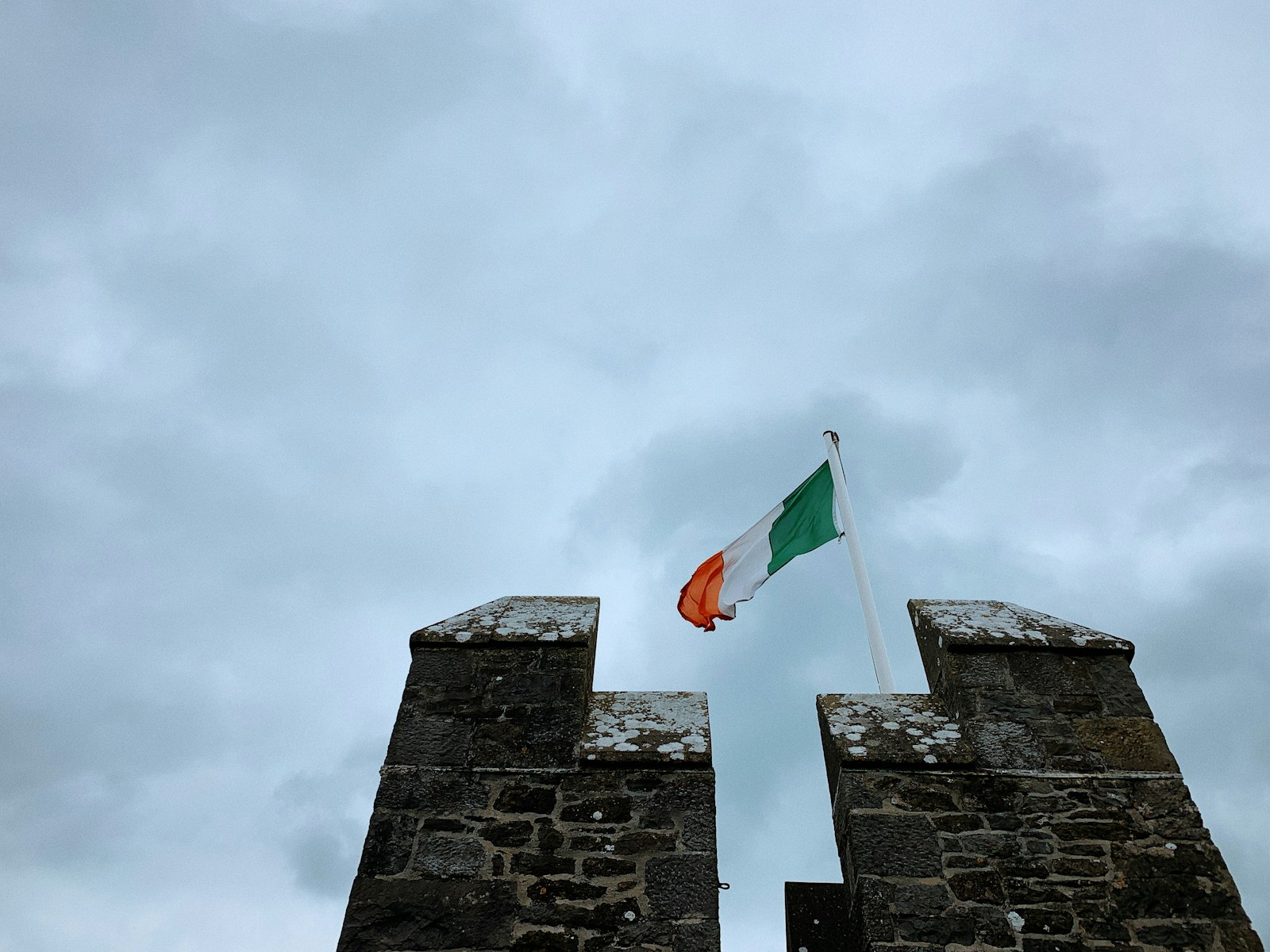
Photo by Tommy Bond on Unsplash
Introduction
When most Americans think of Irish history, they often jump straight to the Vikings, Brian Boru, or the English conquest. But the story of Ireland before the Norman invasion in 1170 is far richer and more complex than most realize. For over a thousand years before Richard de Clare landed at Waterford, the island was home to a fascinating tapestry of kingdoms, each competing for supremacy in a system that would eventually forge the cultural identity we recognize today.
Understanding the ancient Irish kingdoms isn’t just about memorizing dynastic names and dates. These powerful territories shaped the very foundations of Irish society—its literature, law, Christianity, and sense of national identity. The kingdoms of Connacht, Munster, Leinster, Ulster, and the dominant Ui Neill dynasty created a political landscape as intricate as any European feudal system, yet distinctly Irish in character.
This exploration takes you through centuries of power struggles, alliances, and ambitions that ultimately proved unable to withstand Norman invasion. But before that conquest, the Irish kingdoms represented something remarkable: a sophisticated civilization that had synthesized Celtic tradition with Christian learning, warrior culture with monastic scholarship.
The High Kings and the Concept of Supremacy
The notion of a “High King” of all Ireland is one of the most misunderstood aspects of medieval Irish history. Unlike the crowned monarchs of England or France, the High King didn’t rule through absolute authority or codified law. Instead, the position represented a kind of acknowledged supremacy—a recognition that one king’s power and prestige exceeded that of his peers.
The system was rooted in Irish law (the Brehon Laws) and in the concept of imperium, borrowed and adapted from Roman terminology. A High King typically maintained his power through military prowess, strategic alliances, and the willingness to campaign and fight to maintain his position. It was a precarious throne, requiring constant assertion and renewal through force.
The early High Kings, figures like Niall of the Nine Hostages (legendary, perhaps 4th century) and his descendants, established dynasties that would dominate Irish politics for centuries. The Ui Neill dynasty, claiming descent from Niall, split into two major branches: the Northern Ui Neill, controlling what would become Ulster and parts of Connacht, and the Southern Ui Neill, based in the central territories.
What’s fascinating to modern readers is how this system worked in practice. A High King might hold genuine power over several provinces through military might, yet still acknowledge the independence of other provincial kings. Treaties, marriage alliances, and hostage arrangements created a network of obligations that bound the kingdom together without requiring the centralized bureaucracy of medieval European kingdoms.
The Ui Neill Dominance: Centuries of Supremacy
The Ui Neill dynasty represents perhaps the most sustained period of political dominance in pre-Norman Irish history. From roughly the 6th century through the 11th century, Ui Neill kings held the High Kingship more consistently than any other dynasty, and this wasn’t accidental—it reflected genuine military and political superiority.
The dynasty’s strength derived from several factors. First, their territorial base in what would become Ulster and parts of the Midlands gave them access to significant resources and manpower. Second, they maintained a sharp focus on military excellence and strategic warfare. Third, they understood the value of religious patronage and court culture, supporting monastic centers that enhanced their prestige throughout Christendom.
During the height of their power (roughly the 7th and 8th centuries), Northern Ui Neill kings like Aed Balb and his successors established themselves as the unchallenged military powers on the island. They conducted campaigns into every province, collected tribute, and took hostages that guaranteed the loyalty of subordinate kings. These weren’t campaigns of conquest in the European sense—they didn’t seek to absorb entire kingdoms into their direct rule. Instead, they established a hierarchy of power where their supremacy was recognized and rewarded with submission, tribute, and military support.
The Ui Neill also understood cultural power. They were major patrons of learning centers and monastic settlements. The scribes and monks who recorded Irish history were often connected to Ui Neill patrons, which is why we know so much about their achievements. They sponsored the development of Irish art, encouraged manuscript production, and positioned themselves as defenders of Christian Ireland against the Vikings.
The Provincial Kingdoms: Munster’s Challenge
While the Ui Neill dominated the political landscape for centuries, they never went unchallenged. Munster, particularly under the Eóganacht dynasty and later the Dál Cais dynasty, repeatedly rose to challenge the northern supremacy.
Munster was wealthy and powerful. The province controlled rich lands and had excellent ports through which continental trade flowed. The Eóganacht kings, who ruled Munster for centuries, established themselves as serious competitors for the High Kingship. They understood that challenging Ui Neill supremacy required military power, and they invested heavily in warfare and alliances.
The real turning point came with the rise of the Dál Cais dynasty in the 10th century. Their greatest king, Brian Boru (called Brian Boruma), transformed Munster from a provincial kingdom into the dominant military power on the island. Brian was a military genius who understood that the old system of High King supremacy could be challenged and defeated through aggressive campaigning and strategic alliances.
Brian’s most famous victory came at the Battle of Clontarf in 1014, where he decisively defeated a coalition of Ui Neill kings and their allies. Though Brian himself was killed in the battle, his victory demonstrated that Ui Neill dominance could be broken. The battle marked a psychological and political shift on the island—proof that power could be redistributed through military excellence and determination.
Leinster: The Contested Kingdom
Leinster occupied a unique position in medieval Ireland. Geographically closest to Britain and blessed with fertile lands, Leinster was consistently prosperous but never quite achieved the sustained dominance of Munster or the organized military power of the Ui Neill. This made Leinster a kingdom of fluctuating fortunes, sometimes allied with the High King, sometimes in rebellion, and always strategically important.
The Ui Dunlainge dynasty ruled Leinster for centuries, competing fiercely with the Ui Neill for supremacy. Their kings were sophisticated politicians who understood that Leinster’s strength lay not in direct confrontation but in strategic positioning. They formed alliances, played rivals against each other, and used their wealth to maintain a strong military force.
What’s particularly interesting about Leinster is that the kingdom served as a bridge between Irish and English worlds. Leinster kings maintained trade relationships with Wales and England, learned from continental military tactics, and understood European politics in ways other Irish kingdoms did not. This cosmopolitan perspective would eventually make Leinster the point of entry for Norman invaders, but it also made Leinster kings more adaptable and innovative in their approach to governance.
The later history of Leinster, particularly under kings like Dermot MacMurrough, would be shaped by these international connections and the kingdom’s willingness to seek foreign allies to advance dynastic interests.
Connacht and Ulster: The Northern and Western Powers
Connacht, the western province, developed a distinct political culture. More isolated from the rest of Ireland than Leinster or Munster, Connacht nonetheless produced powerful kingdoms and fierce competitors for the High Kingship. The Ui Briain dynasty (distinct from but sometimes confused with Munster’s Dál Cais) ruled Connacht with considerable success, at times claiming the High Kingship and proving themselves formidable military powers.
Connacht’s challenge was its geography. The province was more remote, more difficult to supply militarily, and somewhat isolated from the trading networks that enriched Leinster and Munster. Yet this isolation also created a fiercer, more independent culture. Connacht kings were known for their warrior ethos and their unwillingness to submit to Ui Neill dominance without a fight.
Ulster, to the north, was controlled by the Ui Neill themselves in their earlier centuries, but as the dynasty split and power distributed, Ulster became a kingdom of various powerful families competing for control. The province was wealthy, had excellent harbors, and controlled important trade routes. However, it was also the most vulnerable to external threats—particularly the Viking raiders and later Norse settlements that affected the northern coast.
The history of Ulster in this period is one of constant warfare between ambitious local dynasties seeking supremacy within the province while defending against Ui Neill expansion from the south and east.
Monastic Culture and Intellectual Life
A crucial aspect of understanding the Irish kingdoms is recognizing that political power wasn’t the only form of authority on medieval Ireland. Monastic culture, developing rapidly after Patrick’s mission in the 5th century, created a parallel power structure that was intensely influential.
Irish monasteries weren’t just religious centers—they were universities, artistic workshops, libraries, and economic powerhouses. Kings supported monasteries, and monastic abbots held enormous political influence. The great monasteries like Kells, Clonmacnoise, and Glendalough accumulated wealth, maintained scholars, and produced the magnificent illuminated manuscripts that survive today.
This created an interesting tension and balance. Kings needed monastic support for legitimacy and prestige. They funded monks to pray for their souls and record their achievements. Monks, meanwhile, benefited from royal patronage but also maintained their own authority and could sometimes challenge royal power. When a king proved particularly unjust or impious, monastic communities could withdraw support or encourage his rivals.
The intellectual tradition fostered in Irish monasteries preserved classical learning during the European Dark Ages. Irish monks copied and preserved texts that would have been lost elsewhere, maintained libraries, and developed their own distinctive artistic and literary traditions. This monastic culture became one of Ireland’s greatest achievements and contributed significantly to the prestige of Irish kings throughout Europe.
The Viking Impact and Response
The Viking invasions, beginning in the late 8th century, profoundly affected Irish kingdoms, but not in the way Americans typically imagine. The Vikings didn’t immediately conquer Ireland. Instead, they established raiding parties, then eventually settled communities and trading posts. Irish kingdoms had to adapt to this new threat while maintaining their internal competitions for power.
The response from Irish kings was complex. Some fought Viking raiders fiercely. Others made alliances with Vikings against rival Irish kingdoms. Some Irish kings even hired Viking mercenaries. The system was fluid and pragmatic—Irish kingdoms bent rather than broke under Viking pressure, and they incorporated Viking tactics and technologies into their own military systems.
Over time, Vikings became Hiberno-Norse (Irish-Norse), intermarrying with Irish families and adopting Irish customs while maintaining their own cultural identity. Cities like Dublin developed as Viking settlements that brought wealth through trade but also represented a foreign presence in the island. The political situation became even more complex as Irish kings maneuvered between different Viking factions and used them as tools in internal struggles.
By the time of Brian Boru in the late 10th and early 11th centuries, the Viking threat was well-understood and managed rather than existential. Vikings were still dangerous and raids continued, but Irish kingdoms had proven themselves capable of defeating and managing Viking forces.
Law, Culture, and Governance Systems
Understanding the actual structure of Irish kingdoms requires looking beyond military power to the sophisticated legal and cultural systems that governed them. The Brehon Laws, a remarkably detailed legal code, governed relationships between kings, nobles, commoners, and serfs. These laws established rights, obligations, compensation systems, and rules for almost every social interaction.
What’s remarkable is that this legal system was codified and relatively sophisticated, comparable to European legal systems but distinctly different in character. The Brehon Laws were flexible, allowing for compensation and restitution rather than capital punishment in many cases. They recognized a hierarchy of society but also protected the rights of people at every level.
Kings were expected to govern according to these laws. A king who violated the laws could lose his status and position. This created accountability that, while not equivalent to democracy, did provide some check on absolute power. A sufficiently unjust king might see his nobles withdraw support or his kingdom fragment.
Governance also involved the concept of buachaill (young warrior nobility) who served kings and could rise to power. This created a military aristocracy that was meritocratic to some degree—a capable warrior could rise through the ranks through proven ability rather than simply inheriting position.
The Decline and the Question of Why
By the 12th century, the Irish kingdom system was beginning to show strains. The reasons are complex and debated by historians. Some point to political fragmentation—the emergence of too many competing kingdoms at roughly equal levels of power meant that no single kingdom could achieve the dominance and stability of earlier eras. Others note that Irish kingdoms, sophisticated as they were, never developed the centralized bureaucratic systems that European kingdoms were creating.
Others suggest that the solution to Irish political fragmentation ultimately relied on submission to a single authority, and that various Irish kings considered inviting foreign support (particularly from England and Normandy) as a way to achieve that supremacy. When Dermot MacMurrough of Leinster invited Richard de Clare and Norman knights to support him in 1166, he wasn’t acting uniquely—he was following a well-established Irish tradition of seeking foreign alliance to win internal disputes.
The Norman invasion, then, was not entirely imposed from outside. It was invited by an Irish king pursuing the same strategies that earlier kings had used with Vikings and other foreign powers. What made it different was that the Normans brought a different kind of organization and didn’t assimilate into Irish society the way Vikings eventually did.
Conclusion: Legacy of the Kingdoms
The Irish kingdoms that flourished before 1170 left an indelible mark on Ireland that persists to this day. The provincial divisions established in ancient times remain recognizable in modern Irish geography. The legal traditions, artistic achievements, and cultural values developed in this era continued to influence Irish society centuries later.
For Americans interested in Ireland, understanding these early kingdoms provides essential context for everything that follows. The Irish sense of distinct provincial identity, the valuing of learning and artistic achievement alongside warrior culture, and the complex political maneuvering between powerful families—all these originated in the ancient kingdoms.
The kingdoms also demonstrate that Ireland in medieval times was not isolated or primitive, but rather a sophisticated civilization with its own sophisticated legal systems, rich cultural traditions, and dynamic political systems. It was a civilization that could produce great art, maintain learning, and field powerful military forces. That such a civilization ultimately fell to Norman invasion wasn’t inevitable or a testament to Irish weakness—it was a specific historical moment when internal political fragmentation coincided with the arrival of a new, more centralized military and political force.
Understanding the rise and fall of Irish kingdoms helps us appreciate not just Irish history, but the broader patterns of medieval European history and the complex factors that determined which societies survived and which were transformed by the great changes of the medieval period.

Author: jonathan
Jonathan is the publisher of Irishtopia.net, Anglotopia.net, and Londontopia.net. He's passionate about travel and learning about other cultures. He's been to Ireland several times, and uses his travel expertise for Irishtopia!