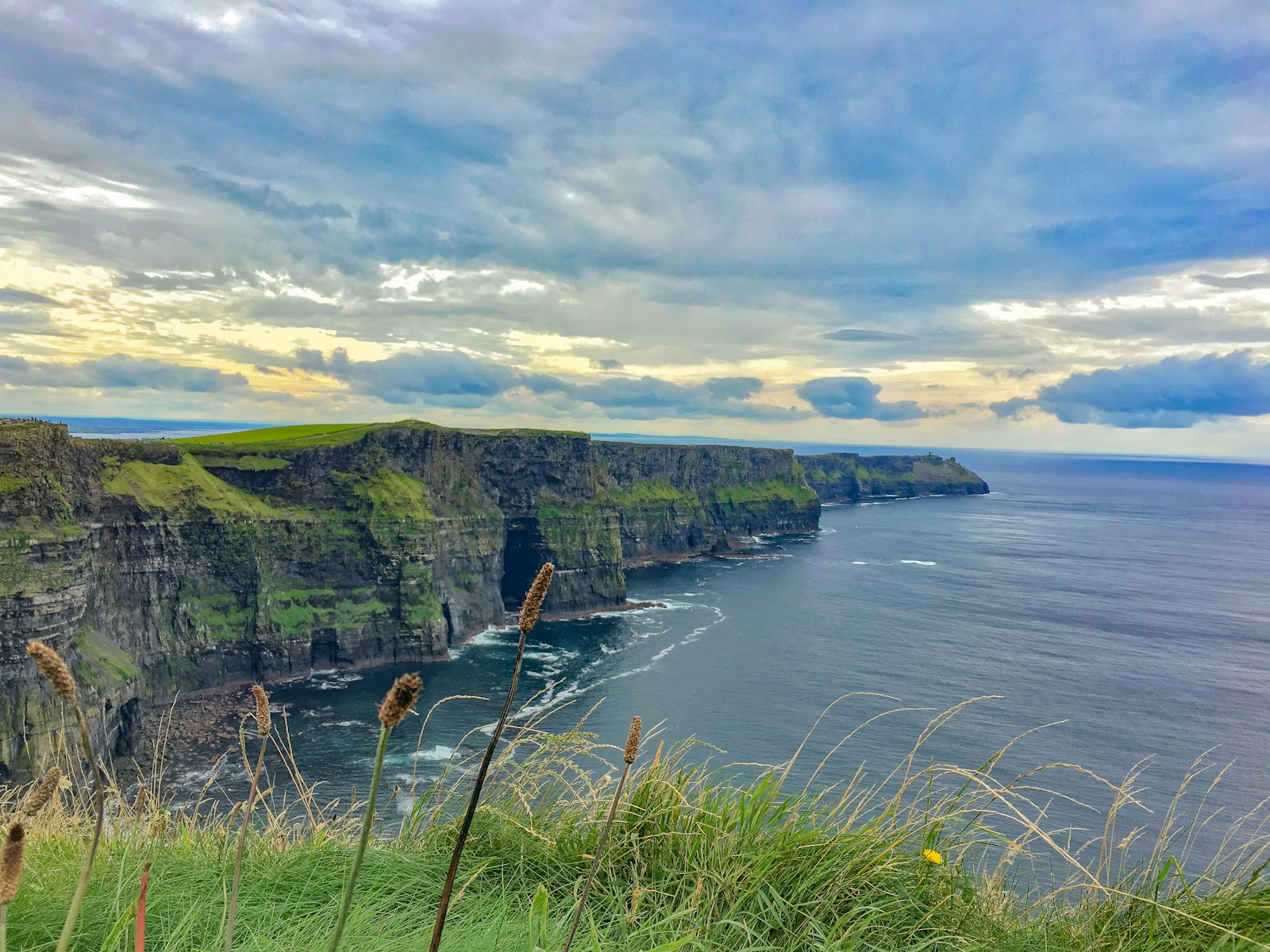
Photo by Leighton Smith on Unsplash
In the pantheon of Irish mythological creatures and symbols, few are as enduring and significant as the Salmon of Knowledge. This mysterious fish, appearing in various forms throughout Irish mythology, represents the pinnacle of ancient Irish wisdom and knowledge-seeking. The salmon embodies the idea that profound understanding comes not through human striving alone but through connection with the natural world and with forces beyond ordinary human comprehension. The stories surrounding the Salmon of Knowledge reveal how ancient Irish culture understood wisdom, how they imagined spiritual transformation, and what values they held regarding learning and knowledge.
The Salmon of Knowledge appears most prominently in the tale of Fionn mac Cumhaill, the legendary hero and warrior of Irish tradition. Yet the salmon appears in various forms throughout Irish mythology, always representing something precious, elusive, and transformative. Understanding the Salmon of Knowledge provides entry into how ancient Irish people understood wisdom and how they imagined the relationship between humans and the natural world.
The Salmon in Irish Mythology
In ancient Irish mythology, the Salmon of Knowledge dwelt in a sacred pool, possessing all the wisdom of the world. According to the legends, this salmon contained the accumulated knowledge of the ages—all human understanding, all secret lore, all hidden wisdom. The salmon itself was the repository of knowledge; to consume the salmon would be to gain access to this profound wisdom.
The most famous version of the salmon myth involves the character Finnegas, a poet and sage who spent years trying to catch the Salmon of Knowledge. Finnegas was obsessed with capturing the salmon and consuming it, believing that doing so would grant him access to all the world’s knowledge. He believed that eating the salmon would complete his understanding and make him the wisest being alive.
After years of effort, Finnegas finally succeeded in catching the salmon. Yet in the moment of capturing it, a young boy named Fionn appeared. Finnegas cooked the salmon and gave it to Fionn to eat. When Fionn consumed the salmon, he absorbed all the wisdom contained within it. Thus, the knowledge that Finnegas had sought for years passed, unexpectedly, to the young boy rather than to the aging sage.
This version of the myth introduces important themes. The salmon cannot be simply captured and consumed by force or through determined effort. Wisdom doesn’t belong to those who pursue it obsessively but rather comes to those who are open to receive it. The young Fionn, apparently innocent and without preconceived notions about wisdom, proved a better vessel for the salmon’s knowledge than the deliberate, ambitious Finnegas.
The Character of Fionn mac Cumhaill
Fionn mac Cumhaill becomes central to Irish mythology partly through his connection to the Salmon of Knowledge. Born under difficult circumstances—his father had been killed and his mother feared for his life—Fionn was raised in hiding, away from human society. This marginal childhood, spent in contact with nature rather than with human civilization, prepared him to receive the salmon’s wisdom.
When Fionn meets Finnegas, the young boy is innocent of human wisdom and learning. Yet his lived experience of nature, his childhood in wild places, his connection to the natural world, made him a suitable vessel for the ancient wisdom contained in the salmon. The myth suggests that access to profound knowledge requires not intellectual ambition or scholarly striving but rather openness, humility, and connection to natural world.
After consuming the salmon, Fionn becomes the wisest of beings, though he is also a warrior and leader. His wisdom informs his actions as a military commander and political leader. He becomes known not just for his strength and prowess but for his wisdom and just judgment. The salmon’s knowledge makes him capable of governing and leading with understanding rather than merely through force.
Knowledge and Transformation
The Salmon of Knowledge represents the idea that true knowledge transforms the person who receives it. Fionn doesn’t simply gain information by consuming the salmon; rather, he is fundamentally changed. His consciousness is expanded, his understanding deepened, his perception of reality altered. The salmon’s knowledge doesn’t merely add to what he knows but transforms his entire being.
This understanding of knowledge as transformative differs from modern conceptions of knowledge as mere information acquisition. In the Irish mythological worldview, knowledge is not neutral or purely intellectual. Rather, knowledge carries power and transforms those who receive it. To gain true knowledge is to become different, to be elevated or enlightened.
The salmon itself represents the fullness of knowledge—not fragmented pieces of information but complete understanding. The salmon contains all knowledge in unified form. To consume the salmon is to gain access to this wholeness, this complete picture of reality that transcends ordinary fragmented human understanding.
The Sacred Pool and the Margins
The Salmon of Knowledge dwells in a sacred pool, a liminal space between ordinary reality and the sacred or magical realm. Sacred pools and wells appear frequently in Irish mythology as places where the boundary between ordinary and sacred worlds grows thin. These watery places are thresholds where humans might encounter the divine or supernatural.
The pool itself is protected, not easily accessible. To reach the pool and encounter the salmon requires determination and often involves trials or challenges. The journey to the pool is as important as the destination. The seeking of knowledge requires effort, dedication, and willingness to leave ordinary society and venture into liminal spaces.
Water in Irish mythology frequently represents transformation and boundary crossing. Rivers, lakes, and wells are places of power and danger. The salmon, dwelling in sacred water, represents knowledge existing in realms beyond ordinary human access. To gain knowledge requires entering these liminal, often dangerous spaces.
The Wisdom of Nature
An important aspect of the Salmon of Knowledge myth is its emphasis on wisdom as something found in nature rather than in human institutions or accumulated human learning. The salmon’s wisdom is not something humans created or preserved through books or oral tradition alone. Rather, it represents a wisdom embedded in the natural world, in the salmon itself, in the sacred waters where it dwells.
This perspective reflects ancient Irish understanding of the natural world as inherently wise and powerful. Animals, plants, rivers, and landscapes possessed knowledge and significance. To become wise, one must learn to understand the language of nature, to read the signs and meanings present in the natural world.
This naturalistic understanding of wisdom influenced Irish poetry and later Celtic spirituality. The idea that wisdom could be found through meditation on nature, through careful observation of natural phenomena, through opening oneself to the teachings of the natural world, became central to Irish and Celtic spiritual traditions.
The Salmon Beyond Fionn
While the Salmon of Knowledge appears most prominently in Fionn’s story, variations of the salmon appear elsewhere in Irish mythology and folklore. The salmon, as a creature, seems to have held particular significance for ancient Irish people. Living in water, moving between river and sea, the salmon crosses boundaries and possesses qualities that would have seemed mysterious and significant to ancient peoples.
Salmon were important to ancient Irish economy and diet. As a source of food, salmon were valuable and somewhat unpredictable—fish that could be caught in certain seasons but were not always reliably available. This unpredictability and value might have contributed to the salmon’s mythological significance.
The salmon’s migration between river and sea, its journey upstream against current, its mysterious ability to navigate vast ocean distances and return to natal streams, would have seemed wondrous and magical to ancient peoples. The salmon’s behavior could be read as metaphorical: the persistence in swimming upstream against resistance parallels the effort required to gain wisdom and knowledge.
The Fish and the Sacred
Sacred fish appear in various mythological traditions. In Christian symbolism, the fish represents Christ and spiritual truth. In Irish mythology predating Christianity, the salmon seems to represent sacred knowledge and divine wisdom. When Christianity arrived in Ireland, the salmon’s association with wisdom and the sacred was maintained, creating interesting syncretism between pagan and Christian understanding.
The medieval Irish manuscripts that preserved many Irish myths were created by Christian monks. These monks maintained stories of pagan gods and heroes, including the Salmon of Knowledge. The salmon’s wisdom became, in Christian context, a type of divine knowledge—the understanding of God’s creation and God’s plan that could be glimpsed through nature.
This blending of pagan and Christian symbolism suggests that the Salmon of Knowledge remained significant across religious transformations, that its meaning was flexible enough to accommodate different worldviews while maintaining its core significance as a symbol of profound truth and wisdom.
Modern Interpretations and Legacy
In contemporary times, the Salmon of Knowledge continues to resonate in Irish culture. Writers, artists, and spiritual practitioners draw on the salmon imagery and mythology. The salmon appears in contemporary Irish literature and poetry as a symbol of wisdom, authenticity, and connection to ancient tradition.
For those interested in Celtic spirituality and modern paganism, the Salmon of Knowledge represents the idea that profound wisdom is available through connection with nature and through receptiveness to non-rational modes of understanding. The salmon symbolizes knowledge that transcends purely intellectual understanding.
The salmon also appears in Irish place names and in the landscape. The sacred pools where the salmon was said to dwell are identified with actual Irish rivers and lakes. This connection between mythology and landscape keeps the salmon stories alive and connects contemporary people to ancient traditions through physical place.
The Salmon and Modern Knowledge
Interestingly, the Salmon of Knowledge mythology resonates in modern contexts despite dramatic changes in how knowledge is acquired and understood. In contemporary information-saturated society, where vast amounts of data are available instantly through technology, the salmon’s mystery and the idea that true wisdom is rare and precious remains compelling.
The salmon myth suggests caution about pure information accumulation. Knowledge without wisdom, information without understanding, facts without meaning—these contemporary problems echo in the ancient wisdom that consuming the salmon required openness and the right readiness. Not all knowledge is easily gained or beneficial to those who seek it with purely ambitious intentions.
The salmon also represents knowledge that cannot be reduced to data or information. The salmon’s wisdom is holistic, transformative, and connected to lived experience and natural world. In contrast to mechanical models of knowledge as information processing, the salmon represents understanding as embodied, transformative, and rooted in reality beyond human intellect.
Conclusion: Ancient Wisdom Speaking to Modern Seekers
The Salmon of Knowledge remains one of Irish mythology’s most compelling symbols. The salmon represents the pinnacle of wisdom and the transformation that comes through gaining true understanding. The myths surrounding the salmon reveal how ancient Irish people understood knowledge—not as mere information but as something precious, transformative, and connected to the sacred.
For Americans interested in Irish mythology and Irish tradition, the Salmon of Knowledge offers insight into how ancient Irish people understood wisdom and how they imagined the process of spiritual and intellectual growth. The salmon’s story continues to speak to contemporary seekers, suggesting that true wisdom requires humility, openness, and connection to the natural world.
The Salmon of Knowledge is ultimately a myth about the human longing for understanding and the mysterious ways that wisdom comes to those who are ready to receive it. In preserving this myth, Irish tradition passes on important truths about knowledge, wisdom, and the transformative power of genuine understanding.

Author: jonathan
Jonathan is the publisher of Irishtopia.net, Anglotopia.net, and Londontopia.net. He's passionate about travel and learning about other cultures. He's been to Ireland several times, and uses his travel expertise for Irishtopia!