
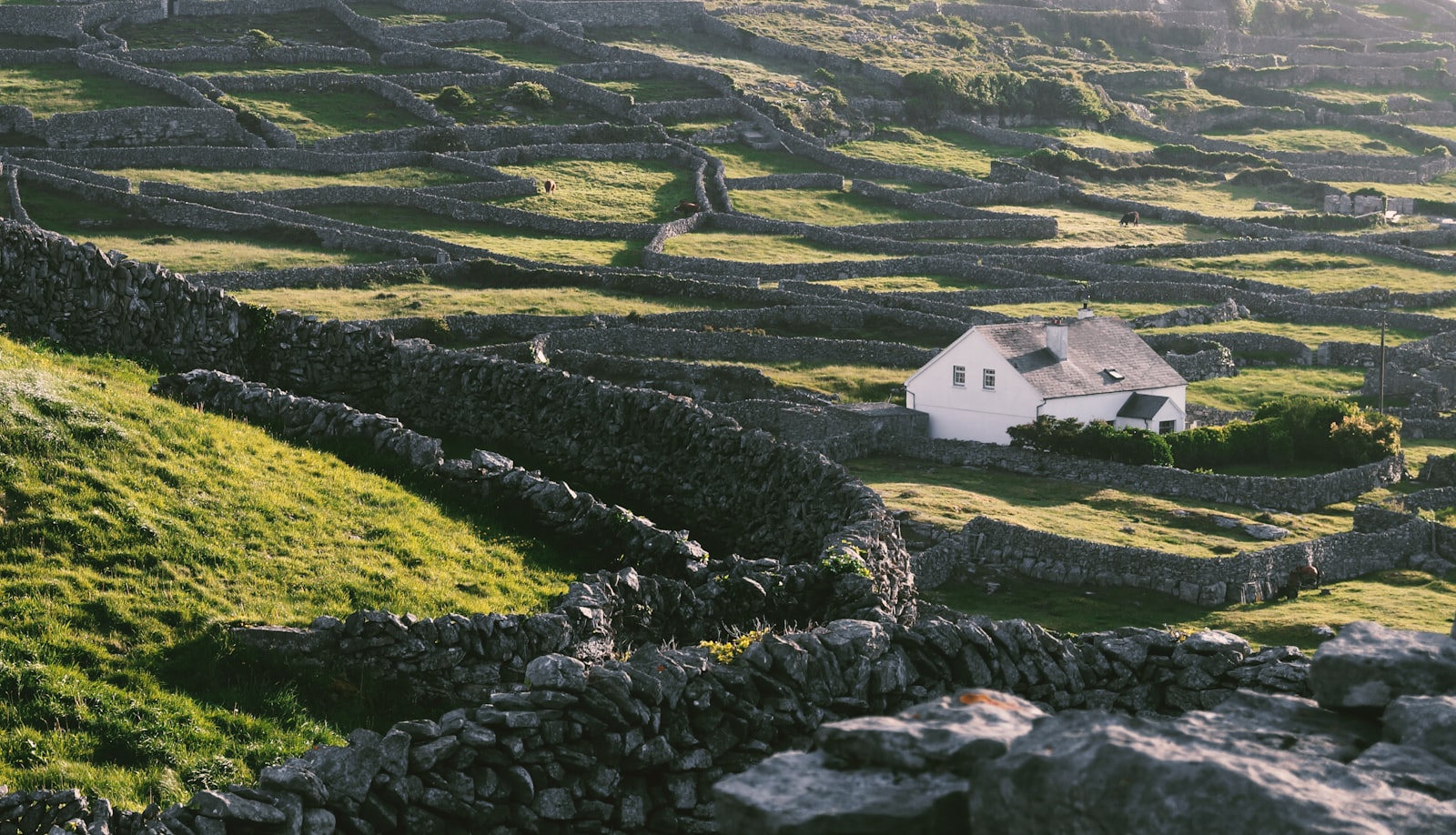
Photo by Alex Houque on Unsplash
On the walls of medieval Irish churches and castles, carved in stone, are figures that shock and perplex modern viewers: naked women, sometimes grotesquely depicted, often shown with explicit sexual anatomy, frequently positioned as if displaying themselves. These figures, known as sheela-na-gigs (Irish: “Síle na Gig”), are among the most mysterious and controversial elements of Irish medieval architecture. For centuries, they were literally covered up, whitewashed, or ignored as embarrassing remnants of pagan superstition. Yet sheela-na-gigs persist, stubbornly visible in their stone forms, compelling us to ask: who carved these figures? Why did they place them on sacred buildings? What did they mean?
The sheela-na-gig remains one of the great unsolved mysteries of Irish and broader medieval European culture. She (for most scholars refer to the figure as female) appears on dozens of churches and castles across Ireland and can also be found in England, Scotland, France, and other medieval European contexts, suggesting she represents something meaningful within medieval Christian civilization, even though she seems radically at odds with the sexual repression and female modesty that medieval Christianity supposedly promoted.
For Americans interested in Irish culture and history, the sheela-na-gig offers a window into medieval Irish society, into the relationship between pagan and Christian traditions, into the role of women in medieval culture, and into aspects of medieval life that contradict our typical understandings. Understanding the sheela-na-gig requires embracing mystery and ambiguity, entertaining multiple interpretations, and recognizing that medieval Christianity was more complex and less univocal than popular images suggest.
The Appearance: What Sheela-na-gigs Look Like
Sheela-na-gigs are carved stone figures, typically found on the exterior of medieval churches or castles, usually at a prominent location such as above doorways, on walls, or on corners. They are recognizable by several consistent characteristics:
They are almost always female figures, depicted naked or nearly naked. The figures are sometimes stylized and abstract, sometimes more naturalistic, but always clearly female.
They are almost always shown in positions that emphasize or display sexual anatomy. The most typical pose shows the figure spreading her legs wide, with hands positioned to draw attention to the genital area. Some figures appear to be literally pulling open their genitals. This explicit display is the defining characteristic of the figure.
The faces are often grotesque or exaggerated. Many sheela-na-gigs have exaggerated features, sometimes appear to be grinning or grimacing, sometimes have expressions that are difficult to interpret. Some have elaborate hairstyles or headdresses.
The bodies are often depicted as thin, aged, or grotesquely shaped, sometimes with emphasized skeletal features. Many sheela-na-gigs appear to depict older women rather than young, attractive women.
The proportions are often distorted or exaggerated, with oversized heads, distorted limbs, or unusual body shapes.
The carving is sometimes crude and rough, sometimes more skillfully executed. The level of artistic sophistication varies, suggesting the figures were carved by different hands and possibly at different times.
The most famous sheela-na-gig in Ireland is probably the one at Kilpeck Church in Herefordshire, England (though some Irish examples are equally well-known). But examples exist on multiple Irish churches and castles, particularly in the medieval period (12th-15th centuries).
The Mystery: Why Are These Figures There?
The fundamental mystery of the sheela-na-gig is: why would these explicit female figures be placed on medieval Christian churches? This question becomes even more puzzling when you consider that medieval Christianity was supposedly deeply concerned with sexual morality, with the sinfulness of the flesh, with female modesty. The placement of explicitly sexual female figures on sacred buildings seems contradictory and requires explanation.
Numerous theories exist, none definitively proven:
The fertility symbol theory suggests that sheela-na-gigs represent pre-Christian fertility deities or symbols that were incorporated into church architecture as remnants of pagan tradition. In this theory, the explicit sexuality of the figure represents divine fertility, the generative power of the female principle. Medieval Christian architects or builders might have incorporated these figures as a way of acknowledging or absorbing pagan tradition into Christian buildings.
The apotropaic (protective) theory suggests that the figures served a protective function, warding off evil or disease. In medieval belief, explicit representations sometimes served protective functions—the display of sexuality could ward off evil spirits or bad luck. The sheela-na-gig, in this interpretation, served as a protection for the church, perhaps particularly protecting against sexual corruption or temptation by explicitly representing and thus neutralizing sexual danger.
The moral warning theory interprets the sheela-na-gig as a visual sermon against sexual sin. The grotesque, often aged appearance of many sheela-na-gigs could represent the consequences of sexual sin, the degradation and ugliness that resulted from unchastity. Placed on the church, the figure would serve as a warning to the faithful about the dangers of sexual indulgence.
The fertility/childbirth symbol theory suggests that the figures represent female fertility and childbirth, and that they were placed on churches specifically as protective symbols for pregnant women and those in childbirth. In medieval times, childbirth was dangerous, and women often invoked divine protection. Sheela-na-gigs might have served as focal points for such prayer and protection.
The pagan goddess absorption theory suggests that sheela-na-gigs represent pre-Christian goddess figures that were incorporated into church architecture as Christianity absorbed and Christianized pagan sacred sites and traditions. The explicit sexuality would represent the goddess in her regenerative, creative aspect.
The female power/autonomy theory (a more modern interpretation) suggests that sheela-na-gigs represented female autonomy, female sexuality, and female power. In a patriarchal society, the figure’s explicit self-display could represent a female claim to power and autonomy. Medieval women were heavily controlled and constrained; sheela-na-gigs might represent a subversive assertion of female power.
The truth is likely that multiple interpretations apply to different figures in different contexts. What’s clear is that medieval people found these figures meaningful enough to carve them, to place them prominently, and (in most cases) to maintain them rather than destroy them.
The Whitewashing: When Sheela-na-gigs Were Hidden
One of the most telling aspects of sheela-na-gig history is what happened to them in the post-medieval period. Starting in the 16th-17th centuries and continuing through the 18th and 19th centuries, many sheela-na-gigs were literally whitewashed, covered with plaster, or removed from buildings.
This destruction and concealment reflects changing attitudes about sexuality, about art, and about acceptable public representation. As societies became more prudish and as attitudes about female sexuality and representation became more restrictive, sheela-na-gigs came to be seen as scandalous, inappropriate, and embarrassing. Church authorities in particular wanted them gone.
The whitewashing and concealment of sheela-na-gigs is itself a kind of history. It reflects the discomfort of post-medieval, increasingly prudish societies with female sexuality and with explicit representation. It shows how attitudes about acceptability shift over time. It demonstrates the power of cultural authorities to literally erase uncomfortable or inconvenient aspects of history.
Some sheela-na-gigs were simply chiseled away, the figure destroyed entirely. Others were whitewashed. Still others were covered with new stonework or were integrated into walls in ways that hid or obscured them. A few were removed entirely from their original locations.
That any sheela-na-gigs survived at all is fortunate. Some were in remote locations and escaped attention. Some were protected by locals who valued or respected them. Some were rediscovered and preserved by scholars and cultural preservationists in the 19th and 20th centuries who began to take interest in medieval art and architecture and to recognize the historical and cultural value of these figures.
Cultural Context: Medieval Attitudes About Sexuality and Gender
To understand sheela-na-gigs, one must understand that medieval attitudes about sexuality and gender were more complex than the popular image of extreme prudishness suggests. While medieval Christianity certainly emphasized sexual morality and promoted celibacy for clergy and virgin status for women, medieval society also maintained awareness of sexuality and represented it (albeit carefully) in art and literature.
Medieval art contained sexual imagery and representation, though it was often coded, metaphorical, or hidden. Gargoyles, misericords (carved seats in churches), margin drawings in medieval manuscripts—all sometimes contained sexual or grotesque imagery. This suggests that medieval builders and artists were willing to include sexual and transgressive imagery in religious contexts, perhaps for protective, moral, or didactic purposes.
Medieval women, despite restrictive ideologies, maintained agency and power in many contexts. They could be property owners, particularly as widows. They could be powerful abbesses. They could exercise influence within families and communities. Female sexuality, while morally condemned, was also recognized as powerful and potentially dangerous. This might explain why explicit female figures appear on churches—not as celebrations of female sexuality, but as attempts to acknowledge and control its power.
The presence of sheela-na-gigs on medieval churches suggests that medieval builders and community members found these figures appropriate to include on sacred buildings, despite (or perhaps because of) their explicit sexuality. This tells us that medieval Christian culture was more complicated than simple sexual repression, that explicit representation had a purpose in medieval thought, and that female sexuality was recognized as significant even in contexts that officially condemned it.
Interpretations and Debates: What Scholars Think
Scholarly interpretation of sheela-na-gigs has evolved significantly over time. In the 19th and early 20th centuries, scholars often interpreted them through racist and sexist lenses, suggesting they represented “primitive” or “pagan” culture, sometimes claiming they were Celtic or pre-Christian in origin. These interpretations often reflected the scholars’ own cultural biases more than historical reality.
By the mid-20th century, scholars became more careful about interpretation. Some emphasized the protective/apotropaic function. Some focused on fertility symbolism. Some examined the actual medieval context in which the figures appeared, trying to understand what medieval people might have thought about them.
In recent decades, feminist scholars have brought new perspectives to sheela-na-gig interpretation. Some emphasize the female agency represented by the figures’ explicit self-display. Others examine what sheela-na-gigs reveal about medieval attitudes toward female sexuality and the female body. These interpretations tend to be more sympathetic to the possibility that sheela-na-gigs represented female power or autonomy, even in the context of patriarchal medieval society.
Contemporary scholars generally acknowledge that the meaning of sheela-na-gigs is uncertain, that different figures in different contexts might have carried different meanings, and that we should be cautious about definitive interpretation. What’s clear is that sheela-na-gigs were intentionally carved, intentionally placed, and intentionally maintained, suggesting they carried meaning for medieval people.
The Geographical Distribution: Where Sheela-na-gigs Appear
Sheela-na-gigs appear on medieval churches and castles across a wide geographical area, including:
Ireland: Multiple examples exist on Irish churches and castles, particularly from the medieval period. Ireland has some of the most striking and well-preserved examples.
England: Including the famous example at Kilpeck in Herefordshire, and examples at other medieval churches.
Scotland: Several examples exist on Scottish medieval buildings.
France: Examples appear in Romanesque churches in France, suggesting the figure was known and used across medieval Western Europe.
Other European locations: Isolated examples exist in other medieval European contexts.
The fact that sheela-na-gigs appear across such a wide geographical area, and in both English-speaking and French-speaking contexts, suggests that the figure had meaning that transcended specific local traditions. It wasn’t purely Irish or purely regional, but rather a phenomenon that medieval Christian culture across a wide area found meaningful enough to represent in stone.
Modern Rediscovery and Cultural Significance
In the 19th and 20th centuries, sheela-na-gigs were rediscovered and studied by art historians and cultural scholars. The figures came to be recognized as important historical artifacts, valuable for understanding medieval culture and medieval attitudes about sexuality and gender.
In modern times, sheela-na-gigs have become objects of fascination, particularly among those interested in:
Medieval history and culture: Sheela-na-gigs are studied as important evidence for understanding medieval attitudes and practices.
Female history and feminist scholarship: Sheela-na-gigs are examined for what they reveal about medieval women, female sexuality, and female power.
Irish cultural heritage: Sheela-na-gigs are recognized as distinctively Irish cultural artifacts, part of Ireland’s medieval heritage.
Art and archaeology: Sheela-na-gigs are studied as important examples of medieval stone carving and medieval art.
Spirituality and alternative religion: Some contemporary pagans and those interested in pre-Christian spirituality have adopted sheela-na-gigs as symbols, interpreting them as representing goddess figures or female spiritual power.
In contemporary culture, sheela-na-gigs have become iconic representations of female sexuality, female power, and medieval complexity. They appear in feminist art, in literature, in contemporary culture, as symbols and as sources of inspiration.
Conclusion: Enigmas in Stone
The sheela-na-gig remains one of medieval culture’s great mysteries and one of the most fascinating artifacts of Irish medieval heritage. She sits on stone walls, explicit and defiant, refusing to be forgotten or fully explained, challenging our assumptions about medieval Christianity, about female sexuality, about what medieval people valued and believed.
Whether sheela-na-gigs represent pre-Christian goddess figures, protective symbols, moral warnings, expressions of female power, or something else entirely, they demonstrate that medieval culture was more complex and multivalent than simplified popular understandings suggest. They reveal that medieval people were willing to represent sexuality, female agency, and female power in their sacred buildings, even in a culture that officially condemned sexual sin and female immodesty.
For Americans interested in Irish history and culture, sheela-na-gigs represent a fascinating window into medieval Ireland and into the enduring power of mysterious, ambiguous cultural artifacts. They remind us that history is often complicated, that the meaning of cultural expressions shifts over time, and that there is wisdom in maintaining openness to mystery rather than insisting on definitive interpretation.
The sheela-na-gigs continue to sit on their medieval stones, explicit and unexplained, inviting continued contemplation and interpretation. In their persistence despite efforts to hide and erase them, they offer a kind of lesson about the power of cultural expression and about the enduring vitality of symbols that carry meaning too deep for easy explanation.

Author: jonathan
Jonathan is the publisher of Irishtopia.net, Anglotopia.net, and Londontopia.net. He's passionate about travel and learning about other cultures. He's been to Ireland several times, and uses his travel expertise for Irishtopia!