In the world of potato crisps, Ireland presents a unique curiosity – two entirely separate companies producing snacks under the Tayto name. This peculiar situation offers a fascinating glimpse into how Ireland’s political division has created parallel versions of one of its most beloved brands.
The story begins in 1954 when Joe “Spud” Murphy established Tayto in Dublin, revolutionizing the global snack industry by creating the world’s first cheese and onion flavored potato crisp. Murphy’s innovation would change snack food forever, but it’s what happened two years later that created one of Ireland’s most interesting business oddities.
In 1956, Murphy sold the rights to produce Tayto in Northern Ireland to the Hutchinson family. This decision, influenced by the political and economic realities of a divided Ireland, led to the creation of two distinct Tayto companies: one based in the Republic of Ireland and another in Northern Ireland.
The Republic’s Tayto, now manufactured in Ashbourne, County Meath, features the familiar Mr. Tayto character in his red jacket, a mascot so popular he even has his own theme park (though recently renamed to Emerald Park). The company, now owned by Intersnack Group through its subsidiary Largo Foods, maintains a significant presence in the Republic’s snack market.
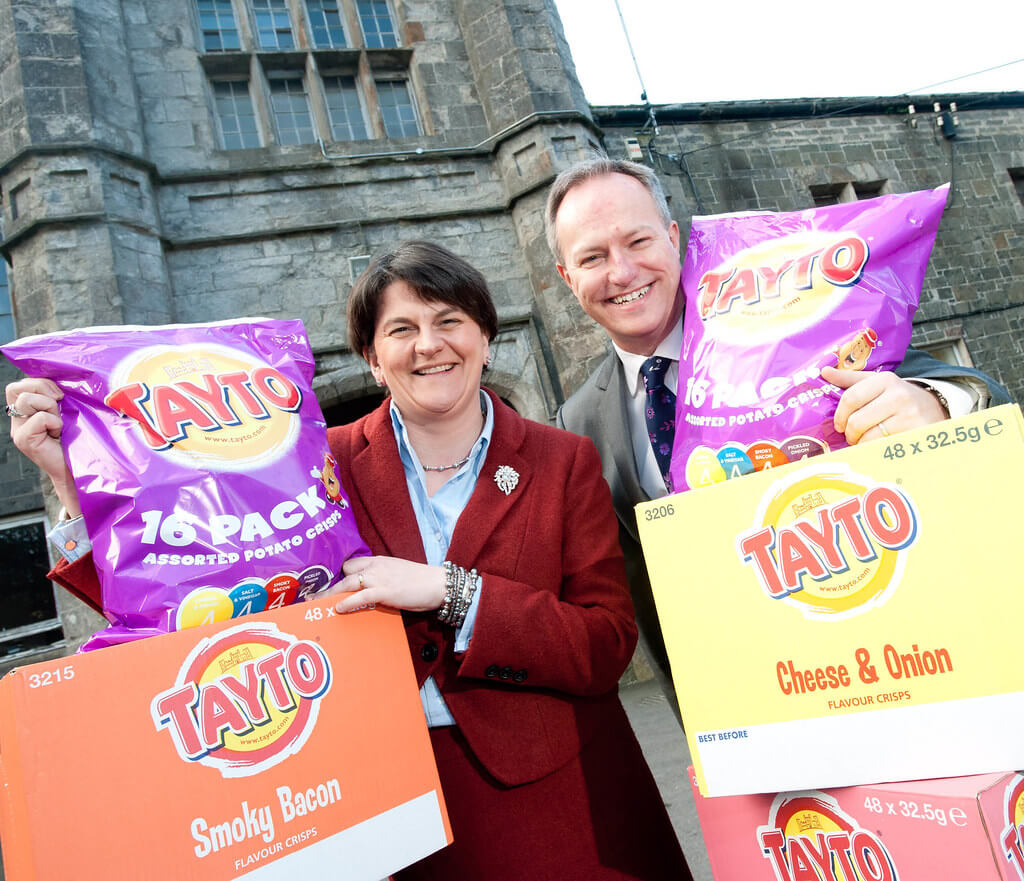
Meanwhile, in Northern Ireland, a different Tayto empire operates from the stunning Tandragee Castle in County Armagh. Still family-owned through Tayto Group Limited, this version of Tayto features its own distinct Mr. Tayto character, sporting a yellow jacket. The Northern Irish Tayto has grown to become the largest crisps and snack manufacturer in Northern Ireland.
The separation goes beyond mere ownership. Each company owns the Tayto trademark in their respective territories and cannot sell their products under the Tayto name in the other’s region. This has led to interesting marketing challenges and occasional confusion among tourists and locals alike who cross the border.
Despite sharing the same name and similar branding concepts, the two Taytos have developed distinct identities. They maintain different recipes, flavor profiles, and packaging designs. Local consumers often engage in spirited debates about which version tastes better, with loyalty often falling along geographical lines.
This division has created a unique phenomenon where crossing the Irish border means encountering a different version of what appears to be the same brand. It’s a situation that continues to intrigue visitors to Ireland and serves as a tangible example of how political boundaries can influence brand identity and consumer culture.
The tale of the two Taytos reflects a larger story about Ireland’s complex political history and its impact on business and daily life. While other companies might see such a division as problematic, both Tayto companies have thrived in their respective markets, each maintaining strong customer loyalty and cultural significance.
Today, both versions of Tayto remain beloved institutions in their respective territories, with each Mr. Tayto serving as a cultural icon. The situation stands as one of the most interesting quirks of Irish business history, demonstrating how political divisions can create parallel versions of the same brand while maintaining successful, independent operations.
As Ireland continues to evolve, the Two Taytos phenomenon remains a fascinating example of how historical circumstances can shape business landscapes, creating unique market situations that reflect broader political and social realities. It’s a reminder that sometimes the most interesting business stories come not from competition between different brands, but from the curious existence of two versions of the same one.

Author: jonathan
Jonathan is the publisher of Irishtopia.net, Anglotopia.net, and Londontopia.net. He's passionate about travel and learning about other cultures. He's been to Ireland several times, and uses his travel expertise for Irishtopia!