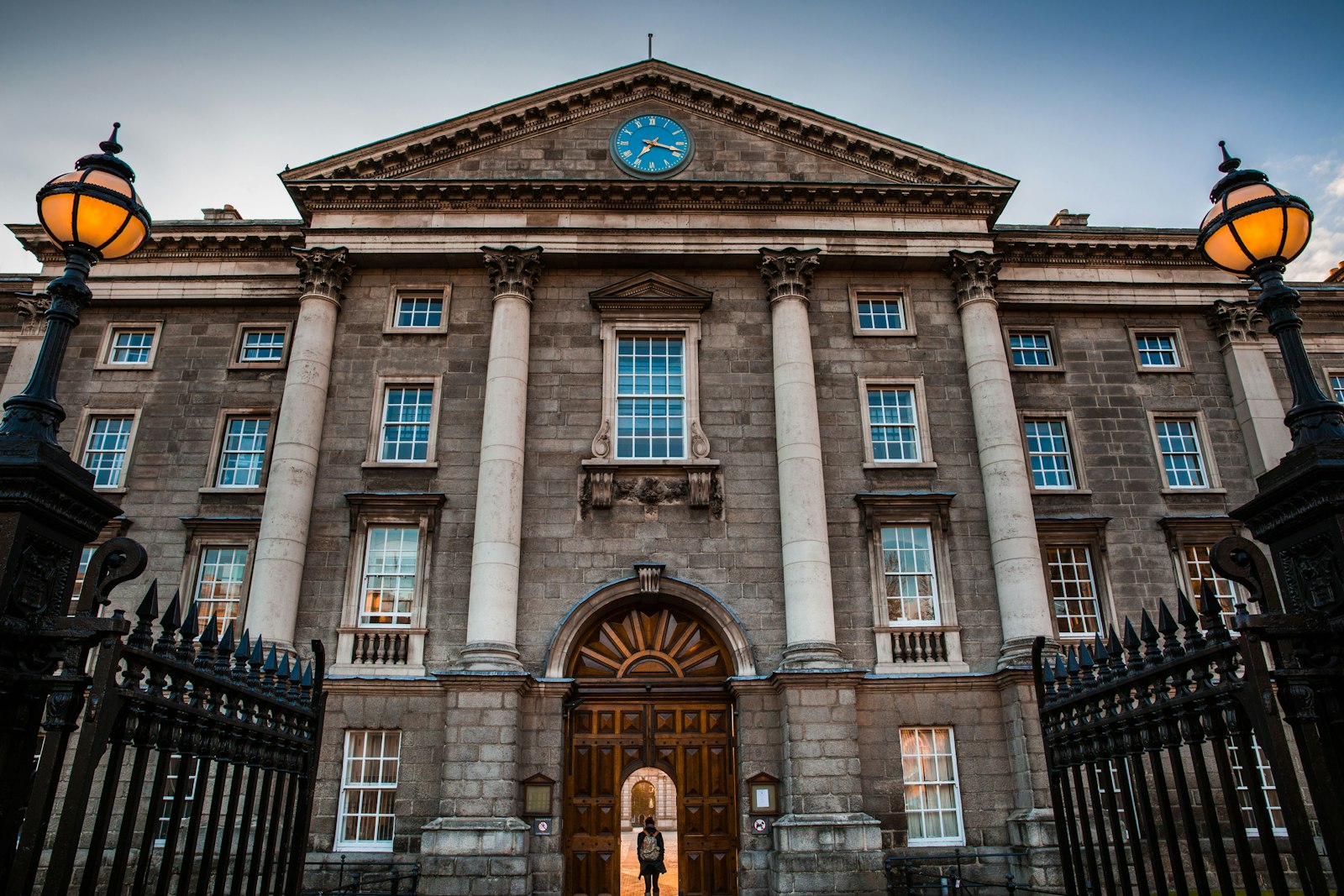
Photo by Stephen Bergin on Unsplash
Across Irish jewelry, on book covers, in tattoos and decorative art, certain symbols appear again and again: the Trinity Knot, the Celtic Cross, the Triquetra, intricate interlacing patterns, and endless knots. These symbols have become so associated with Irish identity and Celtic heritage that they appear on everything from tourist merchandise to serious spiritual practices. Yet the meanings attributed to these symbols, and even their historical authenticity, are often quite different from popular assumptions. Understanding Celtic symbols requires looking past contemporary commercialization and tourist marketing to understand what these symbols actually meant in ancient and medieval Celtic contexts, and how they’ve been reinterpreted and repurposed in contemporary culture.
The study of Celtic symbols is complicated by the fact that much of our knowledge comes from fragmentary historical sources, by the fact that meanings have been substantially reinterpreted and reimagined in modern times, and by the fact that contemporary people often project their own spiritual meanings onto ancient symbols. Yet understanding the actual history and meaning of Celtic symbols offers insight into Celtic culture, into medieval Irish Christianity, and into how symbols gain meaning and power through use and interpretation.
For Americans interested in Irish heritage, engagement with Celtic symbols—whether through wearing them, displaying them, or simply understanding them—offers a way of connecting to Irish tradition. Understanding what these symbols actually meant (rather than what contemporary interpretations claim they mean) deepens appreciation and respect for the traditions they represent.
The Trinity Knot: Ancient Symbol and Modern Interpretation
Perhaps the most iconic of Celtic symbols in contemporary usage is the Trinity Knot (also called the Triquetra or Trefoil Knot). The symbol consists of three interlocking loops or points forming a continuous, unbroken line, creating a triangular or knotted appearance. In contemporary usage, the Trinity Knot is almost universally associated with the Christian Trinity (the Father, Son, and Holy Spirit), and is understood as representing the unity of three elements.
The history of the Trinity Knot is more complicated than this straightforward interpretation suggests. The three-pointed knot design appears in various forms in ancient art, including Celtic art, but also in Germanic, Norse, and other ancient European traditions. The specific design we recognize as the Trinity Knot appears in medieval Irish manuscripts and illuminated texts, particularly those of Christian origin (such as the Book of Kells and other illuminated manuscripts). These manuscripts, created by Christian monks, often integrated Celtic artistic traditions with Christian symbolism.
The association of the Trinity Knot with Christian Trinity is likely a medieval Christian reinterpretation of an older Celtic symbol. Pre-Christian Celtic art featured three-pointed designs and circular knots, and these were reinterpreted by Christian monks who incorporated them into Christian manuscripts and religious contexts with Christian meanings. Whether the pre-Christian three-pointed design had spiritual significance in pagan Celtic religion is unclear—it might have represented the sacred number three, which held significance in Celtic belief, or it might have simply been an aesthetically pleasing design that the Christian monks later reinterpreted through a Christian lens.
In modern practice, the Trinity Knot is worn and used in multiple contexts with various meanings:
For Christian practitioners, it represents the Trinity.
For those interested in Irish heritage, it represents connection to Celtic and Irish tradition, whether or not they ascribe religious meaning to it.
For pagan and spiritual practitioners, it might represent the divine feminine (triple goddess), balance, or connection to Celtic spirituality.
For secular users, it’s often simply an aesthetically appealing design associated with Irish and Celtic identity.
What’s important to recognize is that contemporary meanings attributed to the Trinity Knot may bear little relationship to the historical meaning of the symbol. The “original” Celtic meaning (if it had a spiritual meaning at all) is unclear. The Christian medieval meaning was likely about the Trinity. Modern meanings have proliferated and diversified. All of these meanings are real—they matter to the people who hold them—but it’s important to distinguish between historical meaning and contemporary interpretation.
Other Celtic Symbols: History and Contemporary Usage
Beyond the Trinity Knot, numerous other symbols have become associated with Celtic and Irish heritage:
Celtic Cross: The cross with a circle (sometimes called a Celtic cross or Celtic wheel cross) appears prominently in medieval Irish Christian art and on countless stones throughout Ireland. The combination of cross and circle is genuinely medieval and Christian, representing the Christianization of Celtic lands. In contemporary usage, the Celtic cross is one of the most recognizable symbols of Irish and Celtic identity, worn in jewelry and displayed in decorative contexts.
Triquetra or Endless Knot: A symbol of three interlocking triangular shapes (similar to the Trinity Knot but with a different configuration), sometimes understood as representing the infinite or the endless nature of the divine. This symbol appears in some medieval Irish art, though its historical meaning is unclear.
Spiral designs: Celtic spirals—continuous, interlocking spiral patterns—appear in Irish prehistoric art (such as at Newgrange, the ancient megalithic site) and are genuinely ancient. Spirals have been interpreted as representing spiritual evolution, growth, or cycles of time. While spirals are indeed ancient Celtic art, modern spiritual interpretations may not reflect historical Celtic meaning.
Knotwork and interlacing patterns: Celtic knotwork—intricate patterns of lines that interweave and interlock without beginning or end—appears throughout medieval Irish manuscripts and carved stone. The knotwork is genuinely medieval and distinctive to Irish and Celtic artistic tradition. Contemporary interpretations often understand the unbroken lines as representing connection, wholeness, or the interconnected nature of existence.
The Celtic Knot: Often used as a generic term for various knotwork designs, the “Celtic Knot” in contemporary usage refers to any intricate interlaced pattern suggestive of Celtic artistic tradition.
Ogham symbols: The ancient Celtic alphabet Ogham, with each letter associated with a plant or tree, has become the subject of modern spiritual interpretation and divination systems. Contemporary pagans use Ogham letters as spiritual tools, attributing meanings that may or may not reflect historical Celtic understanding.
The Artistic Roots: Where Celtic Symbols Come From
To understand Celtic symbols, one must understand the artistic traditions from which they emerged. Celtic artistic tradition is distinctive and recognizable, characterized by:
Interlacing and knotwork: Celtic art characteristically features complex patterns of lines that interweave and interlock. These patterns are often geometric but can also be organic or representational (incorporating animal or human forms).
Spirals and curved lines: Celtic art frequently employs spiraling patterns, curves, and flowing lines rather than rigid geometric shapes.
Symmetry and balance: Celtic designs often exhibit careful symmetry and balance, with patterns that are visually satisfying and formally sophisticated.
Animal and human forms: Celtic art sometimes incorporates stylized representations of animals, humans, or hybrid creatures, often integrated into larger patterns.
This distinctive artistic tradition appears in various media throughout the Celtic world and time periods:
Metal work: Celtic metalwork (including torcs, brooches, and other objects) features characteristic Celtic designs, demonstrating that this was a highly developed and valued artistic tradition.
Stone carving: Celtic stone crosses, carved stones, and other monuments display distinctive Celtic artistic traditions.
Manuscript illumination: The most famous examples of Celtic artistic tradition appear in medieval illuminated manuscripts like the Book of Kells, the Book of Durrow, and other religious manuscripts created by Irish monks. These manuscripts brilliantly demonstrate the sophistication and complexity of Celtic artistic tradition.
Textile and embroidery: Evidence suggests that Celtic traditions appeared in textiles as well, though fewer examples have survived.
The artistic sophistication of Celtic design demonstrates that the Celts had a highly developed aesthetic sensibility and a distinctive approach to visual art. The designs are not primitive or simple but rather complex, sophisticated, and formally accomplished.
Medieval Christianity and Celtic Symbols: The Integration
One of the most significant moments in the history of Celtic symbols was the integration of Celtic artistic tradition with Christian religious expression during the medieval period, particularly in Ireland. When Christianity came to Ireland, rather than completely suppressing Celtic artistic traditions, Christian monks integrated Celtic designs into religious manuscripts and Christian contexts.
The Book of Kells (created around 800 CE) is perhaps the most famous example of this integration. This illuminated manuscript, created by Irish monks to honor the Gospel of Saint Matthew, brilliantly combines Christian religious content with distinctive Celtic artistic traditions. The pages feature intricate Celtic interlacing patterns, spiral designs, and knotwork alongside Gospel text and Christian religious imagery. This integration suggests that Christian authority in medieval Ireland was willing to embrace and incorporate Celtic artistic traditions as vehicles for Christian expression.
This integration represents neither pure continuity from pre-Christian Celtic religion (the Christian monks deliberately reinterpreted the art for Christian purposes) nor complete suppression of Celtic tradition (the monks preserved and developed Celtic artistic forms). Rather, it represents a creative synthesis where pre-Christian artistic traditions were recontextualized and reinterpreted for Christian religious purposes.
The Modern Revival: Romantic Nationalism and Spiritual Interpretation
In the 18th and 19th centuries, as European cultures became interested in folk traditions and national identity, Irish and Celtic symbols were revived and reinterpreted. The Romantic movement’s interest in nature, emotion, and authenticity led to increased interest in Celtic culture and history. Irish nationalists, seeking to affirm Irish cultural identity distinct from English/British identity, drew heavily on Celtic symbols and traditions.
This period saw a significant reinterpretation of Celtic symbols. Symbols that had been forgotten or neglected were rediscovered. New meanings were attributed to ancient designs. Contemporary artists created work in “Celtic style,” mimicking ancient artistic traditions but often creating new designs rather than simply reproducing historical ones.
This revival was important for Irish cultural and political identity. Celtic symbols became markers of Irishness, ways of asserting Irish cultural distinctiveness. Over time, Celtic symbols became so associated with Irish national identity that they became defining elements of how Irish culture was understood and expressed.
Contemporary Spiritual Interpretation: New Meanings for Ancient Symbols
In the late 20th century, the rise of contemporary paganism, Wicca, and broader spiritual movements led to significant new interpretations of Celtic symbols. Modern pagans, seeking to reconstruct or reimagine ancient Celtic religious practices, drew heavily on Celtic symbols and attributed spiritual meanings to them.
Modern pagan interpretation of Celtic symbols often emphasizes:
The sacred nature of the symbols: Symbols are understood as having spiritual power, as being channels for divine energy or as focal points for spiritual practice.
Connection to nature and the cycles: Symbols are understood as representing natural cycles, seasons, and the divine in nature.
The divine feminine: Symbols with three points are often interpreted as representing the triple goddess (maiden, mother, crone), a figure central to modern pagan theology but of uncertain historical basis in Celtic religion.
Wholeness and interconnection: Symbols representing continuity and interlinking are understood as representing the interconnected nature of existence and the unity of all things.
While these modern spiritual interpretations are meaningful to practitioners and represent sincere spiritual engagement, they should be distinguished from historical Celtic meanings. Modern practitioners are creating new meanings for ancient symbols rather than recovering historical meanings. This isn’t necessarily problematic—symbols can have multiple meanings, and contemporary meaning-making is valid—but clarity about the distinction between historical and contemporary interpretation is important.
The Commercialization: Symbols and Tourism
In contemporary times, Celtic symbols have become heavily commercialized. Tourist shops in Ireland and elsewhere sell Celtic-symbol jewelry, clothing, home décor, and merchandise. Publishers create numerous books about Celtic symbols, often making claims about meanings that are speculative or invented. Contemporary artists create work inspired by Celtic traditions. The symbols have become markers of “Irishness” that are marketed internationally.
This commercialization has both positive and negative aspects:
Positively, commercialization has made Celtic symbols widely visible and has helped maintain interest in Irish and Celtic tradition. It has supported artists and craftspeople creating work in Celtic tradition. It has made Celtic heritage accessible and appealing to broad audiences.
Negatively, commercialization has often led to oversimplification of meaning, to invented or speculative interpretations presented as historical fact, to the flattening of complex traditions into simple decorative symbols, and to the appropriation of cultural symbols by those with little genuine connection to Irish or Celtic heritage.
The proliferation of books claiming definitive meanings for Celtic symbols—meanings that are often invented or highly speculative—is a significant problem. Readers may assume they’re learning historical truth when they’re actually learning contemporary invented interpretations. Critical engagement with sources and awareness of the difference between historical evidence and speculative interpretation is important.
What We Actually Know: The Limits of Historical Knowledge
One important recognition is how limited our actual historical knowledge of Celtic symbols and their meanings is. Much of what we would like to know about Celtic pre-Christian religion and symbolism is simply not documented. The Celts had no written tradition for most of their history (though they eventually adopted writing). Our knowledge comes from:
Archaeological artifacts: Objects that have survived, which we can examine, but about which we can only speculate regarding meaning.
Classical Greek and Roman accounts: Written by outsiders who may not have fully understood Celtic culture or may have had biases.
Medieval Irish Christian texts: Written long after Christianization, sometimes preserving memories of pre-Christian traditions but filtered through Christian interpretation.
Folklore and folk tradition: Preserved through oral transmission, but of uncertain historical accuracy and subject to modification over time.
Given these limitations, claims about what specific Celtic symbols “originally meant” should be made cautiously. We can observe that certain designs appear in Celtic art, we can note that they persisted into the medieval period, we can see how they were reinterpreted for Christian purposes. But definitive statements about pre-Christian Celtic spiritual meanings are often speculative.
Conclusion: Symbols as Living Meaning-Making
Celtic symbols matter not because of their historical meanings (which are often unclear or lost) but because they carry meaning for contemporary people. When someone wears a Trinity Knot, that symbol carries meaning whether they understand it as representing Christian Trinity, Celtic heritage, spiritual wholeness, or simply Irish identity. The meaning is real because the person has invested it with meaning.
What’s important is approaching symbols with intellectual honesty: recognizing what we actually know historically, distinguishing between historical evidence and contemporary interpretation, and being honest about whether meanings are historical or contemporary. We can appreciate Celtic symbols, can wear them, can find them spiritually meaningful, can use them in spiritual practice—but we should do so with awareness of what we actually know and don’t know about their history and original meanings.
Celtic symbols represent a bridge between past and present, between historical tradition and contemporary culture. Understanding them deeply means understanding both what they meant historically (insofar as we can determine) and what they mean for contemporary people. In that doubled understanding—respecting the historical tradition while honoring contemporary meaning-making—we engage most fully and honestly with these distinctive and beautiful symbols.

Author: jonathan
Jonathan is the publisher of Irishtopia.net, Anglotopia.net, and Londontopia.net. He's passionate about travel and learning about other cultures. He's been to Ireland several times, and uses his travel expertise for Irishtopia!