
Photo by Marina Nazina on Unsplash
On December 26th, the day after Christmas, in certain corners of Ireland and Ireland-connected communities around the world, a peculiar and ancient tradition continues: the hunting and procession of the wren. Young people, traditionally dressed in straw and disguise, carry a dead wren (or in modern versions, a symbolic wren) through their communities, singing, playing music, and collecting money. This tradition, called “Wren Day” or “St. Stephen’s Day,” is one of the oldest and most distinctive of Irish customs, and its origins are shrouded in mystery and ancient practice.
The Wren Day procession is a tradition that seems strange and unsettling to those unfamiliar with it—the hunting of a small bird, its display, the collection of money—yet it represents layers of meaning stretching back to pre-Christian Celtic practices, adapted through Christianity, and persisting into modern times. Understanding Wren Day requires examining ancient ritual sacrifice, the relationship between humans and animals, the role of young people in maintaining tradition, and how communities mark important thresholds in the year.
For Americans interested in Irish culture and tradition, Wren Day offers a window into practices that have persisted for centuries, that reveal pre-Christian meanings beneath Christian frameworks, and that demonstrate how communities maintain distinctive identity through distinctive practices. The tradition is unusual enough to capture attention, yet meaningful enough to have survived centuries of change and modernization.
The Tradition: How Wren Day Works
The basic structure of the Wren Day procession has remained relatively consistent over centuries, though specific practices vary by region and have evolved over time. Traditionally, the procession follows this pattern:
Young people, typically boys or young men (though increasingly, girls and women participate), catch a wren or obtain one through hunting. In modern versions, particularly in urban areas or where bird protection laws prevent actual hunting, the wren is symbolic—a wren effigy, a picture, or even just the reference to a wren. The wren is distinctive: it’s a very small bird, the smallest common bird in Ireland, making it an unusual choice for hunting.
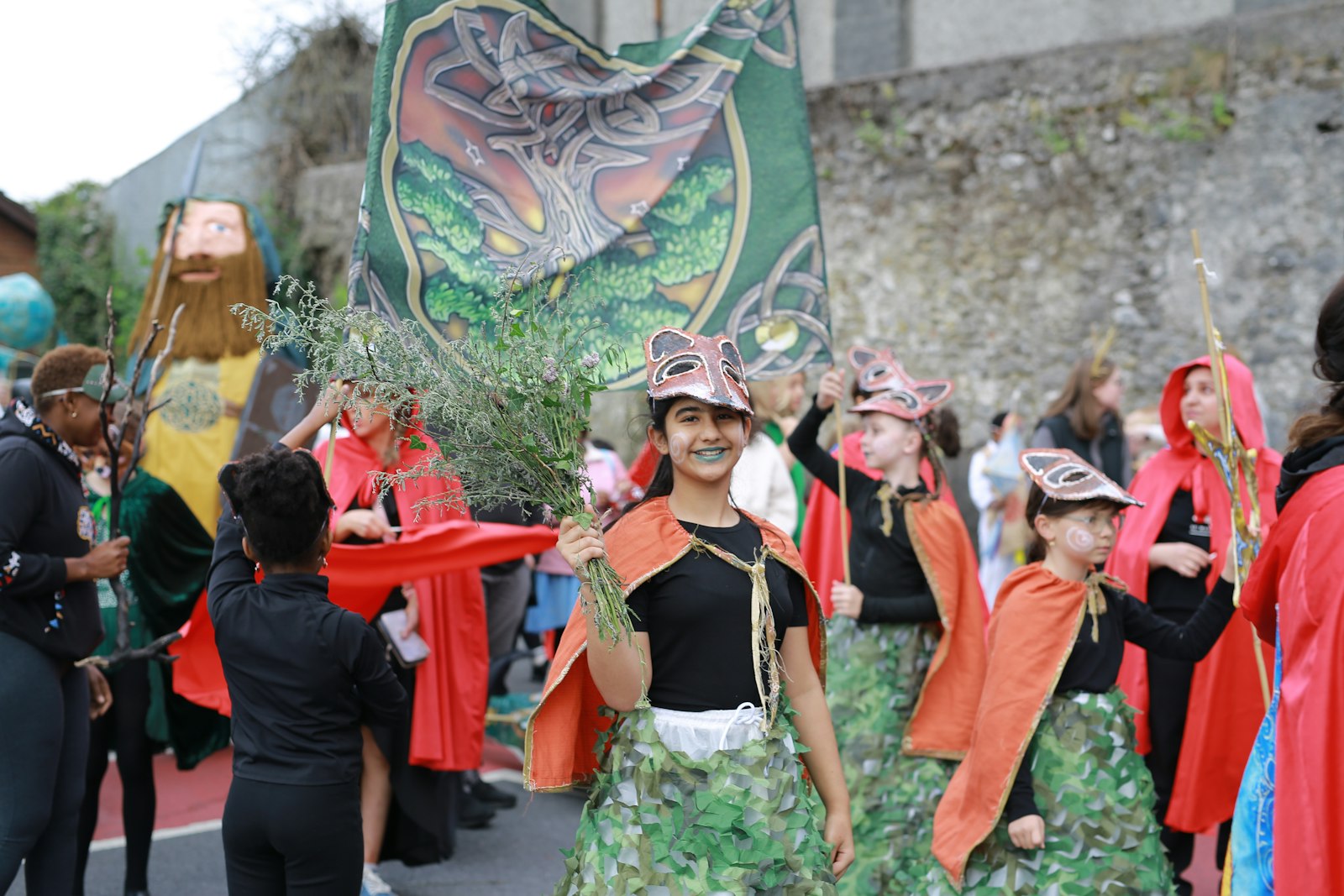
The young people dress in costume, often wearing straw, wearing masks or having faces covered, wearing ragged clothing or mismatched attire. The costumes serve multiple purposes: they mark the participants as being in a liminal state, between normal social identity and ritual participation. They also provide anonymity, allowing young people to behave in ways they might not otherwise (though this is carefully bounded by tradition).
The costumed group, led by the wren (or its symbolic representation) and accompanied by musicians playing traditional instruments, processes through the community. They sing traditional songs, particularly “The Wren Song,” and collect money from households. People give money, traditionally, in exchange for the blessing brought by the wren’s presence and for the entertainment provided by the singers and musicians.
The procession is festive and celebratory, with music, singing, and social interaction. The wren-bearers stop at houses, perform, and receive donations. The collected money is typically used for community purposes—a feast, a party, or increasingly, charitable donations.
In some traditional versions, the wren, having been carried in procession, is buried in the earth or given to the elements in some ceremonial way, suggesting an old ritual of sacrifice or return to nature. In modern versions, particularly where actual wren-hunting is less common, the wren is entirely symbolic and not actually harmed.
The History: Origins and Evolution
The origins of Wren Day are debated by scholars, but several theories exist, each suggesting different layers of meaning:
Pre-Christian ritual sacrifice theory: Some scholars argue that Wren Day represents a survival of pre-Christian ritual practices involving the sacrifice of small animals as part of year-end or threshold rituals. The wren, being small, might have been used in ceremonies related to the turning of the year or to the beginning of winter. The practice would have carried cosmological significance, with the death and ceremonial treatment of the wren understood as part of maintaining cosmic order and ensuring the year’s continuation.
Christianization and Saint Stephen theory: Others argue that Wren Day was deliberately created or shaped by Christianization. St. Stephen’s Day (December 26th) commemorates Saint Stephen, the first Christian martyr. Some versions of the legend of Saint Stephen involve birds—possibly the wren—either playing a role in his capture or being associated with him through folk etymology or legend. One version suggests that Stephen was betrayed by a wren giving away his hiding place. In this theory, Wren Day developed as a way of Christianizing a pagan practice, reframing the hunting of the wren through Christian martyr narrative.
Celtic calendar threshold theory: Some scholars connect Wren Day to the Celtic calendar’s important threshold. December 26th comes just after Christmas but also marks a turning point in the year’s darkness (the winter solstice has passed, and days begin to lengthen). This threshold might have had significance in pre-Christian Celtic practice that was adapted into Wren Day. The hunting of the wren could represent the hunting out of old year or the ritual transition between years.
Fertility and fortune theory: Another theory suggests that the wren was understood as carrying the year’s luck or misfortune, and that hunting and displaying the wren was a way of ritually managing the community’s fortune. By possessing the wren, carrying it, and then disposing of it, the community might be understood as controlling fate or fortune.
What’s most likely is that Wren Day involves multiple layers: it probably has pre-Christian roots, was adapted and reinterpreted through Christianization, and has accumulated meanings and practices over centuries. Rather than having a single, definitive origin, Wren Day represents the complex history of Irish tradition—how pagan practices survive, adapt, become Christianized, and persist across centuries.
Historical Documentation: What the Written Record Shows
Written references to Wren Day appear in Irish and English sources from the medieval period onward. English colonizers found the practice strange and disturbing and documented it in unfamiliar terms, often expressing disapproval. These colonial accounts suggest that Wren Day was already well-established and widespread by the medieval period, indicating that its origins were much older.
Medieval Irish texts make references to wren hunting and to the significance of wrens in Irish tradition and mythology. In Irish mythology and folklore, wrens occasionally appear, and they’re sometimes associated with magic, with the otherworldly, or with divine communication. This suggests that wrens held cultural significance beyond simply being small birds.
By the medieval period, accounts suggest that Wren Day (St. Stephen’s Day) was celebrated with wren-hunting as part of the celebration. The pattern of young people processing, collecting money, and engaging in the hunting suggests that the tradition was already established in its basic form. Over centuries, specific practices evolved and changed, but the fundamental pattern—Wren Day hunting procession—remained consistent.
In the 19th and 20th centuries, Wren Day was documented in folklore collections and ethnographic records. These sources provide detailed descriptions of the tradition as practiced in various regions of Ireland. The practice was most common and most developed in rural areas and particularly in areas of strong Irish language and cultural preservation. Urban areas and areas more influenced by English cultural practices saw Wren Day become less common or disappear.
Regional Variations: How Wren Day Differs Across Ireland
Like many Irish traditions, Wren Day has significant regional variations. Different areas of Ireland practiced Wren Day with different emphases, different songs, different specific rituals:
In some regions, the focus was strongly on wren-hunting as an actual hunt, with young hunters pursuing wrens through hedges and fields. In other regions, the focus was more on the procession and music than on the hunting itself.
Different regions had their own versions of “The Wren Song,” the traditional song sung by the processionalists. These versions varied in lyrics, melody, and emphasis, though all contained the core reference to the wren, to the hunt, and to the collection of money.
Some regions had elaborate costumes and masks; others had simpler disguises. Some regions saw the tradition as primarily a young people’s activity; others had more community-wide participation.
In some areas, particularly in the west of Ireland and in Irish-speaking regions, Wren Day remained more central to the year’s celebration and more elaborate in its practice. In areas more influenced by English culture or urbanized areas, Wren Day became less significant or disappeared entirely.
These regional variations reflect broader patterns of Irish cultural diversity. While there are characteristics that are recognizably Irish across the island, local and regional variation is significant and important. Wren Day tradition illustrates this principle: it’s recognizable as the same tradition across regions, but specific practice varies considerably.
Modern Practice: Wren Day Today
In contemporary Ireland, Wren Day remains a recognized tradition, though it’s practiced differently than historically and with varying degrees of seriousness:
In rural areas, particularly in the west of Ireland and in areas with strong cultural consciousness, Wren Day processions still take place. Young people dress in costumes, process through communities, sing, and collect money. These modern processions often maintain much of the traditional structure, though with adaptations for contemporary life. Actual wren-hunting has become rare, particularly due to bird protection laws and increased environmental consciousness.
In urban areas, Wren Day has become less common, though some communities maintain the tradition. Dublin and other cities occasionally see Wren Day processions, particularly organized by cultural organizations or community groups interested in maintaining Irish traditions.
The practice of collecting money for charity has become increasingly prominent. Rather than money being used for a feast for the participants, it’s now more commonly donated to charitable organizations, giving the tradition a contemporary social justice dimension.
Modern Wren Day celebrations often coexist with other St. Stephen’s Day activities: sports events (particularly hurling matches, which are traditionally played on St. Stephen’s Day), visiting family and friends, and continuing the Christmas celebration. Wren Day has become one element of a broader day’s celebration rather than the singular focus.
The tradition has also become increasingly theatrical and tourist-focused in some contexts. In areas where tourists are present, Wren Day processions might be organized specifically to display the tradition to visitors, with perhaps less genuine community participation than historically. This commercialization and touristic framing can dilute the tradition’s meaning while also helping to preserve and keep it visible.
The Question of Animal Welfare: Modern Ethical Concerns
One of the most significant changes in Wren Day practice has been the move away from actually hunting and killing wrens. For much of Wren Day’s history, the tradition involved genuinely hunting a wren and having an actual dead bird. In modern practice, particularly in areas with animal protection laws and increased ethical concern for animals, the wren is increasingly symbolic rather than real.
This shift raises interesting questions about tradition and ethics. Should traditions be maintained as they were historically practiced, even if those practices now seem harmful? Or should traditions evolve to reflect contemporary values? Different people answer these questions differently.
From an animal welfare perspective, the move away from actual wren-hunting is positive. Wrens are protected birds, and the slaughter of a wren for tradition seems unjustifiable by modern standards. From a traditionalist perspective, the shift to a symbolic wren represents an adaptation that allows the core tradition to continue while acknowledging modern ethical concerns.
The shift from actual to symbolic wren represents the kind of evolution that many traditions undergo as societies change. The core elements of the tradition—the procession, the music, the young people’s participation, the collection of money, the celebration of the threshold between years—remain, while the specific element that involved animal killing has been replaced by symbol.
The Cultural Significance: What Wren Day Reveals About Irish Culture
Wren Day reveals several important aspects of Irish culture and tradition:
The persistence of ancient practices: Wren Day represents the remarkable persistence of practices that likely have pre-Christian origins. In a country that has experienced colonization, religious conversion, modernization, and cultural pressure to conform to English norms, Wren Day has survived in recognizable form. This speaks to the cultural resilience of Irish tradition.
The role of young people in maintaining tradition: Wren Day is specifically a young people’s tradition. The coordination and participation of young people in the procession suggests that culture is actively passed from generation to generation, with young people playing a crucial role in maintaining tradition. This is not passive heritage but active participation.
The integration of sacred and secular, ancient and Christian: Wren Day exemplifies how Irish tradition has integrated pre-Christian and Christian elements. Whether the original practice was pagan and Christianized, or was created in the Christianization process, the result is a tradition that carries both ancient resonance and Christian association.
The value of community gathering and celebration: Wren Day focuses the community on a specific day and a specific tradition. The gathering, the music, the procession, the collection—these are all communal activities that reinforce community bonds and identity.
The distinctiveness of Irish culture: Wren Day is distinctively Irish. It’s not practiced in this form in other cultures. It marks Irish identity and differentiates Irish tradition from English or broader European practice.
Conclusion: A Threshold Marked by Tradition
Wren Day represents one of the most distinctive and most ancient of Irish traditions, a practice that persists despite centuries of pressure to abandon it or conform to other cultural norms. The hunting and procession of the wren on St. Stephen’s Day marks a threshold in the year, involves young people in the active transmission of culture, combines ancient and Christian elements, and creates occasions for community gathering and celebration.
For Americans interested in Irish heritage, Wren Day offers a tradition that is distinctively Irish, that carries ancient resonance, and that continues to be practiced today. While the specific form has evolved, and while modern practice differs significantly from historical practice in some ways, the core elements of the tradition persist: the wren, the procession, the music, the community involvement, the marking of the year’s threshold.
Whether you’re interested in Irish traditions, in the history of cultural practices, in the relationship between humans and animals, or in how communities maintain distinctive identity through distinctive practices, Wren Day offers rich material for thought and understanding. And if you ever find yourself in Ireland or in an Irish community on December 26th, seeking out a Wren Day procession might give you the chance to witness and participate in a tradition that stretches back centuries, a tradition that communities have chosen, year after year, to continue and pass on to the next generation.

Author: jonathan
Jonathan is the publisher of Irishtopia.net, Anglotopia.net, and Londontopia.net. He's passionate about travel and learning about other cultures. He's been to Ireland several times, and uses his travel expertise for Irishtopia!