
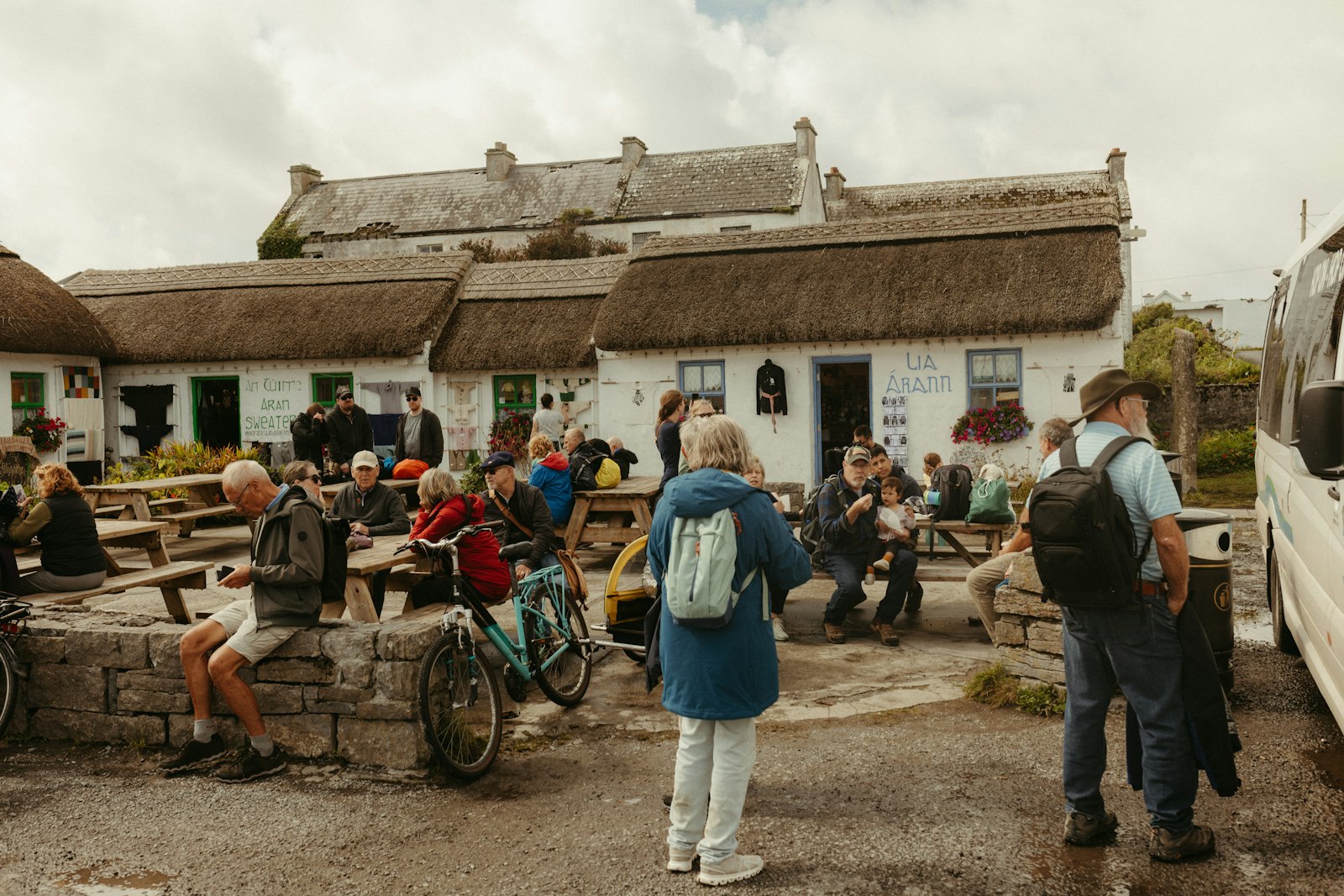
Photo by Jonathan Borba on Unsplash
Throughout rural Ireland, in small workshops and family studios, artisans continue to practice crafts that have been maintained and developed over generations. From the distinctive weaving of Irish tweed to the hand-shaping of clay into pottery, from the creation of intricate metalwork to the making of traditional furniture, these crafts represent not just historical tradition but living practice. Irish artisans today continue work that connects them to centuries of craft tradition, maintaining techniques and standards that were developed long ago while adapting to contemporary contexts and markets.
Irish traditional crafts are not museum pieces or historical artifacts but rather living traditions, practiced by skilled artisans who understand their work as both honoring the past and creating for the present. These crafts represent the application of skill, aesthetic sensibility, and deep knowledge to the creation of beautiful and useful objects. They also represent economic livelihood for artisans and communities, sources of cultural pride, and ways of maintaining connection to heritage and identity.
For Americans interested in Irish culture and heritage, understanding traditional Irish crafts offers insight into how skill is developed and maintained, how tradition persists in contemporary contexts, and why certain objects—a piece of Irish tweed, a handmade ceramic bowl, a piece of jewelry—carry significance beyond their material form. These objects embody the hands, the knowledge, the care of the people who made them, and they connect us to Irish culture and history in tangible ways.
Irish Tweed: Weaving Tradition and Contemporary Practice
Irish tweed is perhaps the most famous of Irish traditional crafts, recognized internationally for its distinctive quality, durability, and aesthetic appeal. The term “tweed” generally refers to a sturdy, traditionally woven woolen fabric, characterized by a rough or nubby texture, complex color patterns created through multi-colored yarns, and distinctive visual character that immediately identifies it as quality fabric.
The history of Irish tweed-making is complex and somewhat debated by historians. Tweed-making in Ireland likely evolved from earlier wool-working traditions, influenced by both Irish tradition and by techniques brought from other regions (particularly Scotland, which is also famous for tweed production). What’s clear is that by the 19th century, tweed-making had become established in Ireland, particularly in rural areas where sheep-raising was common and where women’s weaving work provided crucial income.
Traditional Irish tweed-making is labor-intensive and involves multiple stages: sheep-raising and shearing, carding and preparing the wool, spinning yarn, dyeing, and finally, weaving on hand looms or traditional mechanical looms. The dyeing process is particularly important—traditionally, tweed was dyed using natural dyes from plants (heathers, lichens, bark) or later, synthetic dyes. The choice of colors and the way they’re combined in the weaving create the distinctive patterns and visual character of the finished tweed.
Different regions of Ireland became known for distinctive tweed styles. Donegal tweed, produced in County Donegal, is particularly famous for its distinctive nubby texture and the way colored yarns are combined to create complex patterns. The characteristic “Donegal nub”—small flecks of contrasting color in the fabric—became a distinctive feature of Donegal tweed that is valued by those who appreciate quality textile.
Traditional Irish tweed-making was almost entirely a female activity. Women, often working in their homes or in small weaving communities, did the majority of the actual weaving work, though men might be involved in shearing, carding, or dyeing. For rural Irish women, tweed-weaving provided crucial income and maintained cultural tradition.
By the 20th century, tweed-making in Ireland was facing challenges from industrial production and from changing economic conditions. The rise of industrial weaving meant that hand-woven tweed could not compete on price. Many traditional weaving communities declined. However, growing recognition of the quality and distinctive character of hand-woven tweed, combined with cultural interest in preserving Irish heritage, has meant that traditional tweed-making persists.
Today, Irish tweed continues to be produced, with several important weaving centers remaining active. Organizations like the Donegal Tweed Heritage Centre work to preserve and promote traditional tweed-making, to educate visitors about the craft, and to support contemporary weavers. Hand-woven Irish tweed remains highly valued by those who appreciate quality and craftsmanship, and continues to be used for high-end garments and home furnishings.
Irish Pottery: Clay and Tradition
Irish pottery represents another important traditional craft, with a long history and a distinctive aesthetic character. Irish pottery varies significantly by region and by maker, but certain characteristics are widely associated with Irish ceramic work: simple, functional forms; subtle earth-tone or dark glazes; often handmade quality evident in irregular edges or variations; integration of traditional Celtic designs or patterns.
The history of pottery-making in Ireland extends back to pre-Christian times, with archaeological evidence of ceramic production dating to ancient periods. However, the pottery tradition that survives and is recognized as distinctively “Irish pottery” largely developed in more recent centuries.
By the 20th century, Irish pottery-making had become somewhat organized around certain centers and certain makers. The Belleek Pottery, established in 1857 in Fermanagh, became one of the most famous Irish potteries, known for distinctively styled ceramic ware featuring shamrock and Celtic design elements, often with an ivory or cream glaze. Belleek became internationally recognized and remains one of the most famous Irish ceramic brands.
Other important Irish pottery traditions include:
Craic Pottery and various studio pottery movements that emerged particularly in the late 20th century, with individual artist-potters creating distinctive work based on Irish tradition but expressing individual artistic vision.
Functional pottery created in small studios throughout Ireland, emphasizing handmade quality and connection to clay and traditional forms.
Contemporary artistic pottery that draws on Irish tradition while pushing boundaries and creating innovative work.
What characterizes Irish pottery broadly is the emphasis on handcraft, on the visibility of the maker’s hand in the finished object, on connection to clay and traditional forms, and often on the integration of Celtic or Irish cultural motifs. Irish potters often emphasize the relationship between the material (clay), the form, and the maker’s intention.
The tradition of pottery-making in Ireland continues, with both established pottery studios and individual artist-potters creating work. Some pottery is created for functional purposes (dishes, cups, bowls); some is created as art objects. Much Irish pottery is sold to tourists and exported internationally, continuing the tradition of craft as source of economic livelihood.
Other Traditional Crafts: Metalwork, Woodworking, and More
Beyond tweed and pottery, Ireland maintains numerous other traditional craft practices:
Metalwork and jewelry-making has a long history in Ireland, from ancient Celtic metalwork to contemporary jewelry. Irish artisans create work ranging from jewelry incorporating Celtic design motifs to contemporary artistic metalwork. The traditions of combining precious metals, developing distinctive designs, and maintaining high standards of craftsmanship continue.
Woodworking and furniture-making represents another important tradition, with Irish craftspeople creating both functional furniture and decorative wooden objects. Traditional Irish furniture designs are often simple and elegant, emphasizing wood grain and natural beauty rather than elaborate ornamentation.
Weaving and textile arts beyond tweed-making includes various forms of weaving, embroidery, and textile creation. Artists working with fiber continue to develop distinctive work drawing on Irish tradition.
Glasswork is practiced by contemporary Irish artisans, with some creating work drawing on traditional forms and techniques, others creating innovative contemporary glass art. Irish glass has become recognized for its quality and distinctive design.
Leatherwork practiced by Irish craftspeople includes everything from functional leather goods to artistic leather work. Traditional Irish leather craftsmanship is maintained and developed by contemporary artisans.
Woodcarving and other forms of carving represent additional traditional craft practices, with artists creating both decorative and functional objects.
What unites these various crafts is a commitment to handcraft, to developing and maintaining skill, to creating objects of quality and beauty, and to maintaining connection to tradition while allowing for contemporary expression and innovation.
The Craft Tourism Economy: Heritage and Commercial Interests
One significant aspect of traditional Irish crafts in contemporary times is their role in tourism and cultural economy. Tourists visiting Ireland are often interested in purchasing traditional Irish crafts as souvenirs and as ways of connecting to Irish culture. This has created a market for traditional crafts and has provided economic incentive for their continuation.
Some traditional craft practitioners and studios actively market to tourists, offering visitors the opportunity to watch craftspeople at work, to learn about the craft, and to purchase finished objects. This tourism-focused marketing can support the continuation of traditional crafts and can help keep artisans economically viable.
However, the tourism economy also creates potential problems: there’s a risk of authenticity being diluted, of crafts being produced primarily for tourists rather than for genuine cultural or functional purposes, of commercialization degrading the significance of the work. Some traditional craft practitioners deliberately avoid tourism-focused marketing, preferring to focus on creating work for those who genuinely value the craft and the objects produced.
The balance between maintaining cultural authenticity and engaging with commercial markets is one of the ongoing tensions in contemporary Irish craft practice. Many artisans navigate this carefully, maintaining traditional techniques and aesthetic values while also adapting to contemporary market conditions and consumer interests.
Education and Transmission: How Craft Knowledge Persists
A significant concern for traditional Irish crafts is how knowledge is transmitted and how new generations learn the skills. In the past, craft knowledge was transmitted primarily through family or through apprenticeship, with young people learning directly from experienced practitioners.
In contemporary times, traditional craft knowledge is transmitted through:
Family and direct apprenticeship: Some traditional crafts continue to be learned within families, with parents or relatives teaching children the craft. This remains an important transmission method, particularly in areas with established craft traditions.
Formal education: Schools and colleges offer courses in traditional crafts, allowing students to learn from experienced instructors. Organizations like the National Craft Centre provide education in various Irish crafts.
Workshops and classes: Community classes, workshops, and cultural centers offer opportunities for people to learn traditional crafts.
Online and published resources: Contemporary transmission of craft knowledge also increasingly involves written resources, videos, and online instruction.
The transmission of craft knowledge to new generations is important for the continuation of traditional practices. Without active transmission, knowledge is lost and traditions die. Many organizations in Ireland work deliberately to ensure that traditional craft knowledge is preserved and transmitted.
The Contemporary Craft Movement: Tradition and Innovation
Contemporary Irish craft practice is not simply the reproduction of historical forms but rather a living tradition that balances historical knowledge with contemporary expression. Many contemporary Irish artisans create work that:
Honors traditional techniques while developing new forms and expressions.
Draws on Irish cultural motifs and aesthetics while exploring contemporary artistic directions.
Maintains connection to place and material while engaging with global markets and contemporary contexts.
Combines traditional and contemporary approaches, using traditional techniques but sometimes incorporating contemporary technology or approaches.
This contemporary craft movement represents a vital, living tradition rather than a museum-piece preservation of the past. Contemporary Irish craftspeople see themselves as connected to historical tradition but as also pushing that tradition forward and creating work meaningful for contemporary times.
Conclusion: Craft as Culture and Connection
Traditional Irish crafts represent much more than economic production or tourist commodities. They embody knowledge developed over generations, aesthetic sensibilities shaped by culture and place, and commitment to creating objects of quality and beauty. For Irish people, engagement with traditional crafts often represents connection to cultural identity and heritage. For those of Irish descent, purchasing or creating traditional crafts offers ways of connecting to their heritage and maintaining cultural identity.
In a world increasingly dominated by mass production and industrial manufacturing, traditional crafts offer something valuable: objects made by human hands, bearing the marks of the maker’s skill and care, carrying the weight of tradition and cultural meaning. An Irish tweed garment, a piece of handmade pottery, a piece of jewelry crafted in traditional style—these objects offer connection to Ireland, to tradition, to the hands that made them.
For Americans interested in Irish culture, engaging with traditional Irish crafts—whether by purchasing them, learning about them, or attempting to practice them—offers a way of deepening connection to Irish heritage and of supporting the continuation of traditions that carry cultural significance and beauty. The craftspeople of Ireland, maintaining and developing these traditions, deserve recognition and support for their work in keeping these distinctive practices alive.

Author: jonathan
Jonathan is the publisher of Irishtopia.net, Anglotopia.net, and Londontopia.net. He's passionate about travel and learning about other cultures. He's been to Ireland several times, and uses his travel expertise for Irishtopia!