
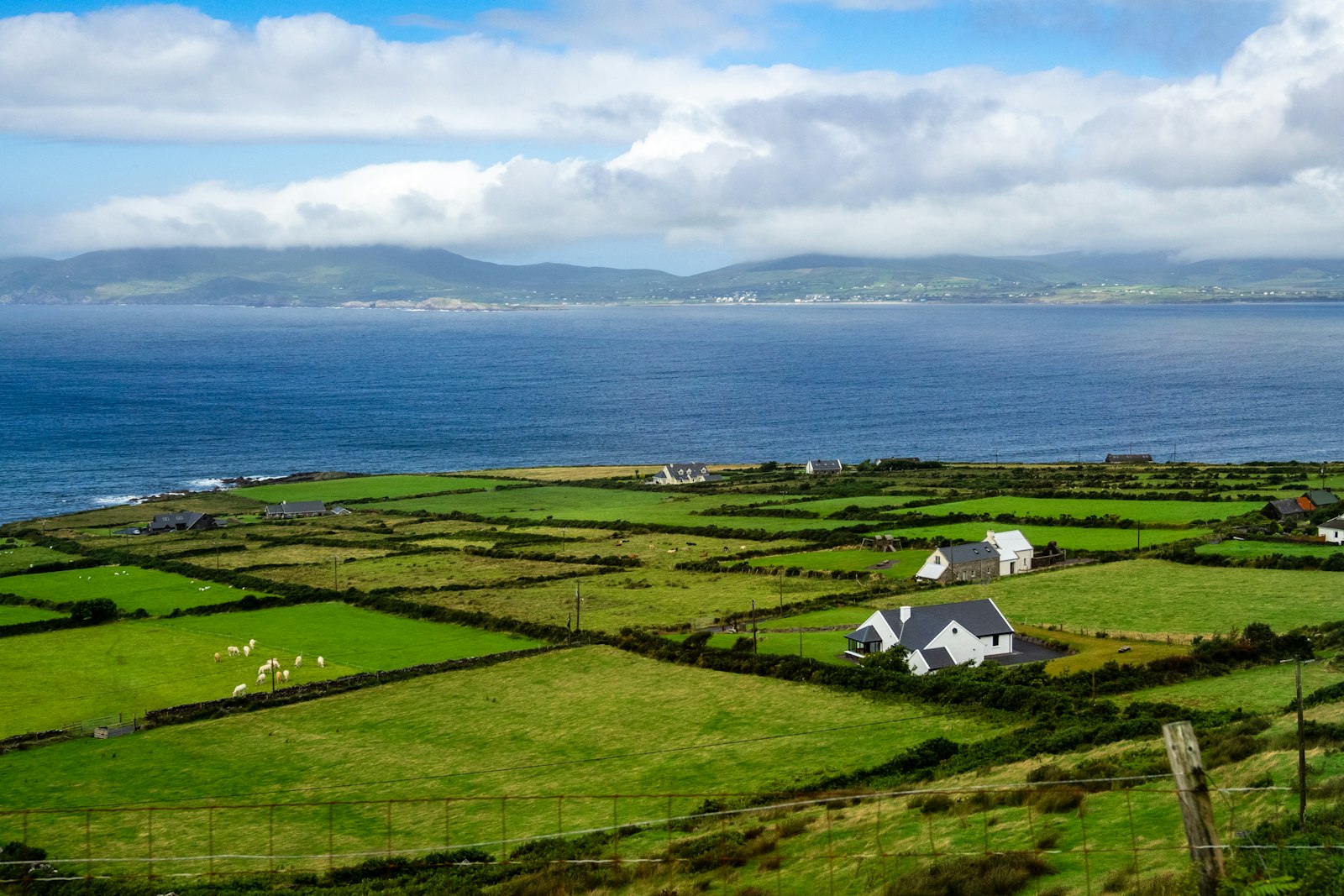
Photo by Andre Ouellet on Unsplash
Introduction
William Butler Yeats (1865-1939) stands as one of the greatest poets writing in the English language. Yet to describe him merely as a poet is to miss the full complexity of this Irish literary giant who was simultaneously artist, political activist, cultural nationalist, mystic, and public intellectual. Yeats helped create Irish literary renaissance, founded the Abbey Theatre, engaged with Irish independence movements, and created poetry of extraordinary power and beauty that remains essential to English-language literature.
For Americans interested in Irish culture, Yeats represents something crucial: the idea that literary and artistic culture are essential to political and national identity, that a poet can be a significant public figure and cultural leader, and that engagement with spirituality and mysticism can inform serious artistic work. Yeats demonstrates that intellectual and spiritual seeking can coexist with political engagement and that cultural nationalism—the assertion of distinctive national culture—can be as important as political independence.
Understanding Yeats requires engaging with his complexity. He was often contradictory—elitist yet committed to Irish cultural revival, spiritual seeker yet influenced by Enlightenment rationalism, early modernist poet who drew on ancient traditions. These contradictions weren’t failures to resolve but productive tensions that generated extraordinary artistic work.
Early Life and Literary Formation
William Butler Yeats was born in 1865 in Dublin to a middle-class family with artistic inclinations. His father was a painter; his mother came from gentry background. Growing up in artistic household with access to cultural resources gave Yeats advantages that shaped his development as artist and intellectual. Yet his childhood also involved significant upheaval—his family moved between Dublin and London, his mother’s invalidism affected family dynamics, his youthful religious doubt marked him as outsider in Catholic Ireland.
Yeats’ early literary formation was influenced by Romantic poets—Byron, Keats, Shelley—whose work emphasized imagination, emotion, and individual vision. Yet he was also influenced by Irish literary traditions and by his encounter with Irish cultural nationalism. As a young man coming of age in the late 19th century, Yeats engaged with Irish cultural revival movements that sought to recover and celebrate distinctive Irish culture.
His early poetry showed these influences. Poems like “The Wanderings of Oisin” drew on Irish mythology while employing Romantic poetic techniques. Yeats was attempting to create a poetry that was simultaneously modern and Irish, that engaged with literary traditions while drawing on Irish cultural sources.
Cultural Nationalism and the Abbey Theatre
A crucial dimension of Yeats’ significance is his role in Irish cultural nationalism. He believed that Irish identity required distinctive cultural expression, that Ireland needed not just political independence but cultural independence—literature, drama, music, visual art that expressed Irish experience and perspective.
In pursuit of this vision, Yeats co-founded the Abbey Theatre, Dublin’s most important theatrical venue. The Abbey produced Irish plays addressing Irish themes, developing Irish dramatic tradition, and creating context for Irish writers to develop as dramatists. Yeats served as director and was involved in selecting plays, managing the theater, and defending its artistic vision.
The Abbey Theatre proved profoundly important to Irish cultural life. It provided venue for new Irish dramatists. It established Irish drama as significant literary form. It became symbol of Irish cultural independence and artistic achievement. While Yeats was one of several founders and directors, his influence on the Abbey’s vision and direction was substantial.
Maud Gonne and Personal Life
Yeats’ personal life was marked by intense romantic passion and longing. His most significant relationship was with Maud Gonne, an Irish nationalist and actress. Yeats’ unrequited love for Maud—she declined his marriage proposals—profoundly affected his emotional life and his poetry. Much of Yeats’ most beautiful love poetry addresses his passion for Maud and his pain at her refusal.
This romantic longing, while personally painful, generated extraordinary poetry. Yeats transformed his emotional suffering into art that transcends the particular circumstances to address universal human experience of desire, loss, and longing. The poems written about Maud Gonne are among his finest work.
Later in life, Yeats married Georgie Hyde-Lees, who shared his interest in spiritualism and mysticism. Their marriage was productive both personally and artistically. They had children together and worked collaboratively on spiritual and artistic projects.
The Modernist Poet: Achieving Mastery
As Yeats moved through middle age, his poetry evolved significantly. Early work, sometimes dismissed as overly aesthetic or decorative, gave way to more austere, complex modernist verse. Collections like “The Wild Swans at Coole” (1919) and “The Tower” (1928) showcased poetry of extraordinary power and complexity.
The shift in Yeats’ poetry wasn’t simple progression from inferior to superior work. Instead, it reflected his evolving artistic vision and his engagement with modernism. His later poetry became more intellectual, more complex syntactically and imagistically, more engaged with difficult philosophical and political questions. Yet it maintained emotional authenticity and connection to Irish experience.
Poems like “The Second Coming,” “Sailing to Byzantium,” and “Among School Children” are remarkable achievements—modernist poetry of great technical sophistication that also achieves emotional and philosophical depth. They address themes of aging, mortality, historical change, and human meaning with power and eloquence.
Political Engagement and Complexity
Yeats’ relationship to Irish political nationalism was complex and sometimes controversial. He was committed to Irish independence and Irish cultural revival, yet he was also skeptical of certain aspects of Irish nationalism. He supported cultural nationalism while sometimes distancing himself from political revolutionaries.
After the 1916 Easter Rising, Yeats initially distanced himself from the rebellion. Yet the British executions of rebels profoundly affected him, and he wrote “Easter 1916,” perhaps the greatest poem about the Rising. The poem both celebrates the rebels’ courage and sacrifice and questions the value of sacrificing lives for political principles. It’s simultaneously nationalist and skeptical about nationalism—a productive tension that characterizes much of Yeats’ political thinking.
His later engagement with Irish politics became more complex. He served as Senator of the Irish Free State, participating in legislative processes. He confronted questions about cultural values, education, and national identity. His political engagement was serious and reflected his belief that intellectuals and artists should participate in public life.
Spiritualism and Mysticism
Throughout his life, Yeats was profoundly interested in spiritualism, mysticism, and occult traditions. He believed that spiritual realities existed beyond material reality and that spiritual knowledge could be accessed through various traditions and practices. This spiritual seeking influenced his poetry and his life choices.
Yeats’ engagement with mysticism included involvement with the Hermetic Order of the Golden Dawn, exploration of Eastern philosophy, interest in automatic writing, and various other spiritual practices. These weren’t superficial curiosities but sustained commitments to understanding spiritual reality. His wife Georgie shared these interests, and they practiced automatic writing together—a technique involving allowing the hand to write without conscious direction, supposedly accessing spiritual knowledge.
This spiritual engagement sometimes provoked skepticism from secular intellectuals and remains controversial among Yeats scholars. Yet it’s undeniable that it profoundly influenced his artistic work and worldview. His later poetry sometimes incorporates spiritual themes and philosophical ideas derived from his spiritual explorations.
The Vision and Philosophical System
Yeats developed an elaborate philosophical and spiritual system, documented in “A Vision,” published in multiple versions throughout his life. This system proposed that history moves through cycles (“gyres”), that individuals have particular personality types and spiritual capacities, and that spiritual reality underlies material reality. While “A Vision” can seem opaque and overly complex, it represented Yeats’ sustained attempt to develop comprehensive understanding of human existence and history.
“A Vision” influenced his later poetry. Various poems reference the system’s concepts. Yet the system itself matters less than how it generated artistic work—the system wasn’t mere intellectual exercise but framework for exploring profound philosophical and spiritual questions.
The Nobel Prize and Later Recognition
In 1923, Yeats was awarded the Nobel Prize in Literature, recognizing him as one of the world’s greatest poets. The award was distinguished recognition of his artistic achievement. Yet it also represented something significant: the first Nobel Prize in Literature awarded to an Irish writer, acknowledging Irish cultural significance on international stage.
Yeats’ later years brought increasing recognition and respect. He was celebrated as major literary figure, major Irish cultural figure, and important public intellectual. This recognition was deserved—his artistic achievements were genuine and significant.
Legacy and Literary Influence
Yeats’ influence on subsequent poetry and literature has been enormous. Modernist poets learned from his technical achievements and his engagement with complex philosophical themes. Irish writers found in Yeats a model of how Irish identity and literary achievement could coexist. Writers globally engaged with his work as exemplary modernist poetry.
The question of Yeats’ politics remains contested. Some emphasize his nationalism and cultural achievement. Others criticize certain aspects of his politics, including controversial statements about fascism and racial theory. Understanding Yeats requires acknowledging both his significant artistic and cultural achievements and his limitations and problematic aspects.
Conclusion: The Artist as Public Intellectual
Yeats represents a particular model of what artists can be: not merely individual creators but public intellectuals engaged with their cultures, committed to cultural development and political change, willing to use their platforms to address important questions. He showed that artistic achievement and political engagement weren’t contradictory but could inform each other.
For Americans interested in Irish culture, Yeats represents Irish literature’s achievement and sophistication. His work demonstrates that Irish writers could create poetry of world-class achievement, that Irish cultural and literary traditions were rich and valuable, and that engagement with Irish identity could generate great art rather than constraining it.
Yeats remains essential reading for anyone interested in modernist poetry, Irish culture, or the relationship between art and politics. His work continues generating scholarly engagement, artistic influence, and appreciation. He stands as one of the greatest poets of the English language and one of Irish culture’s greatest figures.
Keywords: W.B. Yeats, Irish poet, Abbey Theatre, modernist poetry, Irish literary renaissance, nationalism, spiritualism, Nobel Prize, “The Second Coming,” “Sailing to Byzantium,” Irish literature

Author: jonathan
Jonathan is the publisher of Irishtopia.net, Anglotopia.net, and Londontopia.net. He's passionate about travel and learning about other cultures. He's been to Ireland several times, and uses his travel expertise for Irishtopia!