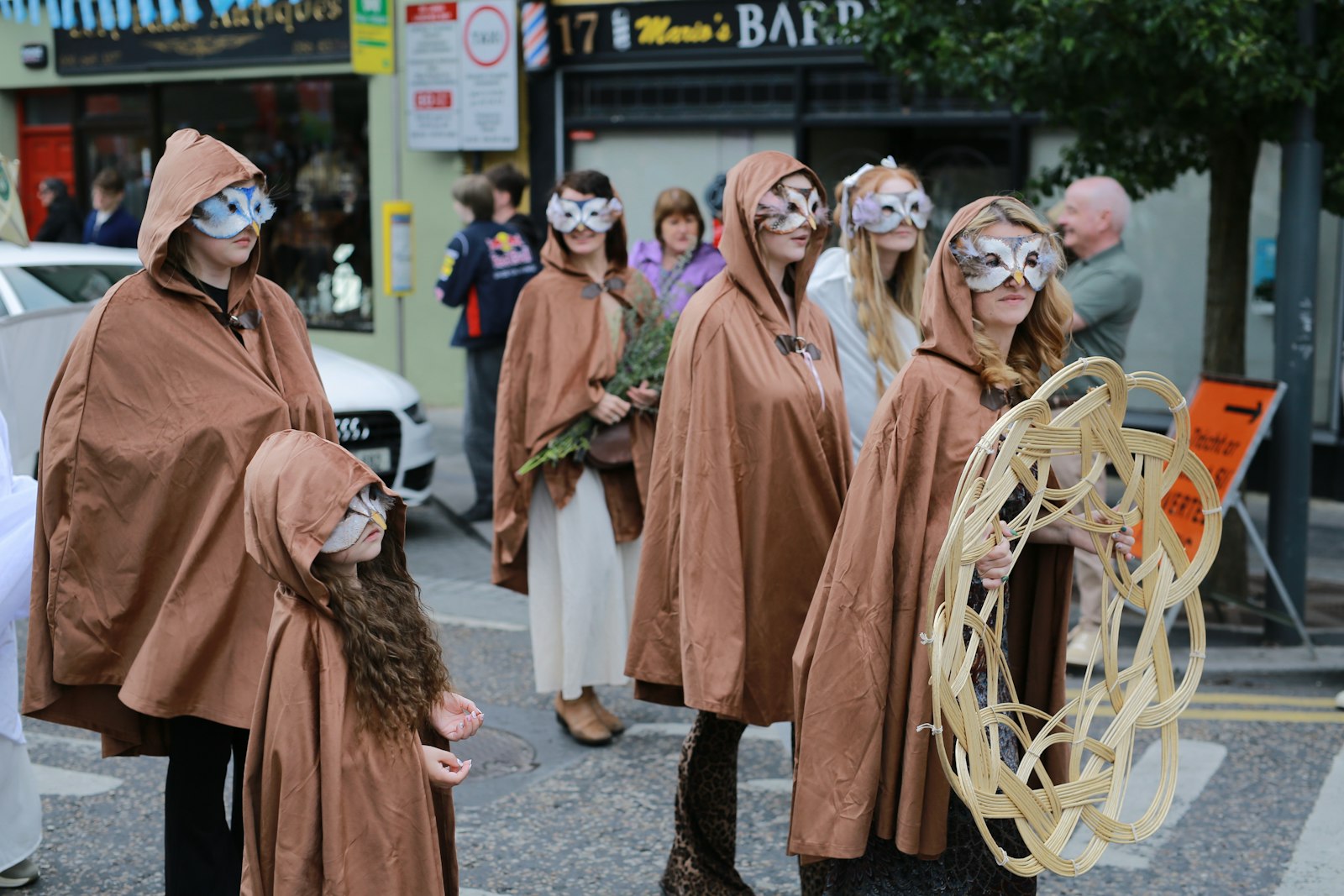
Photo by Marina Nazina on Unsplash
The history of women in Ireland is often overshadowed by accounts of male warriors, kings, and saints. Yet Irish women, from the Iron Age through the medieval period, exercised considerable authority, owned property, participated in governance, led religious communities, and shaped the cultural and political life of their island. The legal status of women in pre-Christian and medieval Ireland was, in many respects, remarkably favorable compared to their contemporaries in other parts of Europe. Understanding the lives of Irish women requires us to examine not only the formal legal frameworks that governed their status, but also the ways in which real women navigated, negotiated with, and sometimes defied the systems within which they lived.
Women’s Legal Status in Pre-Christian Ireland
The Brehon Laws, that sophisticated legal code governing pre-Christian Irish society, included remarkably detailed provisions concerning women’s property rights, marriage, divorce, and inheritance. While these laws operated within a patriarchal society, they nevertheless granted women specific protections and allowed them to hold property, conduct business, and exercise limited governance within their families and communities.
Under the Brehon Laws, a woman retained control of the property she brought to marriage—her dowry or bride-price—throughout her married life. This was not absorbed into her husband’s estate but remained legally hers. She could also inherit property from her family, control lands, and hold wealth independently. If a marriage dissolved, a woman was entitled to restitution of her original property and a share of any increase in value that had occurred during the marriage. This protection of women’s property rights was unusual for the ancient world. While many legal systems allowed women to own property, few offered such explicit protections ensuring that marriage didn’t result in loss of economic control.
The Brehon Laws further provided for women’s participation in inheritance. While male children typically inherited first, women could inherit if no male heirs existed, and women who were married or in long-term stable relationships were entitled to portions of family lands and resources. Additionally, a woman could divorce her husband on grounds that included infidelity, cruelty, or financial instability. In cases of divorce, she was entitled to compensation and could return to her father’s household with her property intact. This provided a level of protection and independence that was extraordinary compared to many medieval European legal systems, where women had limited ability to divorce and often lost custody of children and property upon divorce.
Women as Property Holders and Landowners
Beyond the theoretical provisions of law, archaeological and historical evidence confirms that women actually exercised these rights. Early Irish genealogies and legal documents reference women who held lands, made contracts, and conducted business. Some women became wealthy through inheritance or shrewd management of property, and their wealth translated into social influence. A wealthy woman could patronize churches, commission crafts, and support poets and scholars, thereby exercising cultural authority.
The concept of the “woman of the house,” or banaltracht, represented a woman of property and standing within the household, with authority over its management and resources. While ultimate authority typically rested with the male head of household or his heirs, the woman of the house held significant practical authority over daily management, servants, production, and resource allocation. In the household economy, this was not a trivial power.
Some women managed to acquire and hold significant landholdings themselves. The Irish historical record, while male-dominated in its focus, occasionally mentions women who possessed lands, controlled fortifications, and exercised political authority. These women typically occupied their positions because they were the sole surviving heirs of important families, and their control of these lands often gave them influence over political alliances and succession disputes.
Women in Politics and Governance
While formal kingship and high leadership were generally male-dominated, women nonetheless exercised significant political influence. The mother or widow of a king might hold considerable authority, particularly if she represented an important family alliance or if her son was too young to rule independently. Some women positioned themselves as kingmakers, using their influence, property, and social connections to support particular candidates for leadership positions.
The medieval Irish sources occasionally mention women who participated in political decisions or who exercised governing authority. Eithne, a 6th-century woman, is recorded as a “queen” associated with political authority in her region. Gormlaith, a legendary figure who appears in sources about 10th-century Ireland, is portrayed as a woman of considerable influence, marrying multiple kings and intervening in political conflicts. Whether such figures exercised actual political power or whether their power was circumscribed by the male political system is difficult to determine from sources written long after the fact, but their very presence in the historical record suggests that women’s political participation was not impossible or entirely excluded.
Women also could exercise authority through the church. Female religious communities gave women an alternative to marriage and motherhood, allowing them to lead communities, control property, exercise spiritual authority, and access education. The abbess of an important convent could exercise significant power within her community and beyond. Some convents became centers of learning and artistic production, with abbesses serving as patrons of scholarship and craft. The possibility of religious life thus offered women a path to power and authority that secular society alone might not have provided.
Women’s Religious Life
The Irish church of the early medieval period included substantial numbers of female monastics, and convents occupied an important place in religious and cultural life. These institutions gave women an opportunity to pursue spiritual life, receive education, and contribute to the intellectual and artistic life of their communities. Many of the educated women in early medieval Ireland were women who had joined religious communities.
The lives of women saints, as presented in hagiographic literature, reveal something about ideals concerning women’s religious virtue and authority. While these accounts are stylized and shaped by literary conventions, they sometimes preserve genuine information about women’s roles. Saint Brigid, one of Ireland’s most important saints, is presented in multiple sources as an abbess of considerable influence. The sources associate her with founding convents, performing miracles, and exercising both spiritual and temporal authority. Whether Brigid was a historical figure or a composite legendary character, the fact that she is remembered as a powerful religious leader suggests that such figures were part of Irish medieval tradition.
Women saints’ lives also portray women choosing religious life as an escape from forced marriage or from narrow domestic roles. Stories about women resisting paternal authority to enter convents, or women exercising independent judgment about their spiritual vocations, suggest that religious life represented a form of agency and independence for women. Some sources even suggest that certain convents were founded by women and remained under women’s governance, creating institutional spaces where women held decision-making power.
Motherhood, Marriage, and Family
Within the domestic sphere, Irish law and custom gave mothers significant authority over children and household. A mother’s authority over young children was recognized, and she could make decisions about their upbringing and betrothal. Women also played crucial roles in maintaining family connections and managing kinship relationships, which were central to Irish social organization. As wives, mothers, and widows, women could exercise considerable informal authority even within systems that granted formal power primarily to men.
Marriage in pre-Christian and medieval Ireland was not necessarily a sacrament but could take various forms depending on the status of the parties involved. The Brehon Laws recognized different types of unions, some of which allowed women considerable independence. A woman of equal status to her husband could maintain more authority within the marriage than a woman of lower status. Multiple sources suggest that some marriages were contractual arrangements that could be renegotiated or dissolved by either party, rather than permanent bonds.
The remarriage of widows appears to have been common and relatively unproblematic in Irish society, at least compared to some other medieval cultures where widows were sometimes marginalized or pressured into convents. A widow with property could remarry and maintain control of her lands, making her a valuable marriage partner. This may have increased women’s security and independence in later life.
Women’s Work and Economic Participation
While medieval sources tend to focus on the activities of the nobility and clergy, women at all levels of society participated in the economic life of their communities. Peasant women engaged in agricultural labor, textile production, food preparation, and other essential work. Archaeological evidence and occasional references in documents suggest that women played significant roles in craft production, including textile manufacture, food production, and potentially metalworking.
Some women operated as independent craftspeople or traders. Although formal guild systems in medieval cities were often male-dominated, evidence from Ireland and other regions suggests that women sometimes participated in textile trades, selling cloth and thread. The production of linen, an important Irish textile product, likely involved substantial numbers of women at various stages of processing and production.
Women’s Resistance and Agency
Medieval Irish sources occasionally preserve stories of women who resisted patriarchal authority or who exercised agency in unexpected ways. Legends sometimes portray women as wise counselors who influenced men’s decisions, as women who managed to maintain their independence despite social pressure to marry, or as women who used their wealth and status to exercise power. The degree to which these stories reflect historical reality versus literary convention is always uncertain, but their presence suggests that women’s agency and resistance were significant enough to be remembered and recorded.
Some sources mention women who fought in battles or who exercised military authority, though such figures were exceptional. The legend of Emer, associated with the hero Cú Chulainn, portrays a woman of skill and valor. Whether such figures were historical or purely mythological, their presence in the tradition suggests that martial participation by women was at least conceivable within Irish culture, even if it was exceptional in practice.
The Limits and Realities
It’s important to note that legal protections and theoretical rights didn’t necessarily translate into absolute equality or unlimited freedom for all women. Women’s actual power and independence were limited by their social status, wealth, and family position. A noblewoman of the royal dynasty could exercise far more authority than a peasant woman. Wealthy women could control property and exercise influence; poor women had little choice but to labor for others’ benefit. The legal system, while relatively favorable to women, still privileged male authority and inheritance.
Additionally, the Christianization of Ireland modified some of these legal frameworks. Over time, Christian teachings about women’s roles, submission, and proper conduct influenced legal developments. While Irish convents continued to offer women opportunities unavailable in some other Christian contexts, the broader trend of Christianization included a gradual restriction of women’s formal power and property rights as Christian concepts of womanhood became more influential.
Legacy of Medieval Irish Women
The women of pre-Christian and medieval Ireland lived within constraints, as all medieval women did, but they occupied a legal and social position that, in many respects, was more favorable than that of their contemporaries in other parts of Europe. They could own property, conduct business, divorce, and in some cases exercise governance authority. They could pursue religious vocations that offered education, authority, and status. They participated in intellectual and artistic life, supported scholarship and craft, and shaped cultural development.
The legacy of these women is preserved imperfectly in historical documents written primarily by and about men, yet glimpses of their lives and activities remain. Understanding this history requires reading between the lines of male-focused sources, inferring women’s presence and agency from fragmentary evidence, and acknowledging what cannot be recovered. But the evidence that does survive reveals women who were not passive victims of patriarchal systems but active participants in the life of their communities, exercising whatever authority and agency their circumstances permitted, and sometimes transcending the limits those circumstances seemed to impose.

Author: jonathan
Jonathan is the publisher of Irishtopia.net, Anglotopia.net, and Londontopia.net. He's passionate about travel and learning about other cultures. He's been to Ireland several times, and uses his travel expertise for Irishtopia!