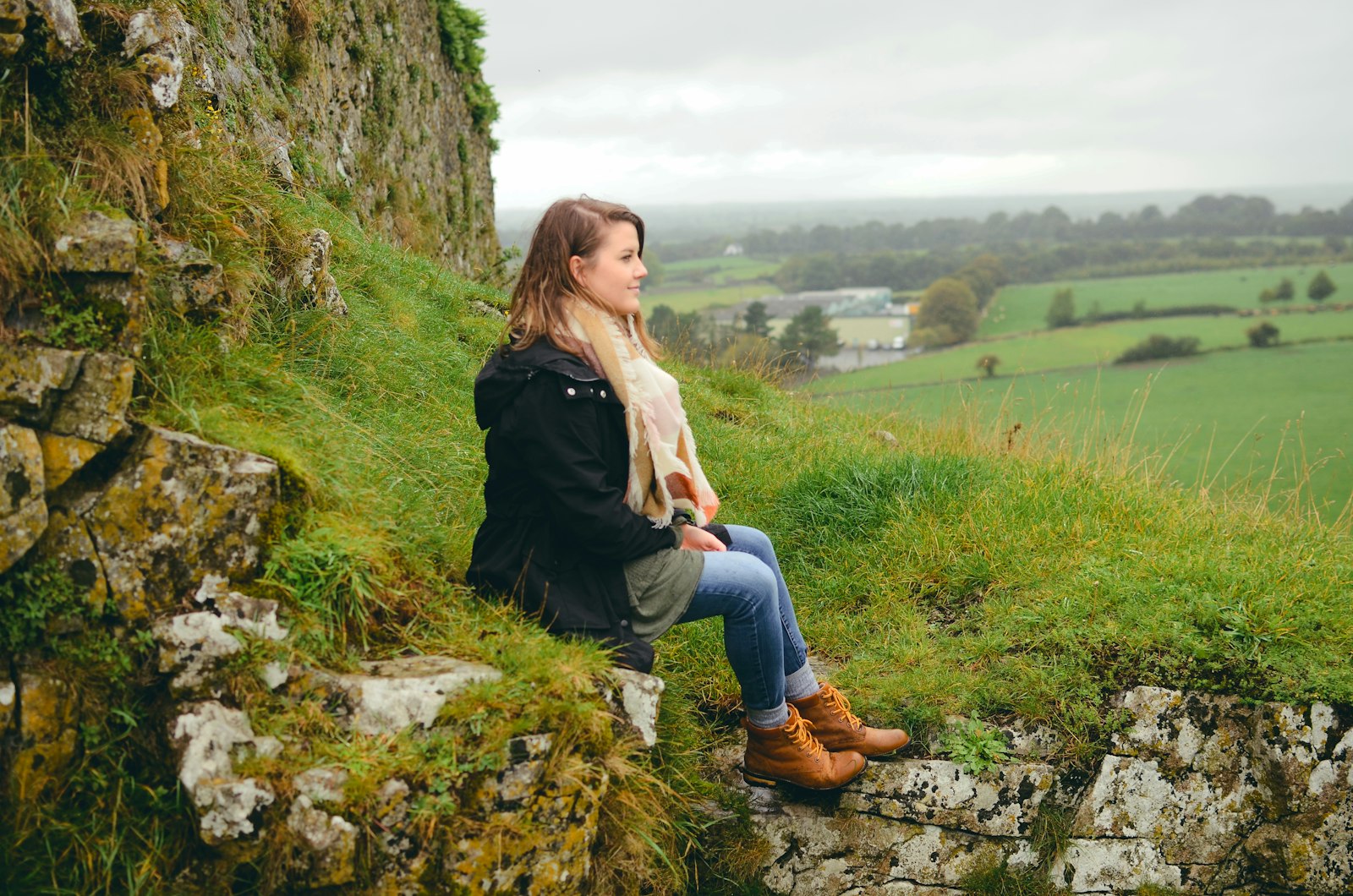
Photo by Christian Bowen on Unsplash
Irish literary history, like much literary history, has often focused on male writers while underrecognizing the significant contributions of women writers. Yet women have been creating important Irish literature throughout Irish history, and in recent decades, women Irish writers have achieved prominent positions in Irish and world literature. From Edna O’Brien’s groundbreaking exploration of female sexuality to Sally Rooney’s contemporary investigations of modern relationships, women writers have transformed Irish literature and created works that address women’s experiences, challenges, and concerns while also achieving artistic brilliance.
The emergence of women writers into greater prominence reflects both historical recovery of previously underrecognized work and the creation of new space for women’s voices in Irish literary culture. Understanding women Irish writers is essential to understanding Irish literature comprehensively and to recognizing the full scope of Irish literary achievement.
Edna O’Brien: Breaking Silence
Edna O’Brien (1930-2023) stands as a pioneering figure in Irish women’s literature. Born in County Clare, O’Brien drew on Irish rural experience in her early work, but she transformed that material through explicit attention to female sexuality, desire, and bodily experience that was shocking to Irish Catholic sensibilities.
O’Brien’s early novels, particularly “The Country Girls” (1960) and its sequels, depicted young Irish women experiencing desire, sexuality, and independence. The novels follow two girls growing up in rural Ireland, moving to Dublin, and navigating their sexual and emotional lives. For Irish readers in the early 1960s, this frank depiction of female desire and sexual experience was scandalous.
O’Brien’s work challenged the idealized image of Irish womanhood as pure, maternal, and sexually passive. Instead, she depicted women as sexual beings with desires, ambitions, and agency. This was revolutionary in the context of Irish Catholic culture, which enforced strict sexual morality, particularly regarding women. O’Brien’s novels were banned by the Irish censorship board, and she faced significant criticism from conservative Irish Catholics who felt her work betrayed Irish values.
Yet O’Brien’s refusal to accept conventional limits on what women could be and do in her fiction was precisely what made her work important. She insisted on women’s right to explore their sexuality, to make mistakes, to pursue their own paths. She created female characters who were complicated, flawed, vulnerable, and human rather than idealized.
O’Brien’s later work, including “Johnny I Hardly Knew You” and numerous short stories, continued to explore female experience, desire, and Irish identity. Her work evolved across her long career, but it consistently maintained attention to women’s inner lives and experiences. Even in her final years, O’Brien continued to write, demonstrating her commitment to her art and her continuing engagement with literature and experience.
Maeve Binchy: The Chronicler of Irish Life
Maeve Binchy (1940-2012) achieved significant international success with her novels and short stories depicting Irish small-town life and characters. Though perhaps less explicitly challenging to Irish conventions than O’Brien, Binchy created work that demonstrated women’s capacity to observe, understand, and depict complex human experience.
Binchy’s most famous work, “Evenings in the Village” (later expanded and retitled), consisted of interconnected stories depicting characters in a small Irish village. Through carefully observed details and sympathetic characterization, Binchy depicted the lives of ordinary people—their loves, conflicts, disappointments, and small joys. The work demonstrated that ordinary Irish village life, seemingly mundane, contained depths of human complexity and dramatic tension.
Binchy’s novels, particularly “Circle of Friends” and “Evening Class,” demonstrated her ability to create complex narratives encompassing multiple characters and perspectives. Her work was widely popular, reaching general readers as well as literary audiences. Her success demonstrated that women writers could achieve commercial success while maintaining artistic integrity.
Binchy’s work was often adapted for film and television, introducing her characters and stories to even wider audiences. These adaptations extended the reach of Irish literature and demonstrated the popular appeal of her portrayal of Irish experience.
Eimear McBride and Contemporary Innovation
Eimear McBride (born 1981) represents a newer generation of Irish women writers who are pushing the boundaries of Irish literary expression. Her debut novel, “A Girl Is a Half-formed Thing” (2013), employed innovative linguistic and formal techniques that challenged conventional narrative structures.
McBride’s novel tells the story of a young Irish girl and her relationship with her brain-damaged brother through fragmented, poetic language that mirrors the protagonist’s consciousness and trauma. The novel’s unconventional form, its frank treatment of sexual assault and trauma, and its linguistic experimentation made it challenging but profound.
The novel faced initial rejection from publishers who felt it was too experimental and difficult. Yet once published, it achieved critical success and won numerous awards. McBride’s work demonstrated that Irish women writers could experiment with form and challenge conventions while remaining engaged with Irish themes and experience.
Colette ní Bhraonáin and Irish-Language Writers
While much attention focuses on Irish women writers working in English, women writers working in the Irish language have also created important work. Colette ní Bhraonáin and other Irish-language writers have produced significant literature that remains less visible to English-language readers but is important to Irish literary culture.
The revival and maintenance of the Irish language depends significantly on creating contemporary literature in Irish. Women writers contributing to Irish-language literature help sustain the language and demonstrate its capacity to express contemporary experience and artistic sophistication.
Anne Enright and Contemporary Fiction
Anne Enright (born 1962) has emerged as one of Ireland’s most important contemporary fiction writers. Her work explores Irish family life, relationships, female sexuality, and the interior lives of her characters with psychological depth and stylistic sophistication.
Enright’s novel “The Gathering” (2001) won the Booker Prize, demonstrating international recognition of her achievement. The novel depicts a family’s life and relationships, exploring how past trauma shapes present experience. Enright’s exploration of family dynamics and how we narrate family stories demonstrates her psychological insight and formal sophistication.
Enright’s subsequent work has continued to explore similar themes with varying approaches and perspectives. She has emerged as a significant voice in contemporary Irish and world literature, demonstrating the achievements possible for women writers in contemporary Irish literary culture.
Nuala Ní Dhomhnaill: Irish Language Poetry
Nuala Ní Dhomhnaill (born 1952) is an important Irish-language poet whose work has achieved international recognition despite being written in a language with relatively few speakers. Her poetry employs sophisticated forms and addresses contemporary themes while maintaining connection to Irish language and Irish tradition.
Ní Dhomhnaill’s work has been translated into numerous languages, making her work accessible to international audiences. Her translations have been particularly successful, introducing international readers to Irish-language poetry and demonstrating its sophistication and power.
Ní Dhomhnaill’s achievement in making Irish-language poetry of international significance is important for sustaining the Irish language and for demonstrating that minority-language literature can achieve worldwide influence and respect.
Emma Donoghue: Queer Irish Writing
Emma Donoghue (born 1969) is an important Irish writer whose work often explores queer themes and LGBTQ+ experience. Her novel “Room” (2010) achieved international bestseller status and was adapted into an acclaimed film. The novel depicts a woman and child held captive in a small room, exploring the psychological dimensions of captivity and resistance.
Donoghue’s historical novels have also received acclaim. Works like “The Wonder” explore Irish history through stories of women, often employing historical settings to explore contemporary concerns about gender, sexuality, and women’s experience.
Donoghue’s work demonstrates the increasingly visible space for LGBTQ+ writers in Irish literature and the capacity of Irish writers to address queer themes and experiences. Her international success has introduced Irish literature to wide audiences and demonstrated the appeal and significance of her work.
Sally Rooney and Millennial Ireland
Sally Rooney (born 1991) represents the newest generation of Irish writers achieving international prominence. Her novels “Normal People” (2018) and “Beautiful World, Where Are You” (2021) have achieved massive international success and critical acclaim.
Rooney’s work is set in contemporary Ireland and explores young people navigating relationships, class difference, and the complexities of contemporary life. Her writing style is minimalist and precise, eschewing conventional narrative devices in favor of direct representation of dialogue and action. Her work captures the interior lives of her characters through careful attention to what they say and do rather than authorial commentary.
Rooney’s novels have resonated particularly with younger readers who see themselves reflected in her characters and who appreciate her representation of contemporary relationships and concerns. Her work demonstrates that Irish literature remains vital and capable of speaking to contemporary experience.
Themes in Women Irish Writers
Women Irish writers have consistently explored themes related to female experience, identity, and agency. Questions of women’s sexual desire and autonomy, women’s roles and expectations, women’s interior lives and consciousness, remain central to much women’s Irish writing.
Irish identity and nationalism also appear in women’s writing, but often complicated by women’s particular experience of nationalism and Irish culture. Women writers have questioned whether women can fully participate in nationalist movements and national identity or whether their positions remain marginal.
Class and social position feature prominently in many women’s Irish writing. Writers depict the material conditions of women’s lives—economic dependence, limited employment opportunities, educational restrictions—that have shaped women’s experience in Ireland.
Family relationships, particularly relationships between mothers and daughters, mothers and sons, and among siblings, frequently appear in women’s Irish writing. These relationships are explored with psychological depth and emotional authenticity, revealing the complexity of family bonds and the ways family shapes individual development.
Literary Institutions and Women Writers
The increasing prominence of women Irish writers reflects changes in Irish literary institutions and culture. Universities, literary journals, publishing houses, and literary organizations have increasingly recognized and supported women’s writing. Literary prizes that once went almost exclusively to men now regularly recognize women writers.
Yet significant gender imbalance remains in some areas of Irish literary culture. Women writers have gained visibility and prominence, but full equality of recognition and opportunity remains incomplete. Continued attention to women’s writing and to creating space for women’s voices remains necessary.
International Recognition and Impact
Many women Irish writers have achieved significant international recognition. Their work has been translated into numerous languages, has won major prizes, and has influenced writers globally. This international success demonstrates that women’s Irish writing is not merely of local interest but achieves universal significance and appeal.
The international prominence of women Irish writers contributes to Ireland’s cultural prestige and to the visibility of Irish literature in world literary culture. It also demonstrates that Irish literature encompasses diverse voices and perspectives and that Irish literary tradition remains capable of producing work of the highest artistic merit.
Conclusion: The Vitality of Women’s Irish Writing
Women Irish writers have created literature of extraordinary artistic achievement and human insight. From Edna O’Brien’s challenge to sexual conventions to Sally Rooney’s representation of contemporary relationships, women writers have transformed Irish literature and created works that address women’s actual experiences while achieving universal significance.
The emergence of women Irish writers into greater prominence reflects both justice in recognizing previously overlooked work and the creation of new possibilities for women’s voices in Irish literary culture. Contemporary Irish literature is richer and more diverse because women writers are visible and prominent contributors.
For readers seeking to understand Irish literature and Irish culture, women Irish writers offer essential perspectives and voices. Reading women Irish writers provides understanding of how women have experienced Irish society, have navigated Irish culture, and have created literature of lasting beauty and significance. Their work enriches Irish literature and contributes significantly to the ongoing vitality of Irish literary tradition.

Author: jonathan
Jonathan is the publisher of Irishtopia.net, Anglotopia.net, and Londontopia.net. He's passionate about travel and learning about other cultures. He's been to Ireland several times, and uses his travel expertise for Irishtopia!