
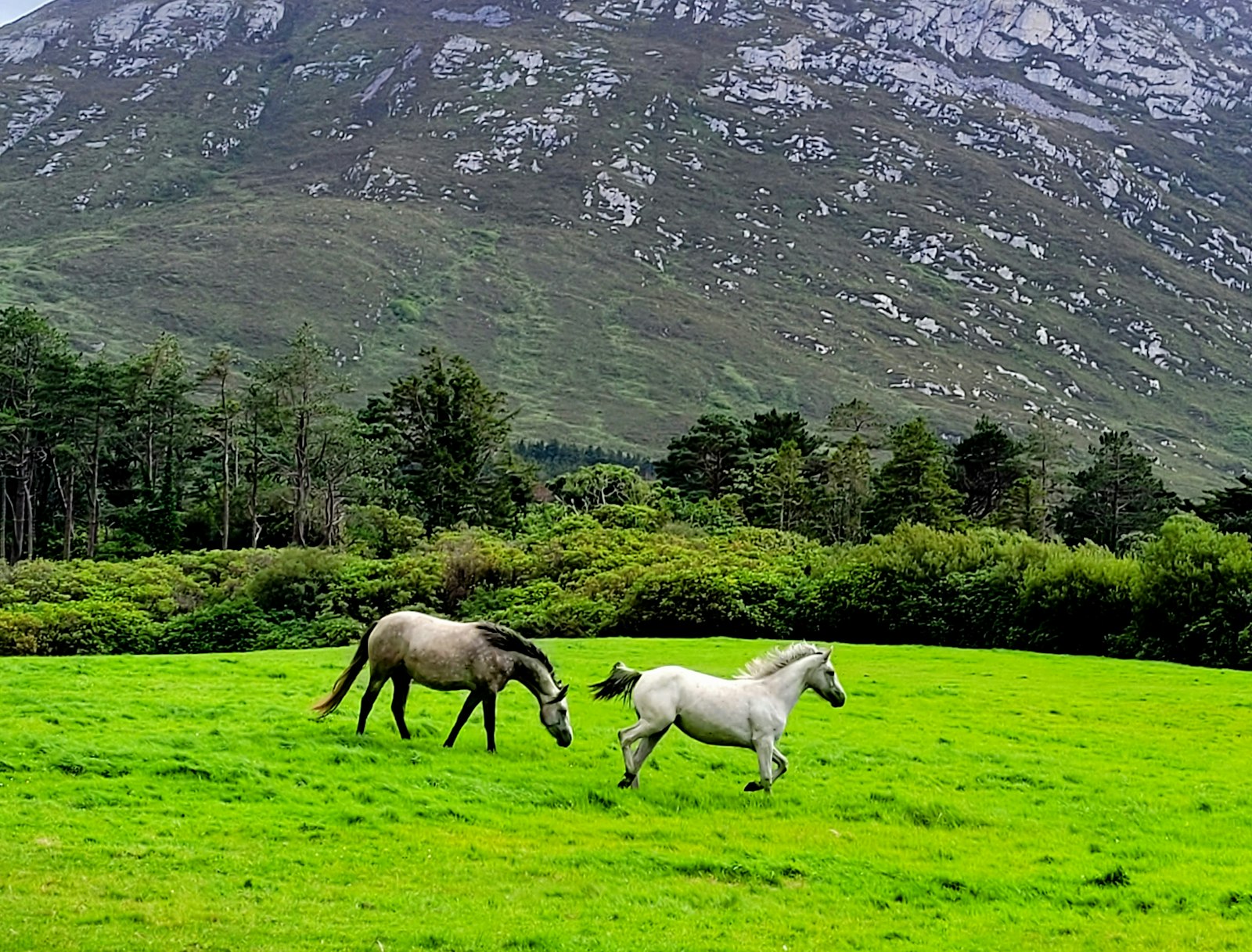
Photo by Melissa De Yoe on Unsplash
Ireland’s ecological story is increasingly defined not just by its native species and ancient ecosystems, but by a parallel story of invasion and ecosystem disruption caused by species introduced from elsewhere in the world. Japanese knotweed covers entire valleys with impenetrable stands of tall plants. American mink hunt native water voles to extinction in localized areas. Grey squirrels outcompete native red squirrels for food and habitat. Zebra mussels clog water pipes and alter aquatic ecosystems. These invasive species, introduced accidentally or deliberately through human activity, now represent one of the most significant threats to Irish biodiversity and ecological integrity. Understanding these invasions and the threats they pose is essential for appreciating the full complexity of conservation challenges facing modern Ireland.
What Are Invasive Species and Why Are They Problematic?
An invasive species is generally defined as an organism that is not native to a particular location but that has been introduced there (whether deliberately or accidentally) and has become established, often with harmful effects on native ecosystems or human interests. Not all introduced species become invasive—many fail to establish populations or remain localized without substantial ecological impacts. However, some introduced species thrive in their new environments, sometimes outcompeting native species for resources, preying on native species, altering ecosystem structure through their activities, or introducing diseases that harm native populations.
The reasons invasive species sometimes thrive in new environments relate to what ecologists call “enemy release.” In their native habitats, organisms have evolved alongside predators, competitors, and diseases that keep their populations in check. When an organism is introduced to a new region lacking these natural enemies, it can proliferate without the usual ecological constraints. Additionally, native species in the invaded ecosystem may lack defensive adaptations or competitive strategies suitable for dealing with novel invaders. If an invasive species is particularly competitive or a particularly effective predator, it can outcompete native species or cause population collapses.
Invasive species often have particular characteristics that make them successful invaders. They tend to reproduce rapidly, to be generalists rather than specialists (able to use a wide range of food types and habitats), to be aggressive competitors, and to have phenotypic plasticity—the ability to adjust their growth and behavior to match environmental conditions. The most problematic invasive species combine multiple such traits, making them difficult to control and capable of thriving across diverse environments.
Plant Invaders: The Green Plague of Irish Ecosystems
Perhaps no invasive species has become more visible and emblematic of invasive species problems in Ireland than Japanese knotweed. This tall perennial herb, native to East Asia, was introduced to Europe as an ornamental garden plant in the nineteenth century. The plant’s attractive white flowers, rapid growth, and ability to thrive in poor soils made it appealing to Victorian gardeners. However, Japanese knotweed has escaped from gardens and become established throughout Ireland and much of Europe.
Japanese knotweed’s invasive success stems from multiple factors. The plant grows extremely rapidly, reaching heights of six feet or more in a single season. Its extensive underground rhizome system allows vegetative reproduction—new plants grow from fragments of rhizomes, making the species difficult to eradicate. The plant produces chemicals that suppress the growth of other plants, giving it a competitive advantage. In invaded areas, Japanese knotweed often forms nearly impenetrable monocultures, preventing other plants from establishing and reducing habitat quality for native animals.
The impacts of Japanese knotweed invasion extend beyond ecological effects to economic and infrastructure concerns. The plant’s vigorous growth can damage building foundations, crack concrete, and penetrate through asphalt. Homeowners dealing with Japanese knotweed infestations face expensive removal and treatment. The plant’s presence can reduce property values and complicate real estate transactions.
Japanese knotweed control is extremely challenging and expensive. Simple removal of above-ground plant parts is ineffective, as any rhizome fragments left in the soil can regenerate new plants. Herbicide application provides some control but typically requires multiple treatments over years. Some experimental approaches, including the introduction of natural enemies from the plant’s native range, show promise but remain under development. In Ireland, many areas now contain established Japanese knotweed populations that seem permanently established.
Other invasive plant species also threaten Irish ecosystems. Rhododendron, a large evergreen shrub native to southeastern Europe and Asia, has become established in woodlands in southwestern Ireland and other locations. Dense rhododendron thickets shade out other vegetation, preventing tree regeneration and reducing habitat diversity. Unlike Japanese knotweed, rhododendron actually maintains substantial ecological structure, but the homogeneous rhododendron-dominated woodland differs dramatically from native woodland communities.
Giant hogweed represents another problematic plant invader. This large herb, native to the Caucasus region, produces sap containing compounds that cause photosensitization—making skin sensitive to severe burns when exposed to sunlight. Giant hogweed can form dense stands in disturbed areas and along stream margins, displacing native vegetation and causing human health concerns for people who contact the plant.
Animal Invaders: Predators and Competitors in Irish Ecosystems
While plant invasions often receive more public attention, animal invasions have equally or even more significant ecological impacts. The American mink represents one of Ireland’s most consequential animal invasions. These small carnivores, native to North America and widely farmed in Europe for their fur, escaped or were released from fur farms beginning in the twentieth century. Mink established feral populations that have become widespread throughout Ireland.
Mink are highly efficient predators of small mammals and ground-nesting birds. They are particularly devastating to water vole populations—native rodents that inhabit stream banks and wetlands. In invaded areas, mink often cause complete collapse of water vole populations. The small, rounded burrows of water voles, once common features of Irish stream banks, are increasingly rare in areas where mink have become established. Beyond water voles, mink prey on ducks, moorhens, and other wetland birds, causing population declines in some locations.
Controlling mink populations is challenging. They are elusive predators, hard to locate and target. Trapping programs have been implemented in some locations with limited success. The mink invasion illustrates a broader principle: once invasive animal species become established across extensive areas, eradication is typically impossible, and management focuses on limiting impacts rather than achieving complete removal.
The grey squirrel represents another North American invader with significant impacts on Irish ecosystems. Grey squirrels were introduced to Ireland from North America in the early twentieth century, deliberately released into estates. Unlike mink, grey squirrels were not universally established across Ireland—they remain most abundant in eastern and central regions. However, in areas where they are present, grey squirrels often outcompete the smaller native red squirrels for food and habitat.
The competition between grey and red squirrels is complex. Both feed on tree seeds, particularly acorns and other mast crops. In mixed populations, grey squirrels frequently dominate red squirrels, accessing preferred food resources first and monopolizing feeding areas. The larger size and more aggressive behavior of grey squirrels gives them competitive advantages. Additionally, grey squirrels carry a squirrel pox virus that often proves fatal to red squirrels but causes minimal disease in grey squirrels. The combination of direct competition and disease transmission has caused red squirrel populations to decline dramatically in areas where grey squirrels have become established.
Conservation organizations throughout Ireland now focus significant effort on protecting remaining red squirrel populations. In some areas, grey squirrels are actively controlled through shooting programs, designed to protect red squirrel habitat. Establishing squirrel reserves—areas where invasive grey squirrels are removed to allow red squirrels to thrive—represents another management strategy. These efforts have achieved some successes, but preventing the eventual replacement of red squirrels by grey squirrels in invaded areas remains uncertain.
Aquatic Invasions: Threats to Rivers, Lakes, and Coastal Waters
Ireland’s aquatic ecosystems face invasions from multiple species adapted to freshwater and marine environments. The zebra mussel, a freshwater bivalve native to Eastern Europe and Asia, has invaded Ireland’s waterways, likely arriving in the ballast water of ships or through aquaculture equipment. These small mollusks form dense aggregations on hard substrates, clogging water intake pipes of power plants and water treatment facilities, creating millions of euros in economic damage.
Beyond infrastructure impacts, zebra mussels alter aquatic ecology. They are extremely efficient filter feeders, consuming massive quantities of algae and small organisms. In heavily invaded waters, zebra mussels can consume so much plankton that water clarity increases dramatically—seemingly positive, but with unintended consequences. The increased clarity and reduced plankton can alter light penetration and primary production in ways that disrupt aquatic food webs. Additionally, some native aquatic plants and animals are displaced by zebra mussels or affected by the ecological changes they cause.
The signal crayfish, a North American species, has invaded Irish freshwaters, sometimes through deliberate introduction for aquaculture. Signal crayfish are larger and more aggressive than the native white-clawed crayfish, and they carry a parasitic disease fatal to native crayfish. Where signal crayfish become established, native white-clawed crayfish populations often decline to extinction. The loss of native crayfish removes an important aquatic omnivore and affects aquatic food webs that have evolved with native crayfish as key components.
In marine environments, the slipper limpet, a small marine mollusk native to the Atlantic coast of North America, has invaded Irish coastal waters. This species reproduces rapidly and can form dense aggregations on hard substrates. Dense slipper limpet populations can alter marine substrate ecology and potentially compete with native species for food and space.
The Mechanisms of Introduction: How Invasions Begin
Understanding how invasive species arrive in Ireland is important for preventing future invasions. Intentional introductions have been responsible for some major invasions. Japanese knotweed, rhododendron, and Japanese red squirrels were all deliberately introduced as ornamental garden plants, then escaped to establish wild populations. American mink were deliberately farmed for fur, then escaped or were released. Some game fish were introduced deliberately to provide sport fishing opportunities.
Accidental introductions occur through numerous pathways. Species can arrive as contaminants in shipped goods—zebra mussels arrived in ballast water or with aquaculture equipment. Seeds can be transported in livestock feed, in soil attached to agricultural equipment, or in other plant products. Species can escape during transport for legitimate purposes—some invasive plants arrived when nursery stock escapes became established.
Climate change may increase the rate and success of species invasions. As Ireland’s climate warms, it becomes suitable for species that previously couldn’t survive there. Species currently established at the southern edges of their range in Europe might expand northward into Ireland. Warming waters could allow marine species from warmer regions to establish populations in Irish waters.
Management and Control: Responses to Invasion
Ireland’s response to invasive species invasions has evolved over recent decades. For some species, early eradication efforts were attempted. These efforts sometimes succeeded when invasions were discovered early and the invaded area was limited. However, for widespread, well-established invasions, eradication has typically proven impossible, and management shifted to limiting impacts.
Management approaches vary by species and context. For some plant invasions, repeated herbicide application provides some control, particularly in sensitive areas where mechanical control might cause unacceptable damage. For animal invasions, shooting programs or trapping can reduce populations in localized areas, particularly where they threaten rare native species. Biological control—introducing natural enemies from a species’ native range—has been attempted with limited success but remains under investigation for several species.
Prevention of future invasions is increasingly recognized as more cost-effective than management of established invasions. Quarantine measures on imported plants and animals, regulation of ballast water practices, and careful inspection of imported goods help prevent new invasions. However, preventing all future invasions is impossible, and some species will inevitably establish in Ireland despite prevention efforts.
Living with Invasions: The New Ecological Reality
A sobering reality is that some invasive species are now effectively permanent fixtures of Irish ecosystems. Japanese knotweed is so widely established and difficult to eradicate that it will almost certainly remain part of Irish landscape for the foreseeable future. Grey squirrels are well-established in eastern Ireland and may continue expanding range. Zebra mussels are permanently established in multiple Irish waterways.
Rather than simply lamenting invasions as ecological tragedies—though the losses are certainly tragic—some ecologists are beginning to discuss concepts like “novel ecosystems” and “reconciliation ecology.” These frameworks recognize that in heavily invaded regions, the ecological landscape has fundamentally changed and may never return to pre-invasion conditions. Instead of pursuing the impossible goal of returning to some pristine past state, management might focus on maintaining ecosystem services and biodiversity within these novel contexts.
This is not a recommendation to abandon invasive species control—research and management efforts should continue to minimize invasions’ harmful effects and control invasive species where possible. Rather, it’s a recognition that for some established invasions, management must focus on coexistence rather than eradication.
The Broader Implications: Invasion as a Symptom
The prevalence of invasive species in Ireland reflects broader themes in modern ecology. Human global interconnectedness, international trade, and travel constantly move organisms across natural barriers. Human landscape modification creates disturbed areas where invasive species thrive. Climate change alters the suitability of environments for various species. Invasive species invasions are not anomalies but predictable consequences of the modern world and humanity’s ecological footprint.
Efforts to control invasions are important and should continue. However, controlling invasions will ultimately require addressing these underlying drivers—reducing the rate of transport of organisms, managing landscapes to reduce disturbance, and addressing climate change. No amount of invasive species management alone will prevent future invasions in the absence of addressing these broader issues.
Conclusion: Vigilance and Acceptance
For visitors and residents of Ireland, awareness of invasive species and their impacts is important for understanding modern Irish ecology. The landscape you see—with patches of Japanese knotweed, stands of rhododendron, squirrels in the trees that may be grey or red depending on location—reflects a dynamic and changing ecological landscape shaped by both native species and increasingly by invasive species.
Conservation efforts to protect native species and limit invasive species impacts are ongoing and important. Organizations work to protect red squirrel populations, control rhododendron in native woodlands, and manage zebra mussel impacts on aquatic ecosystems. These efforts deserve support and recognition. However, accepting that some invasions may be effectively permanent, and shifting management mindsets from eradication to coexistence where appropriate, may be necessary for effective modern conservation.

Author: jonathan
Jonathan is the publisher of Irishtopia.net, Anglotopia.net, and Londontopia.net. He's passionate about travel and learning about other cultures. He's been to Ireland several times, and uses his travel expertise for Irishtopia!