
Photo by Elizabeth on Unsplash
Ireland’s forests and moorlands are home to three distinct species of wild deer—elegant creatures that have inhabited Irish landscapes for millennia and continue to shape how Ireland’s wild places function today. Red deer, fallow deer, and sika deer roam across the island in varying densities, each species with its own history, ecology, and role in Irish ecosystems. These magnificent animals represent Ireland’s most substantial large mammal populations and offer visitors and residents alike remarkable opportunities to observe wild, free-roaming animals in their natural habitat. Yet the presence of three deer species also creates complex conservation challenges, as populations and territories overlap, resources compete, and human interests intersect with wildlife management in increasingly complicated ways.
Red Deer: Ireland’s Ancient Megafauna
Red deer are the largest wild land mammal in Ireland and among the largest in all of Europe. A mature male red deer, called a stag, can weigh up to 250 pounds and stand over four feet at the shoulder. Females, called hinds, are considerably smaller, typically weighing 150 to 200 pounds. What makes red deer truly impressive is not just their size but their presence and bearing. A stag in full autumn rut, with massive antlers aloft, neck swollen with testosterone, and bugling calls echoing across the hills, represents one of nature’s most dramatic displays of masculine power and wild vitality.
Red deer have inhabited Ireland since at least the end of the last ice age, approximately 10,000 years ago. Archaeological and historical evidence suggests that red deer were common throughout Ireland’s forests and wild areas in pre-industrial times. However, as Ireland became increasingly settled and forests were cleared for agriculture, red deer populations declined dramatically. By the early twentieth century, wild red deer existed in Ireland only in a few remaining strongholds, particularly in the mountains of County Kerry and possibly a few other isolated locations.
The survival and subsequent expansion of Irish red deer populations is largely due to efforts by estates and conservation organizations to maintain populations, sometimes in semi-managed conditions. In the twentieth century, some estates maintained herds of red deer in enclosed parks or managed wild populations. More recently, conservation efforts and the natural recolonization of suitable habitat have expanded red deer populations. Today, red deer are found across much of Ireland, with substantial populations in the western uplands, particularly in Kerry, Galway, and other western counties. Smaller populations exist in other suitable habitats throughout the country.
Red deer are social animals that typically live in herds, though the composition of herds varies by season and sex. In winter, stags and hinds often live separately, with stag herds occupying higher elevations while hind herds prefer lower areas with better winter forage. In spring, when calves are born, hind herds concentrate in good birthing habitat. The famous rutting season, which occurs in autumn (typically September through October), brings stags and hinds together in dramatic displays of sexual selection. During the rut, stag battles become intense, with larger males with larger antlers dominating breeding and passing superior genetics to the next generation.
Fallow Deer: Non-Native Colonizers with Ancient Roots
Fallow deer have a more complex and mysterious history in Ireland than red deer. These medium-sized deer, smaller than red deer but still substantial animals weighing 100 to 200 pounds, are not native to Ireland in the sense that red deer are. Evidence suggests that fallow deer were introduced to Ireland by humans, likely during the medieval period, though the exact circumstances and date of introduction remain debated among historians. Some suggest Norman settlers brought them in the thirteenth century; others argue for earlier medieval introductions.
Regardless of exactly when they arrived, fallow deer were established in Ireland by the time written records document them. They were valued by Irish nobility for hunting and were kept in enclosed deer parks—a tradition that continues in some locations. Over centuries, some fallow deer escaped from these managed populations and established feral populations in the wild. Today, both managed fallow deer herds and wild feral populations exist in Ireland.
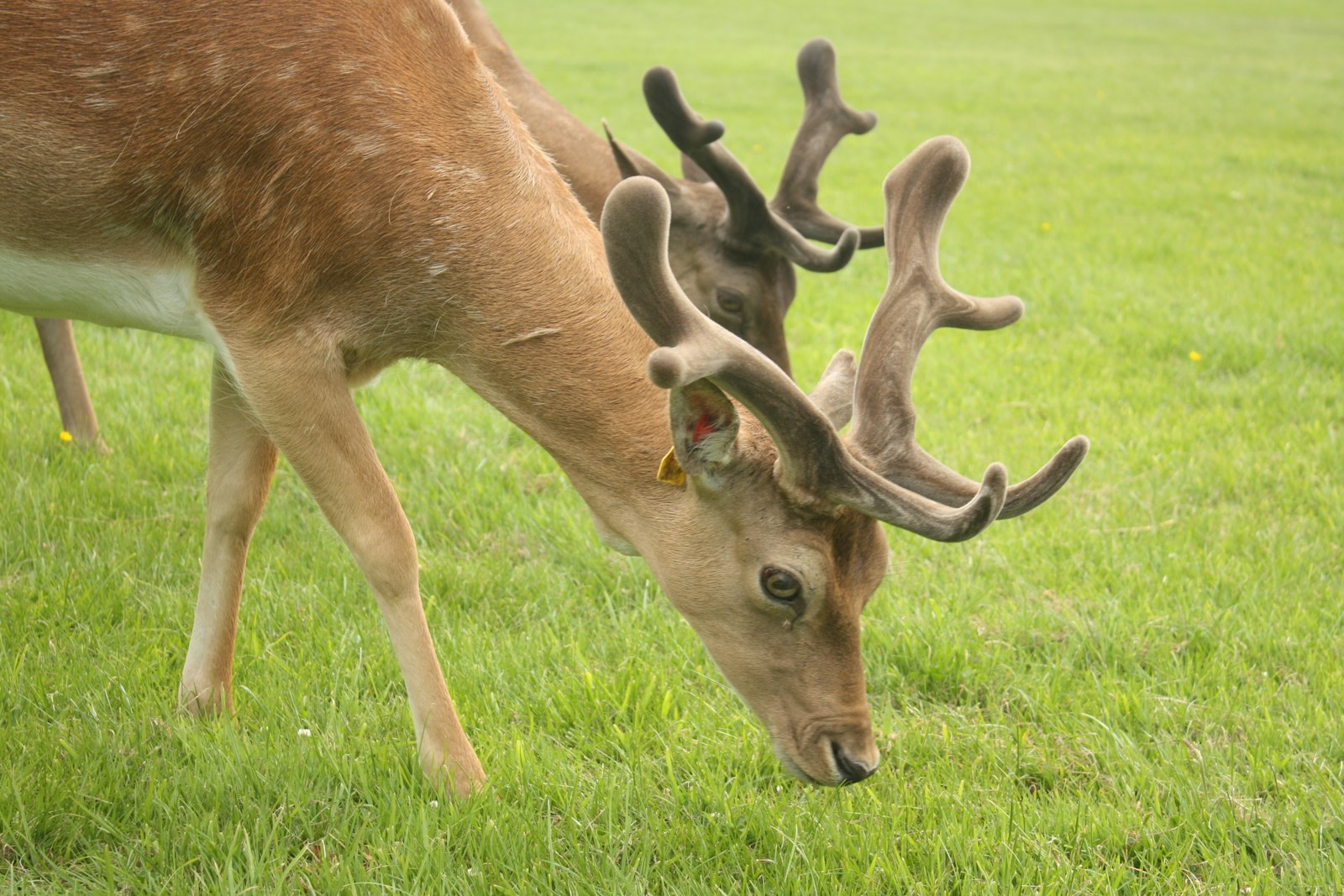
Fallow deer are distinctive for their spotted coats—though coat colors vary, including reddish-brown, dark brown, and pale forms—and their large, palmate (hand-shaped) antlers in males. These antlers are flattened and broad, quite different from the pointed antlers of red deer. Fallow deer are less hardy than red deer and prefer lower elevations and areas with better forage. In Ireland, they are particularly abundant in some areas of the south and east, though their distribution is patchier than that of red deer.
The ecological role of fallow deer in Ireland is somewhat distinct from that of red deer. Fallow deer prefer deciduous woodlands and agricultural areas more than red deer, which can survive in more open, upland habitats. This habitat preference difference means that the ecological impacts of fallow and red deer can differ, though both species are herbivores that can significantly impact vegetation when populations become large.
Sika Deer: Recent Arrivals with Far-Reaching Impacts
Sika deer represent the most recent deer species arrival in Ireland and have the most complicated conservation implications. These small deer, native to East Asia (particularly Japan and the Russian Far East), were introduced to Ireland in the nineteenth century by landowners interested in establishing exotic game populations on their estates. The first sika deer in Ireland were brought to estate parks, where they were maintained in controlled populations. However, as had happened with fallow deer centuries earlier, some sika deer escaped or were released into the wild, establishing feral populations.
Today, sika deer are widespread in Ireland, particularly in eastern and central regions. They have proven to be extremely successful colonizers, rapidly establishing populations and expanding their range. Some conservation experts view sika deer as an invasive species whose expansion represents a threat to native red deer and Irish ecosystems more broadly. Others view them as simply another component of modern Ireland’s wildlife, capable of coexisting with other species.
Sika deer are smaller than either red or fallow deer, weighing only 50 to 100 pounds, but they are hardy and adaptable animals capable of thriving in a wide range of habitats. They are particularly successful in commercial forest plantations, which provide the dense cover and food sources they prefer. Sika males have shorter, simpler antlers than red deer stags, and sika populations can produce very different rutting season displays and sounds compared to red deer ruts.
Ecology and Environmental Impacts: Herbivores Shaping the Landscape
All three deer species are herbivores that can substantially impact vegetation through their feeding. When deer populations reach high densities, their browsing can prevent tree regeneration, eliminate palatable plants, and fundamentally alter the structure and composition of plant communities. This can have cascading effects throughout ecosystems. Some conservation ecologists argue that current deer populations in Ireland are too high and are preventing forest regeneration and altering plant communities in ways that reduce habitat quality for other species.
However, determining appropriate deer population levels is complex. At moderate densities, deer can be beneficial components of ecosystems. They create different vegetation structures and patterns than would exist without them, potentially benefiting some species. They move nutrients through landscapes through their movement and feeding. They create visual and cultural value for humans through hunting traditions and wildlife observation. The question is not simply “are deer present?” but rather “what is the appropriate density of deer to maintain in particular places?”
This question becomes even more complex with multiple deer species present. Where red and sika deer overlap, competition for forage occurs. Some research suggests that sika deer can outcompete red deer in certain habitats, potentially affecting red deer populations. The presence of both species can create different ecological impacts than either species alone.
Managing multiple deer species in ways that are ecologically sustainable while accounting for cultural traditions (hunting), conservation needs (protecting native red deer, controlling invasive sika), and landowner interests requires sophisticated, adaptive management. Ireland’s deer management approaches continue to evolve as understanding of deer ecology improves.
The Autumn Rut: Deer Theater at Its Most Dramatic
For those interested in observing wild deer, the autumn rut—the mating season—represents the most spectacular time. For red deer, this typically occurs from mid-September through October. During the rut, stags’ behavior changes dramatically. They become highly vocal, producing distinctive roaring calls that can be heard from considerable distances. These roars serve to advertise a stag’s presence and fitness to potential mates and to challenge other males.
Competing stags often engage in elaborate displays designed to intimidate rivals without fighting. They walk parallel to each other, necks arched, displaying the magnificence of their antlers. If such displays don’t resolve the conflict, actual fighting occurs. Stags clash antlers and push against each other, sometimes for extended periods, as they compete for dominance. The strongest, largest stags with the most impressive antlers typically win these contests and gain mating access to the hinds in their territory.
The rut is an energetically expensive time for stags. They spend enormous amounts of energy pursuing hinds, fighting with other males, and producing the vocalizations that define the rut. Many stags lose significant body weight during the rut, eating little as they focus on mating activities. This is a critical period—stags that go into winter in poor condition may not survive the winter.
For visitors to Ireland during the autumn rut season, the opportunity to experience this natural spectacle is remarkable. Several locations in Ireland, particularly in the west, allow visitors to approach rut displays at reasonable distances with appropriate guidance. The sound of stags roaring across the hills and the sight of their silhouettes against the sky is an experience that connects visitors to wild nature in visceral, unforgettable ways.
Deer Watching in Ireland: Where and How
Ireland offers multiple opportunities to observe wild deer in their natural habitat. The most accessible populations for visitors are typically those in western Ireland, particularly in the mountains of County Kerry and surrounding areas. Connemara in County Galway supports substantial red deer populations visible from certain locations. Various locations throughout central and eastern Ireland support fallow and sika deer populations.
Several National Parks and protected areas in Ireland have established deer management programs that allow visitors to observe deer while maintaining populations at sustainable levels. Killarney National Park in County Kerry is particularly renowned for red deer viewing. The park contains both red and fallow deer, and visitors can observe them in their natural habitat, particularly during early morning and evening hours when deer are most active and visible.
Responsible deer watching requires patience, appropriate clothing and gear, and respect for the animals. Approaching too closely or behaving in ways that stress deer can disrupt their natural behavior and potentially stress the animals. Using binoculars or telephoto lenses allows observation from appropriate distances. Early morning visits during autumn rut season offer the best chances of encountering deer in visible locations.
Hunting represents another way that some people interact with Irish deer, though this is typically available only to those with landowner permission or membership in hunting organizations. Deer hunting in Ireland is regulated by season and license requirements to ensure sustainable harvests.
Conservation Challenges: Balancing Multiple Interests
Managing deer populations in Ireland requires balancing multiple, sometimes conflicting interests and values. Conservation of native red deer populations requires managing sika deer populations in some locations to prevent sika from becoming so abundant that they outcompete red deer. Protecting regenerating forests from excessive deer browsing requires managing deer population densities, which means reducing populations in some areas. Economic interests of landowners, including hunting tourism and agricultural interests, must be considered. Cultural traditions around hunting must be balanced with ecological needs.
Additionally, climate change poses emerging challenges for Irish deer. Changing weather patterns could affect forage availability, the timing of deer rutting and birthing cycles, and the prevalence of diseases that affect deer. Research continues to improve understanding of how climate change will affect Irish deer populations and how management should adapt.
One emerging issue is the spread of disease in deer populations, particularly among farmed deer. Diseases like tuberculosis can spread from farmed herds to wild deer and potentially to other wildlife. Managing disease in wild populations is challenging but important for maintaining healthy populations.
The Future of Irish Deer
The future of Ireland’s deer populations depends on continued commitment to science-based management that accounts for ecological needs, cultural interests, and the broader impacts of deer on Irish landscapes. As Ireland continues to develop wind farms, forestry operations, and other land uses, managing how these activities intersect with deer populations and habitat will remain important.
Climate change will likely necessitate adaptations in how Ireland manages deer populations, as shifts in forage availability, disease prevalence, and habitat conditions force adjustments to traditional management approaches.
The presence of three deer species in Ireland is a testament to how wildlife communities can be reshaped by human activity—through introductions, habitat changes, and management practices. Whether one views this as simply the modern reality of Irish wildlife or as a conservation challenge requiring intervention, these magnificent animals remain central to the Irish landscape and experience.
Conclusion: Majestic Inhabitants of Irish Wild Places
Red deer, fallow deer, and sika deer collectively represent Ireland’s most substantial large mammal populations. Whether you encounter them as a visitor observing wild deer in their natural habitat, as a hunter participating in traditional hunting practices, or simply as a background element of Ireland’s landscape, these elegant animals are part of what makes Ireland’s natural world distinctive.
The presence of deer in Ireland’s forests and moorlands reflects deep ecological and cultural history. Red deer connect modern Ireland to ancient times when these animals were part of Ireland’s megafauna. Fallow and sika deer represent more recent arrivals and illustrate how human activities reshape wildlife communities. All three species occupy important ecological roles and provide experiences of wild nature that enrich human lives and connect us to the natural world.
Whether you’re planning a trip to Ireland to observe deer, or simply appreciating the knowledge that these magnificent animals roam Ireland’s wild places, remember that seeing a deer—a wild, free-ranging mammal in its natural habitat—is a privilege that connects you to the wildness that persists in modern landscapes. Listen for the roar of a rutting stag echoing across the Irish hills, and you’ll understand why these animals have captured human imagination for thousands of years.

Author: jonathan
Jonathan is the publisher of Irishtopia.net, Anglotopia.net, and Londontopia.net. He's passionate about travel and learning about other cultures. He's been to Ireland several times, and uses his travel expertise for Irishtopia!