Photo by Ian Capper via <a href="https://www.geograph.org.uk/photo/4262299">Geograph.org.uk</a> licensed under <a href="https://creativecommons.org/licenses/by-sa/2.0/">CC BY-SA 2.0</a>
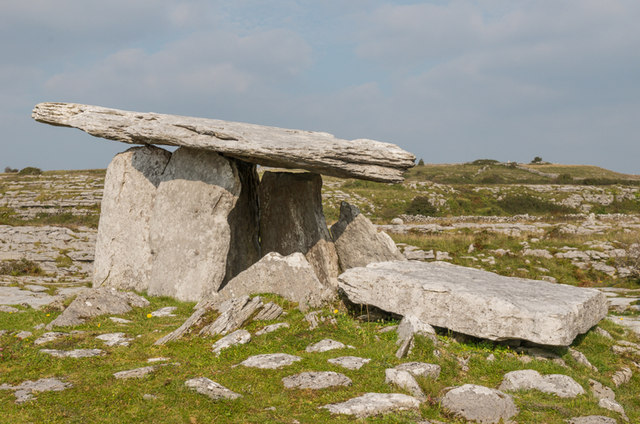
Poulnabrone Portal Tomb is a remarkable tourist attraction located in County Clare, Ireland. This ancient megalithic monument holds great historical significance and attracts visitors from all over the world.
Situated in the heart of the Burren, a unique limestone landscape, Poulnabrone Portal Tomb dates back to the Neolithic period, approximately 5,800 years ago. The tomb is composed of large upright stones supporting a massive capstone, creating a striking and enigmatic structure. The name “Poulnabrone” translates to “hole of sorrows” in Irish, which adds an air of mystery and intrigue to this archaeological treasure.
The tomb is believed to have been a communal burial site, with over 33 individuals discovered during excavations. The remains found at the site, including adults and children, provide valuable insights into the lives and burial practices of the people who lived in this region during the Neolithic era. It is fascinating to think about the rituals and beliefs that surrounded the construction and use of Poulnabrone Portal Tomb so many centuries ago.
Visiting Poulnabrone Portal Tomb allows you to immerse yourself in Ireland’s ancient past and experience the awe-inspiring beauty of the surrounding landscape. The site is easily accessible and well-signposted, making it a popular stop for tourists exploring the Burren region.
When planning your visit, be sure to check the opening hours and any admission fees that may apply. It is advisable to wear sturdy footwear as the terrain around the tomb can be uneven. Additionally, please be respectful when visiting Poulnabrone Portal Tomb, as this is an important archaeological site that should be preserved for future generations to appreciate.
As you approach the tomb, take a moment to appreciate the panoramic views of the Burren. The desolate, yet hauntingly beautiful, landscape adds to the mystique of Poulnabrone Portal Tomb, creating a truly memorable experience.
Whether you are a history enthusiast, nature lover, or simply seeking a unique cultural experience, Poulnabrone Portal Tomb is a must-visit destination in Ireland. It offers an opportunity to step back in time and connect with the ancient past of this captivating land.