
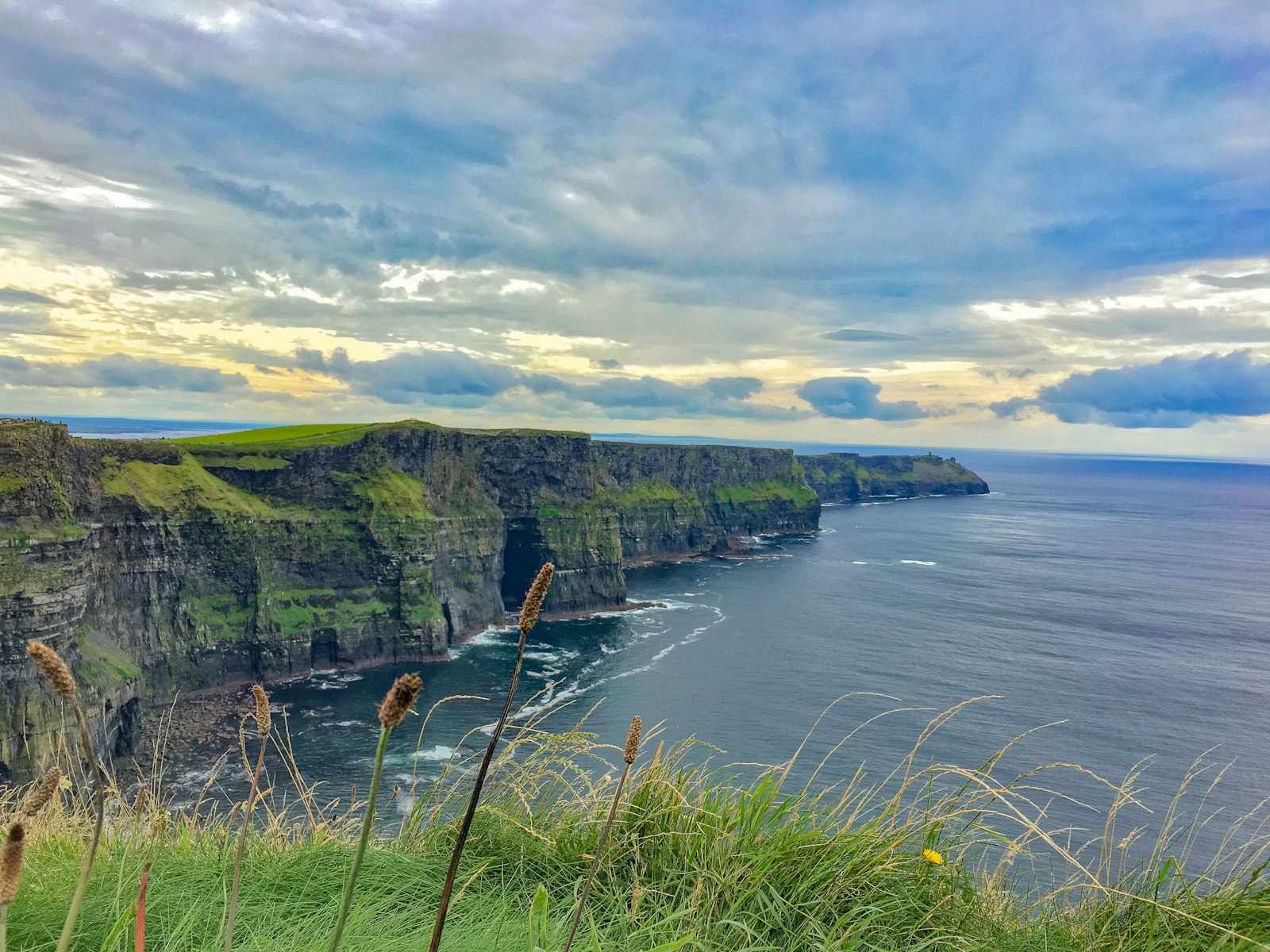
Photo by Leighton Smith on Unsplash
In the northwestern corner of County Clare, between the villages of Ballyvaughan and Gort, lies one of Europe’s most botanically remarkable landscapes. The Burren—a name derived from the Irish word “boireann” meaning rocky place—is a karst limestone region that seems almost alien when you first encounter it. The landscape is dominated by bare, grey limestone pavements that stretch across hillsides, interrupted only by deep crevices and scattered vegetation. Yet within this apparently barren terrain blooms one of Ireland’s greatest natural treasures: a wildflower display so rich and unexpected that it attracts botanists and nature enthusiasts from around the world every spring and early summer.
The Burren Landscape: Geology Creates Ecology
To understand why the Burren contains such extraordinary wildflower diversity, one must first understand the geological circumstances that created this unique landscape. The Burren is underlain by exposed Carboniferous limestone, a sedimentary rock formed from the shells and skeletons of ancient marine organisms millions of years ago. Unlike many landscapes where soil covers the underlying bedrock, the Burren’s limestone is largely exposed to the surface, creating a distinctive terrain of limestone pavement, known locally as “clints and grykes.”
This landscape of clints and grykes forms through a process called dissolution. Rainwater, slightly acidic from dissolved carbon dioxide, seeps into cracks in the limestone and slowly dissolves the rock. Over millennia, this process enlarges the cracks into deep fissures called grykes, while the blocks of limestone between them, called clints, remain relatively intact. The result is a landscape that appears moonlike to many visitors—a vast expanse of grey stone with little obvious vegetation from a distance, but revealing unexpected richness upon closer examination.
The grykes—these deep crevices in the limestone—are crucial to the Burren’s botanical character. Though the exposed limestone pavement appears barren, the grykes create microclimates where moisture and soil accumulate, allowing plants to establish themselves in protected conditions. These fissures shield plants from the worst of the wind, retain moisture better than the exposed pavement, and allow soil to accumulate. Many Burren plants have developed adaptations to thrive in these specific microhabitats, their roots penetrating deep into the grykes to access moisture and nutrients.
The Burren’s limestone also influences water movement and plant communities in other ways. Because limestone is porous, water drains very quickly through it, meaning that surface water rarely accumulates in standing bodies except in specific locations. This creates a landscape that is neither wet nor arid, but distinctly dry. Plants that thrive in the Burren tend to be those adapted to dry conditions, though the protection of the grykes prevents them from becoming truly desert-like environments.
The Alpine Flora of the Limestone: A Mystery and a Marvel
What truly makes the Burren exceptional is the presence of plants usually associated with alpine regions and mountains much further north. Species like mountain avens, spring gentian, and various saxifrages dot the limestone pavement, creating a botanical puzzle that has intrigued naturalists for centuries. How do alpine plants, typically found high on mountains where cold temperatures and short growing seasons dominate, flourish at sea level in western Ireland?
The answer lies in the interaction of climate, geology, and recent glacial history. The Burren’s limestone, with its rapid drainage and exposed surface, creates conditions more similar to high alpine environments than to typical lowland landscapes. The temperatures during the growing season, while mild, are moderated by the landscape’s exposure and the influence of Atlantic weather systems. The limestone itself remains relatively cool because water drains through it rapidly, preventing the kind of heat accumulation that would occur in typical soils. Additionally, the porous nature of the limestone means that plants must have drought-tolerant adaptations, similar to alpine plants that must cope with “drought stress” caused by frozen ground that makes water unavailable to plant roots despite ample snow accumulation.
The recent glacial history of Ireland also explains aspects of the Burren’s flora. During the last glacial period, which ended approximately 10,000 years ago, much of Ireland was covered by glaciers and tundra-like vegetation. When the ice retreated, plants adapted to tundra and alpine conditions—species that had thrived in Ireland’s recently deglaciated landscape—persisted in the few locations that continued to provide suitable habitat after climate warming. The Burren’s limestone pavement, with its unique microhabitat conditions, represented one of the few places in lowland Ireland where these alpine plants could continue to thrive as climate warming pushed them away from most of Ireland.
This means that the Burren’s wildflowers represent a botanical relic—a connection to Ireland’s glacial past preserved in living plants. Every spring gentian that blooms on the Burren represents millions of years of evolutionary history and thousands of years of continuous occupation of this particular landscape. This is not just pretty flowers; it is living geology, a plant community that tells the story of climate change and ecosystem transformation.
The Wildflower Season: A Calendar of Blooms
The Burren’s wildflower season extends from early spring through early summer, with different species peaking at different times. This extended flowering period is one of the landscape’s greatest treasures, as it means that visitors arriving at different times will see different flowers, each species playing its part in the Burren’s botanical pageantry.
Early spring, typically March and April, brings the first significant wildflower show. Pasque flowers—delicate, purple, bell-shaped flowers with silken petals—are often among the earliest bloomers, their flowers appearing before leaves have fully developed. Wood anemones splash the landscape with white, and primroses add touches of yellow. These early-spring bloomers take advantage of the period before the landscape greens up, flowering in the relatively high light conditions beneath the still-bare trees.
As spring progresses into mid-spring and early summer (late April through May), the wildflower display intensifies. Mountain avens, one of the Burren’s signature flowers, blooms during this period. This distinctive white flower with a yellow center is endemic to a small region of northwestern Ireland, with the Burren representing one of its strongholds. Watching mountain avens bloom across the limestone pavement in May is something many Burren enthusiasts consider the peak of the spring wildflower season.
Simultaneously with mountain avens, spring gentians create pools of brilliant blue across the landscape. These small but intensely blue flowers seem almost impossibly vibrant against the grey limestone, and their appearance marks a milestone in the Burren spring. Saxifrages appear in various forms—fleshy-rooted saxifrage with its delicate pink flowers, purple saxifrage with its small clusters of bright purple blooms, and others. The combination of white mountain avens, blue gentians, pink saxifrages, and countless other species creates a wildflower tapestry of remarkable beauty.
Later in spring and into early summer (May and June), additional species bloom. Bloody cranesbill, with its magenta flowers, adds color to sunny slopes. Kidney vetch creates mats of yellow flowers. Lady’s mantle, with its chartreuse flower clusters, appears in moister locations. Orchids begin to emerge—the Burren is home to several orchid species, including the bee orchid, early purple orchid, and others. For those with patience and botanical knowledge, orchid hunting in the Burren represents one of Europe’s great wildflower experiences.
Rarer species also bloom during the Burren season, though seeing them often requires patience and local knowledge. The Irish spurge, a plant found almost nowhere else in the world outside the Burren, blooms in May with its distinctive yellow-green flowers. Hoary rock rose creates mats of yellow flowers. Eyebright species, small delicate flowers with intricate patterns, reward close observation.
Botanical Exploration: Where to Find Wildflowers
For visitors intent on experiencing the Burren’s wildflowers, understanding where to look dramatically improves the experience. The Burren is not uniformly covered with flowers; instead, flowers are concentrated in particular areas and microhabitats. Limestone pavement areas with extensive gryke systems tend to support the richest wildflower displays. Tourist information centers in the region provide maps and suggestions for wildflower walks, and many local guides specialize in wildflower walks during the peak season.
Mullaghmore, a hill in the heart of the Burren, is particularly famous for its wildflower displays. The slopes and pavement around this hill support a particularly rich wildflower community. Early summer mornings, when the Burren is quiet and the flowers are at their freshest, offer exceptional experiences for wildflower enthusiasts.
The southern edge of the Burren, where the limestone gradually gives way to other rock types and soil becomes more abundant, supports somewhat different plant communities. Here, in locations like Dromore Wood, woodland wildflowers mix with the open pavement species, creating diverse communities.
Visiting the Burren responsibly is essential for protecting its precious plants. The Burren is now designated as a Special Area of Conservation under EU environmental law, reflecting the recognition of its botanical importance. Visitors should remain on established paths where possible, avoid trampling plants, and never collect wildflowers or dig up plants. Photography is encouraged—wildflower enthusiasts should bring cameras to document the flowers they encounter.
The Ecological Web: Pollinators and Interdependence
The wildflowers of the Burren do not exist in isolation but are part of intricate ecological relationships with pollinators, herbivores, soil organisms, and the entire community of life that inhabits this limestone landscape. Understanding these relationships provides deeper appreciation for the Burren’s wildflower display.
Bumblebees and honeybees are crucial pollinators for many Burren wildflowers, and the spring and early summer period corresponds to the season of maximum bee activity. Many Burren flowers—the saxifrages, the avens, the cranesbills—produce nectar and pollen that sustains these pollinators. In turn, the bees provide the pollination services these plants require for reproduction. A landscape devoid of bees would see wildflower abundance and diversity decline dramatically.
Butterflies and other insects also pollinate Burren flowers. Many wildflower enthusiasts visit the Burren not just for flowers but to observe the insects that visit them. The orange-tip butterfly, the common blue, and many others are intimately connected with particular wildflower species. Watching a butterfly visit a flower and then move to another plant, transferring pollen as it goes, reveals the interdependence of the Burren’s living community.
Insects are also consumers of Burren plants—herbivorous insects feed on leaves, stems, and seeds of wildflowers. This herbivory, while it damages individual plants, is part of the ecological balance. Insects that eat too much of a particular plant species face scarcity of food, naturally regulating their own populations. The presence of herbivorous insects is crucial for the survival of insectivorous birds and small mammals that inhabit the Burren.
Conservation Challenges and Successes
The Burren’s unique wildflower communities face several conservation challenges. Overgrazing by sheep has been a persistent threat, as sheep can consume wildflowers and compact soil and limestone pavement, reducing plant diversity. In response, conservation organizations and landowners have worked to balance grazing with wildflower protection, managing grazing intensity and timing to allow wildflowers to bloom and set seed before intensive grazing occurs.
Habitat loss and fragmentation pose ongoing challenges. While the Burren itself remains relatively intact, surrounding landscapes have been transformed by agriculture, development, and other human activities. This fragmentation can isolate plant populations and reduce genetic diversity.
Invasive species present emerging threats. Some non-native plants can outcompete native wildflowers, particularly in areas where the ecological balance has been disrupted by other human activities. Careful management is required to prevent invasive species from reducing wildflower diversity.
Climate change poses potential long-term challenges. Some of the alpine plants in the Burren are adapted to cool conditions; rising temperatures might eventually make the Burren less suitable for these species. Additionally, changing precipitation patterns could affect soil moisture availability in this already-dry landscape.
Despite these challenges, conservation efforts in the Burren have achieved notable successes. The designation of the Burren as a Special Area of Conservation provides legal protections for its plants and habitats. Management schemes that compensate farmers for protecting wildflower-rich areas have been implemented and expanded. Research projects continue to improve understanding of Burren ecology and appropriate management practices.
Experiencing the Burren: A Visitor’s Perspective
For American visitors with an appreciation for wildflowers and unique natural landscapes, the Burren offers an experience found nowhere else in North America. The combination of botanical richness, geological drama, and cultural heritage creates a landscape that rewards both casual visitors and serious botanical enthusiasts.
The best season for wildflower viewing is late April through May, when the display is most abundant and diverse. However, late March through early June can all offer excellent experiences depending on specific interest in particular species. Spring weather in the Burren can be changeable, so visitors should prepare for wind, occasional rain, and sun—often all in the same day.
Visitor facilities in the region include the Burren Centre in Kilfenora, which provides context and interpretation of the Burren’s geology, ecology, and history. Local guides and tour operators can arrange guided wildflower walks that greatly enhance the experience by pointing out plants that untrained eyes might miss. The region also offers excellent hiking, traditional Irish music venues, archaeological sites, and culinary experiences that can combine with wildflower exploration.
Conclusion: A Living Connection to Ancient Times
The Burren’s wildflowers represent something rare and precious—a living link to Ireland’s glacial past and a functioning example of how geology shapes ecology and determines which plants thrive in which places. The limestone pavement that initially appears barren reveals itself, upon closer examination, as one of Europe’s greatest wildflower gardens. The alpine plants that bloom there each spring are thousands of years removed from the tundra conditions their ancestors adapted to, yet they persist, thriving in the unique microhabitats that only the Burren’s limestone can provide.
For visitors seeking to understand Ireland’s natural diversity and to experience wildflower beauty in an unexpected context, the Burren offers an unforgettable experience. Standing on the grey limestone pavement in late April or May, surrounded by blooming flowers in colors that seem almost improbable—the electric blue of gentians, the pure white of mountain avens, the vibrant magenta of cranesbill—you’re witnessing the results of millions of years of geological history and thousands of years of plant evolution and adaptation. It’s a perspective that puts human timescales in their proper place and reminds us of the deep time and vast processes that have shaped our world.

Author: jonathan
Jonathan is the publisher of Irishtopia.net, Anglotopia.net, and Londontopia.net. He's passionate about travel and learning about other cultures. He's been to Ireland several times, and uses his travel expertise for Irishtopia!